Spanish election campaign halted after Eta murder

For free real time breaking news alerts sent straight to your inbox sign up to our breaking news emails
Sign up to our free breaking news emails
Campaigning in the Spanish general election came to an abrupt halt yesterday after a politician from the ruling Socialist party was shot dead by a suspected Eta gunman.
The murder, less than 48 hours before polling, immediately put terrorist violence back to the top of Spain's political agenda, reviving memories of the Madrid train bombings four years ago, in which 191 people were killed. In the election that followed three days later, voters handed a surprise victory to the Socialist Prime Minister Jose Luis Rodriguez Zapatero.
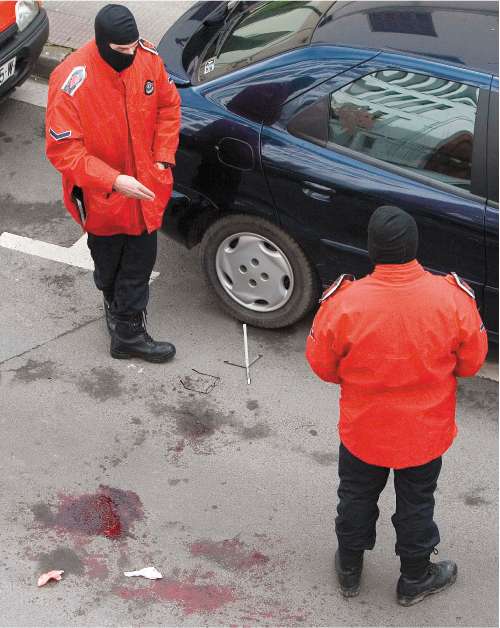
The man who was killed yesterday, Isais Carrasco, a former councillor from the Basque town of Mondragon, was shot three times from behind in the neck and chest as he left home with his wife and five-year-old daughter. He held no public position, had no bodyguard, and lived in a secluded street. "He was an easy target," police said.
The day before polling is usually a quiet day in Spain when voters are supposed to "reflect" in calm tranquillity on their choice. Yesterday's target and the perpetrators differ from Madrid, but the ghastly contamination of elections by violence has plunged the nation once again into confusion and grief.
Mr Zapatero left a rally in Malaga on hearing the news and returned to Madrid. After a conversation with his conservative opponent, Mariano Rajoy, the main parties agreed to suspend electioneering and cancel, as they did four years ago, all the flag-waving meetings designed to rally the faithful at the close of campaigning.
Mr Zapatero said: "[Eta] wanted to interfere in the peaceful demonstration of the will of citizens. It was a criminal act of extreme cruelty against the elementary right to life. We know Eta can still cause damage and grief ... but we know Eta will be defeated by the democratic response of the majority of Spaniards and Basques."
A neighbour of the victim said: "I was in my bedroom and I heard three shots.
"I looked through my window and I saw Mr Carrasco's wife and daughter falling upon him crying 'assassins, assassins'. He had all his chest soaked with blood, and they became stained by touching him."
The gunman was apparently accompanied by a companion, and the two drove from the scene in a grey Seat after the attack.
Alfredo Perez Rubalcaba, the Interior Minister, shaken and wearing a black tie, described the killing as a "vile and cowardly act ... carried out by a gang of assassins who will never succeed in breaking the will of Spanish democracy."
Mr Rubalcaba warned last month that Eta was planning an attack before polling day and ordered extra anti-terrorist security measures to meet the threat. Mr Rajoy said: "We should all stand by the family of Isaias Carrasco and remain united, united against Eta. The guilty ones are terrorists, Eta assassins, and the only option is to defeat them with the law, the security services and the unbreakable will of 45 million Spaniards."
Surveys tip Mr Zapatero to win tomorrow's election by a narrow margin. Some commentators said the shock would send Spaniards to the ballot box in increased numbers. High turnout usually favours the Socialists.
But Mr Rajoy has criticised his opponent for seeking a deal with Eta, so conservatives may feel their leader's position is vindicated. Nonetheless, all parties yesterday pledged unity.
Eta's most recent previous victims were two civil guardsmen, who were shot in France on 1 December 2007. On 30 December 2006 Eta bombed Madrid airport, killing two Ecuadoreans and ending a 10-month truce.
Subscribe to Independent Premium to bookmark this article
Want to bookmark your favourite articles and stories to read or reference later? Start your Independent Premium subscription today.
Join our commenting forum
Join thought-provoking conversations, follow other Independent readers and see their replies