Stalin's grandson fights for the good name of Joseph
Russian liberals sued over pamphlet saying that the dictator killed civilians
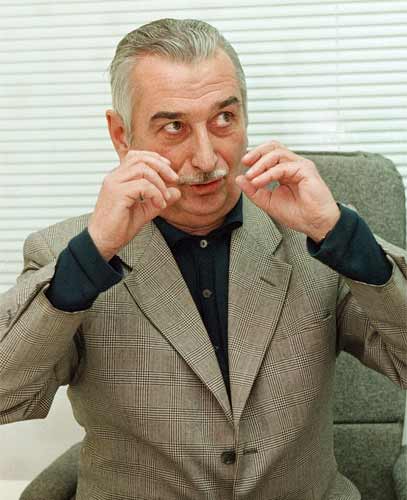
The grandson of Joseph Stalin has launched a libel suit against one of Russia's leading liberal newspapers, accusing it of lying in an article which stated Stalin had killed Soviet citizens.
As the Russian Prime Minister, Vladimir Putin, defended the reputation of the wartime leader in Poland, Yevgeny Dzhugashvili, the dictator's grandson, began his quest to claim nearly £200,000 from Novaya Gazeta.
"Half a century of lies have been poured over Stalin's reputation and he cannot defend himself from the grave, so this case is essential to put the record straight," Mr Dzhugashvili's lawyer, Leonid Zhura, told Reuters.
Liberal critics say that the drive to rehabilitate Stalin has official backing, with the Kremlin keen to glorify Russia's Soviet past and make Russians proud of their history, while glossing over Stalin's crimes.
Dzhugashvili is Stalin's real surname, and Yevgeny Dzhugashvili is the son of Stalin's son, Yakov, who was killed during the Second World War. It is believed that the Nazis offered to trade Yakov for a captured German field marshal, but Stalin refused the offer. Yevgeny Dzhugashvili, however, remains an enthusiastic Stalinist.
His anger was raised by a Novaya Gazeta publication which referred to declassified secret documents ordering the execution of Soviet citizens and which are said to bear Stalin's personal signature.
The lawsuit also accuses the human rights organisation Memorial of libel. It has collected testimony about victims of Stalin's terror and the article appeared in a pamphlet that it published jointly with the newspaper.
The court case is part of an increasingly bitter conflict between liberals and Russian officials over control of Stalin's legacy. Over the past decade, the Kremlin has sought to portray Russia's victory in the Second World War as the most significant historical event of the 20th century. Attention has been focused on Stalin's supposedly heroic wartime leadership, and away from his crimes and repressions.
Last week, a Moscow metro station reopened after renovations, and horrified liberals found that an inscription lauding Stalin, which had been removed from the station after his death in the 1950s, had been restored.
"Stalin raised us to be loyal to the nation, inspired us to labour and great deeds," says the inscription, which is taken from an early version of the Soviet national anthem. Sergei Mitrokhin, the leader of the liberal Yabloko Party, called the inscription "scandalous" and said that Stalin had perpetrated a "monstrous genocide".
However Mr Zhura, Mr Dzhugashvili's lawyer, came to Stalin's defence "He turned populations into peoples, he presided over a golden era in literature and the arts; he was a real leader. We want to rehabilitate Stalin."
Such views find wide support among Russia's population, who are fed a diet of propagandistic television programmes and history textbooks about Stalin's war leadership and "effective management". Last year, in a competition to find the greatest Russian in history, the moustachioed dictator – who was actually an ethnic Georgian – came third.
The Stalin case is not the only bizarre lawsuit that Memorial has had to defend this week. Preliminary hearings also took place into another case linked to the kidnapping and execution of one of the group's leading activists, Natalya Estemirova.
In July, Ms Estemirova was snatched outside her home in Chechnya and killed. She had been investigating human rights abuses perpetrated under the pro-Kremlin Chechen ruler, Ramzan Kadyrov.
Oleg Orlov, the head of Memorial, voiced what many were thinking after her death and said that Mr Kadyrov was responsible, at the very least because he presided over a country where such crimes could occur with impunity. Several of Mr Kadyrov's enemies and critics have met nasty ends over the past year but the chances of Mr Kadyrov being put on trial or questioned over any of the murders are infinitesimal.
On Monday, the same day the Stalin case began, hearings took place in a different courtroom into a lawsuit between Mr Kadyrov and Mr Orlov. Instead of it being a chance to put the Chechen leader – who has been accused of gruesome crimes – in the dock, the court heard a libel action by Mr Kadyrov against the Memorial head.
Mr Kadyrov accuses Mr Orlov of "insulting his honour and dignity" by saying he was responsible for Ms Estemirova's murder and demands compensation to the tune of £200,000.
Join our commenting forum
Join thought-provoking conversations, follow other Independent readers and see their replies
Comments