Stress takes toll on Moscow metro commuters
Underground suicides expected to rise as more Russians lose their jobs
Problems at home, worried about losing your job in the economic crisis, or just feeling down? Russian medical experts have the answer – take the bus.
Travelling on Moscow's crowded metro system is provoking a wave of despair among commuters, psychologists in the city say.
About 150 people commit suicide on the metro each year and the figures are expected to rise as more Russians are laid off and confronted with money woes.
"The roar of the oncoming train compounds stress and people have the temptation to solve all their problems with one swift movement," psychotherapist Sergei Nazarov told the newspaper Novye Izvestia. He also said that using the metro for long periods each day could lead to panic attacks and a paranoid fear about being followed.
In neighbouring Ukraine, the authorities are also worried about the metro blues. Regular electricity shortages mean that often only half the lights in the metro are lit, and the Kiev operators are so worried about an increase in suicides that dramatic measures are being taken.
All the "No Exit" signs are to be removed, because of the negative moods they can induce in commuters, reports Novye Izvestia. And there are plans to re-record the on-train announcements that the doors are closing using a child's voice, to promote a happier atmosphere.
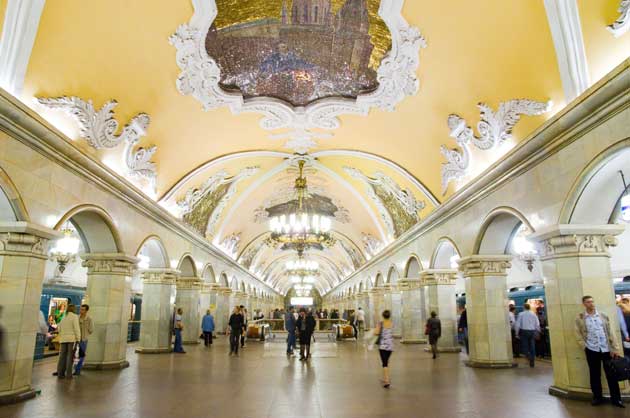
The Moscow metro, much of which was built during Stalin's reign, is one of the most efficient in the world. Many of the stations are stunningly opulent "people's palaces", built in a socialist realist style. Nevertheless, using the metro can be stressful because of overcrowding and poor air quality.
A metro spokesman, Dmitry Gaev, said the number of passengers each day has decreased by 200,000 over the past few months, probably as a result of recent job losses. But he added that about 9 million people still used the metro system every day, so the drop in passenger numbers was hardly noticeable.
Foreigners and Russians from the provinces who move to Moscow often complain about overcrowding on the metro. Considerations of personal space are put to one side as passengers rush to fill the cars before the doors close.
The tide of human traffic is such that the drivers often don't wait for everyone to board the train before shutting the doors, often leading to an undignified scrum.
Dizzyingly long escalators lead down to the stations, which are some of the deepest in the world. Many were built with the idea that they could function as shelters in the event of a nuclear attack. The air quality so far below street level is very poor – many of the ventilation shafts are positioned close to main roads, meaning that the air inside the metro stations is polluted.
The situation is even worse for metro workers, who clock up 12-hour shifts deep under the streets of the Russian capital.
In addition to the health risks of breathing in polluted air, they also suffer from the stress of being underground for so long. "Over time every single station employee or driver gets ill in some way or another," says Svetlana Razina, the leader of the Metro Workers' Union.
But for all the problems associated with the metro, Muscovites are sceptical about suggestions to use alternative forms of transport.
"Using the metro is really unpleasant," said Dmitry Sharapov, 29, who spends 45 minutes underground each morning and evening to get to and from work.
"But what's the alternative? Drive, or take the bus? It would take me twice as long and there would be just as much pollution. If it didn't lead me to suicide, it would probably lead me to murder."
Join our commenting forum
Join thought-provoking conversations, follow other Independent readers and see their replies
Comments