Swiss voters give boost to heroin on the NHS
Switzerland set to back radical plan to help addicts
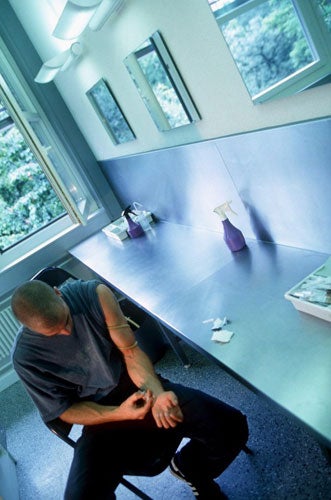
A pioneering British programme to provide injectable heroin to drug addicts received a boost yesterday when voters in Switzerland backed a similar scheme in a referendum.
Early returns indicated overwhelming support for the Swiss scheme which has been credited with reducing crime, improving the health of addicts and clearing them from the streets.
Drug experts in Britain hailed the result as an indication that long-term prescription of heroin to hardened addicts could be politically acceptable. The practice of giving addicts drugs on a maintenance basis, rather than weaning them off them, is one of the most controversial in medicine.
Harry Shapiro, from the charity Drugscope, said: "The Swiss are not known for their radical views. But they have approved this scheme for users, relatives and the public. I hope this will encourage a speeding-up of the process here. The Government is going to need UK evidence before it acts but it is taking a long time to get it."
A pilot scheme established "shooting galleries" in London, Brighton and Darlington, where addicts could get drugs and inject under supervision. The scheme cut crime and stopped street sales. Crimes committed by the addicts dropped from about 40 to six a month after six months of treatment, said Professor John Strang, the head of the National Addiction Centre at the Maudsley hospital. A third of addicts stopped using street heroin and the number of occasions when the rest "scored" dropped from every day to four to five times a month, on average.
Long-term heroin users are among the hardest addicts to treat. They often steal to fund their habit, which accounts for a large proportion of crime in Britain; one in 10 drug addicts commit three-quarters of all acquisitive crime, according to official figures.
The British scheme is modelled on the Swiss scheme, where injecting clinics are deemed to have "medicalised" heroin use, removing its glamour and transforming it from an act of rebellion to an illness requiring treatment. Similar clinics have been established in France, Germany and Canada.
The Swiss programme was launched in 1994. The parliament had already approved a proposal to make it permanent but the conservatives challenged the decision and forced a national referendum under Switzerland's cherished direct democracy.
In Britain, there are about 280,000 drug users, most taking heroin and crack cocaine, and about 2,500 drug-related deaths each year. The pilot scheme, targeted at the 3,000 to 6,000 long-term addicts, operates 365 days a year and costs £15,000 annually per addict, three times the normal cost of providing oral methadone treatment.
Professor Strang said it was "intensive care for drug addicts" and was "more expensive than standard treatment but a third of the cost of sending them to prison at £44,000 a year. And when they go to prison they become re-addicted on release."
"We have constructed a sterile clinical environment so as to increase the separation from street drug use. We are dealing with a profound drug hunger and trying to medicalise it in order to break the link with street heroin use and crime."
Join our commenting forum
Join thought-provoking conversations, follow other Independent readers and see their replies
Comments