Bomb takes death toll of journalists in Iraq war to 126
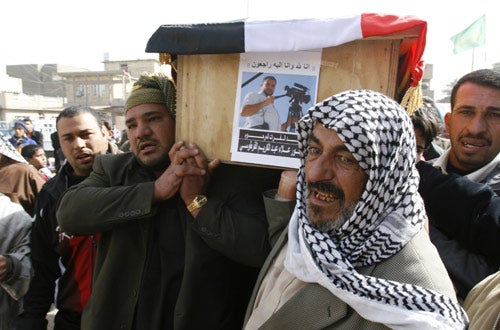
Iraq confirmed its reputation as the most dangerous country in the world for journalists this week when a roadside bomb killed an Iraqi television cameraman, Alaa Abdul-Karim al-Fartoosi, the first journalist to be killed in Iraq this year and the 126th since the start of the war.
Mr Fartoosi, 29, worked for al-Furat, the television station of the Islamic Supreme Council of Iraq, one of the main Shia Islamic parties. He had left Baghdad at about 5pm on Tuesday for Samarra to cover the second anniversary of an attack on the Shia shrine in the city that provoked widespread killings.
Other workers at the television station told Mr Fartoosi to wait until the following day, but he said "the road was safe". The bomb which killed him near the town of Balad, 50 miles north of Baghdad, also injured another correspondent, Fatma al-Hassani, in the leg and injured the cameraman's assistant, Haider Jawad. The explosion almost certainly was not meant for the journalists but for a passing military or police vehicle.
The great majority of the journalists killed – 104 out of the total – were Iraqi. Thirteen were European and two were American. In addition, 49 media support workers have also been killed, according to the Committee to Protect Journalists in New York.
Iraqi journalists have died in almost every circumstance and at many hands. Sometimes there were direct attacks on buildings in which the media worked, such as the suicide bomber who drove a refuse lorry packed with explosives into the entrance of Baghdad TV's offices on 5 April 2007, killing the deputy director Thaer Ahmad Jaber.
Other journalists have been killed because of the stories they were reporting or the political line of the publication, radio or TV for which they worked. Iraqi workers for foreign media companies are particularly at risk. Alaa Uldeen Aziz and Saif Laith Yousuf, a cameraman and a soundman working for ABC News, were ambushed and killed by gunmen in two cars.
Often journalists have been killed for the same reasons that tens of thousands of Iraqis die, but their deaths receive a little more notice. For instance, Khaled Fayyad Obaid al Hamdani was shot dead by a US military patrol when he was driving to work, according to the Nahrain television station for which he worked. He was driving fast to avoid kidnappers but the US soldiers evidently suspected him of being a suicide bomber and shot him. A US military spokesman said he had no record of the shooting.
Many journalists have also been killed because they were Sunni or Shia caught in the wrong area or at the wrong checkpoint. Many were tortured before they died. Others appear to have been abducted for ransom and killed when it was not forthcoming. The salary for a cameraman working for an Iraqi TV station is around $300 (£150) a month while a more senior director would get up to $1,200.
Iraqi journalists these days do much of the reporting for Western media organisations, because of the danger to any foreigner appearing in public.
Some foreign media have become prisoners of their own Western security companies and are mainly confined to their offices. This has kept casualties among Western journalists down but means that much of the war is unreported.
Join our commenting forum
Join thought-provoking conversations, follow other Independent readers and see their replies
Comments