British directors lead boycott of Iran's cultural showpiece
Islamic Republic's biggest film festival is shunned in protest at ongoing crackdown on Iranian opposition
It is Iran's answer to Cannes, Venice and Berlin rolled into one. The cinematic and cultural highlight of the Islamic republic's calendar, the annual Fajr festival in Tehran is a 10-day extravaganza of film, drama, poetry and literature. This year's event, which opens on Monday, ought to be a magnet for the country's artistic elite and a host of international stars.
But Ken Loach and the British theatre director Peter Brook are among leading Western artistic figures who have informed the Islamic regime they are pulling out in protest at its brutal crackdown on the opposition, which includes torture, prison rapes, countless killings and Stalinist-style televised show trials of reformists.
Ministries in charge of the state-run festival had already rescheduled this year's event, so that foreign visitors would not witness expected clashes at "green movement" rallies timed for 11 February, the anniversary of the 1979 Islamic revolution. But the collision of art and political reality has left them scrabbling to find replacement films and plays.
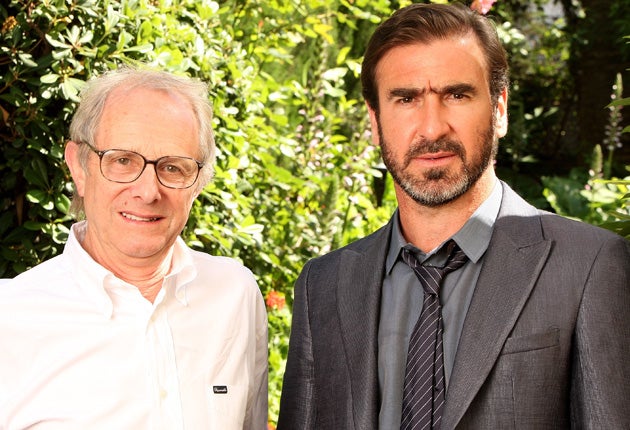
Loach's film Looking for Eric, starring ex-footballer Eric Cantona, was to have featured in the international section, while Peter Brook, who has had an artistic involvement with Iran going back to the 1970s, was to have staged The Grand Inquisitor, an adaptation of a chapter of Dostoyevsky's The Brothers Karamazov.
Theo Angelopoulos, the Greek art house director, whose The Dust of Time stars Willem Dafoe and Bruno Ganz , and the French director Philippe Lioret, who made the highly praised Welcome, about migrants in Calais trying to reach the UK, have also decided to withdraw from the event. Cannes award-winning Palestinian director Elia Suleiman is also joining the protest.
The boycott is a response to a plea by Iranian artists. A joint statement from Iranian cinematographers, playwrights and actors, unsigned to protect those still working in the country, had circulated in recent weeks urging their foreign counterparts to stay away from Tehran to avoid conferring respectability on President Mahmoud Ahmadinejad's government. "Your presence in this year's Fajr festival will be akin to ignoring the struggles of oppressed people of Iran for their rights," the statement said. A number of leading Iranian cinema figures including Abbas Kiarosami have already turned down invitations to be on the festival's jury.
Ken Loach said that while many governments, "including our own", commit human rights violations, he felt compelled to back the Iranian artists' appeal.
"It is the request first and foremost from the Iranian film makers that makes you think, and makes you want to support them. There are many repressive regimes and you can't go on individual boycotts. But when the people themselves say, 'Don't come because you will be endorsing the regime that is perpetrating the violence,' you have to stop and think carefully." It was not a question, he said, of taking an automatic pro-Western anti-Iran stance. "But the suppression of the opposition, and it is violent suppression, is there for all to see."
Theo Angelopoulos said that withdrawing his film was a protest at events which have horrified the world. "Freedom of expression is the only form of discourse with a nation's future".
"If I appeared in this festival it would be like providing a cultural alibi for this regime," Philippe Lioret told The Independent. "This is a regime which is killing culture and killing the freedoms of its people. The artistic community in Iran is suffering. In a country where artists are suffering, everyone is suffering. We know this, everybody knows this. I don't want anything to do with it."
Sepideh Farsi is an Iranian film maker who documented Iranians' frustration with their lack of freedom in her film Tehran without Permission, shot with a mobile phone. Last night she predicted that the boycott would send a strong signal of support to the opposition and to ordinary Iranians who in other years have enthusiastically queued for hours to get tickets to the Fajr screenings and theatre productions.
"This is a very big deal in Iran because it is a chance for people to see good international movies. It's very significant that names like Ken Loach should withdraw. Internationally recognised figures are telling the regime, 'We're not playing your game.' Many of these directors have had their work staged or screened in Iran before. But this year, it would be playing the game of this make-believe festival, in a make-believe Iran," she said.
Iranian film makers have been spared the imprisonments, beatings or show trials inflicted on many others in the ongoing crackdown. The intimidation of artists – which has worsened under the hardline government of President Ahmadinejad – is being conducted in subtler ways. These include the cancellation of television contracts or threats of heightened censorship. Plays in rehearsal have to be vetted by government inspectors and can be axed without explanation.
Ken Loach's letter to the Iranian regime
*We wish to withdraw our film Looking for Eric from the Tehran Film Festival. We recognise that many governments, including our own, have committed acts of aggression, broken international law and ignored human rights. However, this boycott is called for by Iranian film makers and artists to protest against the violence against those who oppose the regime and the many abuses of human rights documented by respected bodies like Amnesty. We support this boycott as we support the boycott of cultural events sponsored by the Israeli state. We regret the difficulties this will cause the festival's organisers.
Join our commenting forum
Join thought-provoking conversations, follow other Independent readers and see their replies
Comments