Defiant Iran spurns deal over uranium plant
Ahmadinejad ignores world powers' deadline for suspending enrichment
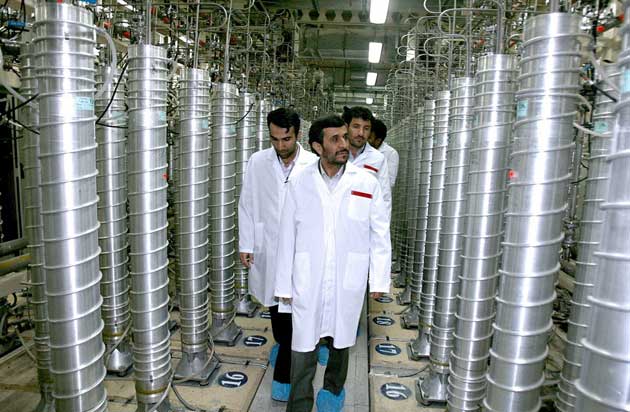
Iran's President has issued a defiant warning to his country's "enemies" as Tehran ignored a deadline from world powers hoping to curb Iranian nuclear ambitions.
Iran's refusal to give a clear answer by yesterday to the offer of technological and political incentives in return for suspending uranium enrichment rekindled tensions with the West and led to fresh warnings from Israel that military strikes remain an option.
But Tehran yesterday accused the West of double standards in the wake of the US's nuclear deal with India.
In a statement on Iranian television on Friday, President Mahmoud Ahmadinejad accused "enemies" of wanting to "force the Iranian nation to retreat". "Whenever the enemies have failed against this nation they have tried to make excuses, but the Iranian nation will stand against them with its power," he said.
The six powers offering a "grand bargain" to Iran – Britain, the US, France, Germany, Russia and China – had warned of expanded sanctions if Tehran refused to comply by yesterday's informal deadline.
Iran was given two weeks to respond after it met representatives from the six powers on 19 July.
But Israel, which considers the Iranian nuclear programme as a threat to its existence, has been beating the drums of war. Three Israeli cabinet ministers were in Washington last week, warning the Bush administration against abandoning the military option. The Israeli deputy prime minister, Shaul Mofaz, warned on Friday that "Israel will not let a second Holocaust happen".
Iran had not been expected to meet yesterday's ultimatum after saying earlier in the week that it rejected "the language of deadline-setting".
Javier Solana, the EU's foreign policy chief, is expected to have a telephone conversation with the chief Iranian nuclear negotiator, Saeed Jalili, tomorrow.
Senior foreign ministry officials of the six powers will also confer. "The Iranians have had more than enough time to respond," said a British diplomat. "If Iran doesn't choose to engage there is no option but further sanctions."
The UK's Foreign Secretary, David Miliband, has stressed that Britain is "100 per cent focused" on a diplomatic solution. Asked last week about the prospect of Israeli military action, he told the BBC: "We don't want to get there."
Mr Ahmadinejad boasted last month that Iran now possesses 6,000 centrifuges at its uranium enrichment plant in Natanz. That is double the figure Tehran had previously announced.
Although Iran says it intends to produce fuel for electricity, most Western experts believe it wants to continue with enrichment to be able to reach a "breakout" capacity, which would give it the option of producing a nuclear weapon.
The UN's atomic agency has confirmed that Iran has enriched uranium to the low level required for civilian use only. Sources close to the International Atomic Energy Agency told The Independent on Sunday that its inspectors, who are making regular visits to Iran, could confirm the presence of 4,000 centrifuges at Natanz, with 3,500 operating, at the end of July.
But Mr Mofaz warned in Washington that a breakthrough was close: "As soon as 2010, [Iran] will have the option to reach [uranium production] at military levels".
The West hopes that Iran will at least agree to the "freeze for freeze" deal spelled out in the talks, whereby, if Iran stops installing centrifuges at Natanz for a six-week period, the six would agree to a moratorium on new sanctions for the same period.
Join our commenting forum
Join thought-provoking conversations, follow other Independent readers and see their replies
Comments