Iraq overturns ban on election candidates 'linked to Saddam'
Court's compromise eases sectarian tension by allowing hundreds of Sunnis to run for office
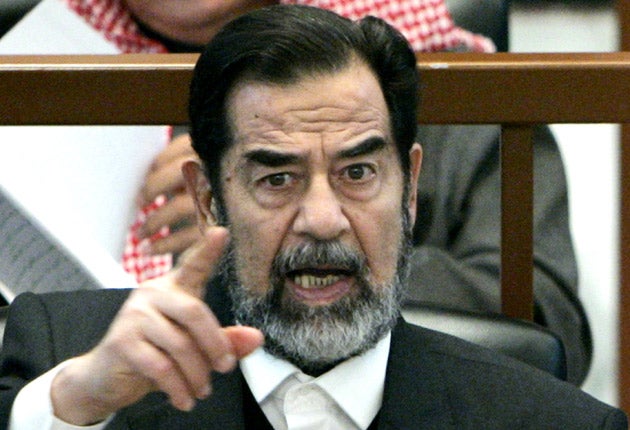
The Iraqi appeals court defused a political crisis yesterday by overturning the ban on 450 candidates standing in next month's election which was imposed because of their alleged links to the Baath party of Saddam Hussein.
Many Sunni Arab leaders were among those disqualified, causing a political uproar because the ban appeared aimed at the Sunni community and was likely to intensify Sunni-Shia hostility. In the last parliamentary election in 2005 the Sunnis boycotted the poll and supported the armed insurgency against the Shia-Kurdish government backed by the US.
In a compromise ruling by the court, candidates on the blacklist will take part in the poll on 7 March but will not be able to take office until they are cleared of links to the old regime. Blacklisted candidates defended themselves by saying that Baath party membership was obligatory for many jobs under Saddam Hussein.
Though many Sunni and secular Shia candidates will now be able to run in the election, a Shia-Kurdish government will inevitably be returned.
Provincial elections last year showed that Iraqis vote along communal or sectarian lines and the Shia make up three-fifths of Iraqis and the Kurds and Sunni one fifth each. At the same time, there is deep dissatisfaction within the three main communities with many of their current leaders because of corruption, lack of services, too few jobs and continuing insecurity. The US used all its influence to get the ban rescinded, including sending Vice-President Joe Biden to Baghdad, because it feared further alienating Sunnis.
The court ruling will reduce one cause of sectarian tension in Iraq, but a series of devastating suicide bombs since last August is also exacerbating Sunni-Shia differences. A bomb in a cart pulled by a motorcycle killed 20 and wounded 110 Shia pilgrims yesterday as they arrived in the holy city of Karbala for the Arbain, the religious festival commemorating 40 days from the anniversary of the death of the martyred Imam Hussein. On Monday, a female suicide bomber killed 41 pilgrims on the outskirts of Baghdad.
The most recent suicide bombing campaign is claimed by the Islamic State of Iraq movement, a cover for al-Qa'ida in Iraq. This has shown that it is able to penetrate tight security in Baghdad and elsewhere and vehicles packed with explosives and driven by suicide bombers have exploded close to well known government buildings and hotels. The effect of the blasts is to inflict many casualties and discredit the government's claim to have restored security.
The government has pointed an accusing finger at Syria saying that it is allowing insurgents to use Syrian territory as a base. A visit last year by Iraq's Prime Minister Nouri al-Maliki to Damascus, where he spent many years in exile, failed to improve relations. The Iraqi government has paraded captured insurgents who say they organised recent bombings and had previously been operating out of Syria.
Saudi Arabia has also made clear that it remains opposed to a Shia government ruling in Baghdad, the first Shia Arab government since the overthrow of the Fatimids by Saladin in Egypt 800 years ago. "Saudi Arabia is intervening in Iraq just as much as Iran," said one former Iraqi government official.
Neither the bombings nor the March election are likely to change the balance of power within Iraq. The Shia Arabs are well established in power though their political leadership is divided. Mr Maliki has the advantage of control of government patronage and money. The Kurdish parties show solidarity against outsiders but the reform party Goran did spectacularly well in the Kurdish parliamentary elections last summer.
The very fact that the Sunni political leadership could be so unexpectedly blacklisted shows their community's lack of strength. They appear to have avoided disenfranchisement thanks to the court ruling yesterday but they will still be a minority in parliament. The suicide bombings show, however, that Sunni insurgents can still destabilise the Iraqi state.
Join our commenting forum
Join thought-provoking conversations, follow other Independent readers and see their replies
Comments