Iraqi shoe thrower 'beaten in custody'
Iraqi protests spread as reporter faces court over act of 'aggression' against Bush
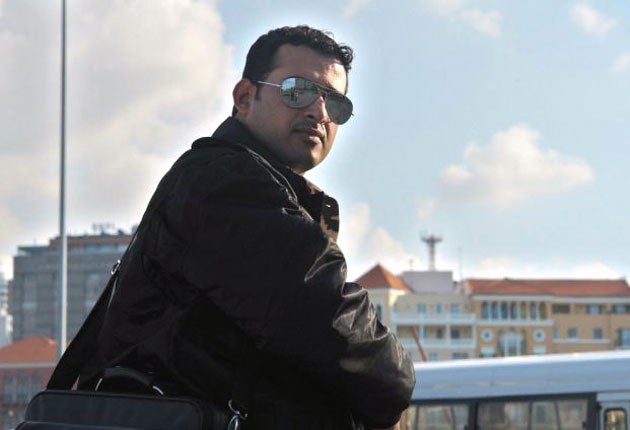
The Iraqi journalist who achieved folk hero status by throwing his shoes at George Bush appeared before a judge in Baghdad yesterday amid reports he had been beaten in custody.
A brother of Muntazer al-Zaidi said the reporter had been taken to the Ibn-Sina military hospital after being hit on the head with a rifle butt. Iraqi security men had also broken his arm. Dargham al-Zaidi said his brother had suffered broken ribs and internal bleeding.
But another brother, Maitham al-Zaidi, later said he had spoken withthe shoe thrower on the phone and he had said: "Thank God I am in good health."
The guards of the Iraqi Prime Minister Nouri al-Maliki were seen beating Mr Zaidi just after the incident and he was seen screaming in pain, but the extent of his injuries were not clear. A judicial spokesman said Mr Zaidi had been brought before a judge and accompanied by a defence lawyer. He had admitted the charge of aggression against a president.
The incident, and Mr Zaidi's arrest, provoked a second day of nationalist demonstrations in Shia and Sunni parts of Iraq yesterday, underlining the deep unpopularity of the US occupation. In the northern city of Mosul, which is predominantly Sunni, 1,000 protesters chanted slogans and carried banners demanding the release of Mr Zaidi. There were also protests in the Shia city of Nassariyah in the south and the Sunni city of Fallujah in the west.
In Baghdad, Noureddin al-Hiyali, a Sunni lawmaker, said that Mr Zaidi's actions were likely motivated by the invasion of Iraq, the dismantling of the Iraqi government and the destruction of infrastructure. "International law approves people's right to resist occupation using all means and Mr Muntazer al-Zaidi endeavoured to resist occupation in his own manner."
Many of those who expressed reservations about Mr Zaidi's actions were concerned about the embarrassment it may have caused Mr Maliki, who was sitting beside Mr Bush at the time. The growth of this patriotic mood will make it difficult for Mr Maliki's government to not insist on the full implementation of the recently signed Status of Forces Agreement, under which the US is to withdraw its troops in three years.
Mr Zaidi could be jailed for up to two years for insulting a foreign state or head of state but he would be charged under a law that the Baath party introduced in 1969, which allowed for a sentence of up to seven years to be handed out to anyone who 'insults the president or his representative'. When Saddam Hussein became president in 1979, Iraqis feared that even spilling coffee on a newspaper bearing his image might have serious repercussions.
It is unlikely the Iraqi government or the United States will want to make a martyr out of Mr Zaidi. All parties in Iraq are gearing up for provincial elections in January and parliamentary ones later next year; candidates will probably want to outdo each other in patriotic and nationalist declarations.
Join our commenting forum
Join thought-provoking conversations, follow other Independent readers and see their replies
Comments