Middle East leaders react nervously to Mubarak's defiance
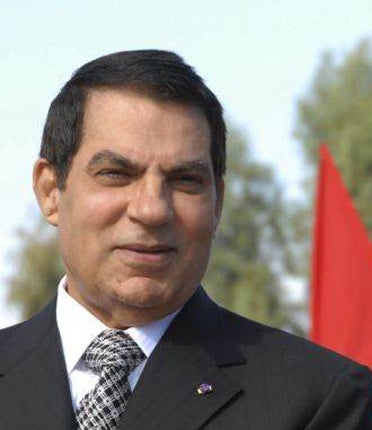
Reaction in the Middle East to President Mubarak's defiant address to the nation was muted late yesterday, with nervous regional leaders hesitant to prejudge the outcome of fast-moving developments in Egypt.
Many had anticipated that Mr Mubarak would use the speech to announce his decision to step down, but he stopped short of that, prompting confused and angry reaction on Tahrir Square.
Israel, which has publicly backed Mr Mubarak's continued claim on power, made only a brief comment as public pressure mounted on Mr Mubarak to step down.
The Israeli Defence Minister, Ehud Barak, who is in the United States, said that it was up to the Egyptian people to "find its way," according to the constitution.
Israel's leaders are clearly nervous about developments in Egypt, fearful that a chaotic overthrow could usher in a new Islamic order hostile to Israel, and one that would annul the 31-year peace concord between the two countries.
Israeli politicians have long seen Mr Mubarak as a steadying influence in the Middle East, and one who is receptive to Israeli security concerns. Egypt has joined Israel in blockading the Gaza Strip, which is governed by the Islamist movement Hamas.
Israel also fears a new regime that would be more sympathetic to Hamas, which has ties to the Muslim Brotherhood, and might even review its cooperation with Israel in blockading the enclave, making it easier for militants to smuggle arms into the strip.
Israel has quietly signalled that it would accept a new government in Cairo with Omar Suleiman, the Vice-President and intelligence chief, at its head with backing from the army. Mr Suleiman is regarded with respect and liking in Jerusalem.
But Israel has been preparing its people for worst-case scenarios in recent weeks. The Prime Minister, Benjamin Netanyahu, called last week for "bolstering Israel's might," a reflection of the growing realisation that Israel might face new military threats in the event of an unfriendly Egypt on its southern border.
Meanwhile, Arab rulers have also watched events unfold with some unease, clearly nervous that protests in Tunisia – where President Ben Ali was ousted last month – and Egypt, a pivotal country in the Middle East, could spread to other countries in the region.
Several Middle Eastern leaders, autocrats themselves, have urged the United States to drop its calls for a speedy transition in Egypt, and in doing so head off a chaotic and turbulent change.
In the last few days, the Saudi ruler, King Abdullah, had a tense phone call with US President Barack Obama, where he reportedly admonished the American leader for his haste in calling for Mr Mubarak to step down.
Middle Eastern autocrats have good reason to be unnerved. The rumblings of dissent are already being heard throughout the region, which is plagued by economic problems such as high unemployment on the one hand, and nepotistic and corrupt elites on the other.
Protests in Jordan and Yemen have prompted the rulers of those countries to take dramatic pre-emptive steps to stop the demonstrators in their tracks. King Abdullah of Jordan sacked his government and promised political reform, while the Yemeni President, Ali Abdullah Saleh, vowed to step down when his term ends.
Many of these leaders, some of whom have held power for decades, have now been forced to consider their own positions, which have long been propped up by an authoritarian system of governance backed by security forces that are quick to crack down on dissent.
They are now facing emboldened citizens, who realise that an important threshold has been crossed. Popular protest has swept a despot from power in Tunisia, and has pushed the Egyptian regime to the brink.
Join our commenting forum
Join thought-provoking conversations, follow other Independent readers and see their replies
Comments
Bookmark popover
Removed from bookmarks