New Jerusalem settlement hits peace process
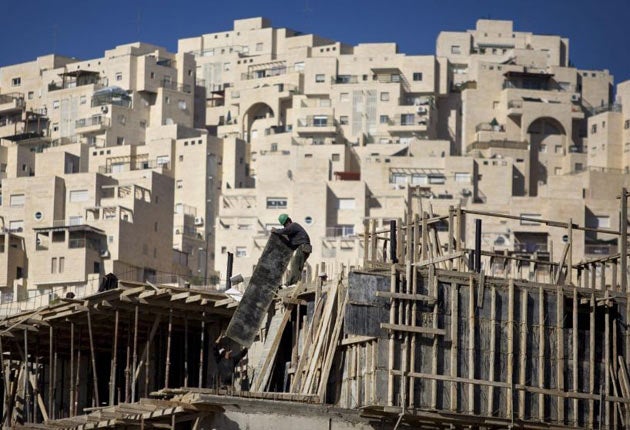
Israel is moving ahead with a project to build 1,400 new homes in predominantly Arab East Jerusalem, a development that critics claim will deliver a death knell to the already faltering peace process.
The controversial plan drew furious condemnation from the Palestinian Authority and threatened to dash any prospect of a revival of the US-sponsored peace talks, which collapsed last year over the issue of Jewish settlements.
Saeb Erekat, the Palestinians' chief negotiator, said. "This proves the Israeli government has chosen settlements over peace." Plans for the expansion, expected to be presented to Jerusalem's planning commission this week, were also criticised by Washington as "counterproductive" in efforts to get the two sides back into negotiations.
The international community last week condemned the demolition of an historic hotel in east Jerusalem to make way for 20 apartments for Jews, prompting a defiant declaration from Prime Minister Benjamin Netanyahu that Jews should be free to live where they like in the city.
This latest project would extend the existing Gilo settlement, a large neighbourhood in East Jerusalem built on lands captured by Israel in 1967 after the Six-Day War, and later annexed. All settlement construction in the occupied sector is regarded as illegal by the international community. The homes would be built on what is currently a picturesque hillside on the other side of the valley from the Cremisan monastery, a popular picnicking spot for Palestinians from the West Bank.
Campaigners opposed to the project fear the expansion of Gilo would lead to an unbroken ring of settlements stretching from Jerusalem to Gush Etzion, to the south of Bethlehem, effectively ensuring that that part of the West Bank is never handed back in a peace deal.
Meir Margalit, a Jerusalem councillor from the left-leaning Meretz party, said it might be years before the houses are actually built, but that the political repercussions could be immediate. "If there is any chance of the peace process being renewed, after this it's clear it will not happen," he said. "The Palestinians cannot live with this kind of provocation. If [US President Barack] Obama still believes the US can do something to bring peace in the Middle East, this is the time to do it."
The Palestinians have opposed settlements on the grounds that Israel cannot negotiate in good faith as long as it is building more settler homes on West Bank land that the Palestinians hope will form the basis of their future state. The Palestinians also covet East Jerusalem as their future capital and fear that Israel is attempting to predetermine its "indivisible" status.
But Israel remains unrepentant, arguing that there is an understanding that Israel will never hand back the Jewish areas in East Jerusalem.
"In every peace plan put forward over the last two decades, the Jewish neighbourhoods of Jerusalem remained part of Israel in a final status [agreement]," said Mark Regev, the prime minister's spokesman. "The Palestinians have unfortunately adopted a position where they refuse to engage."
Israel's announcement that it would build 1,600 new homes in east Jerusalem during US Vice-President Joe Biden's visit last March soured relations between the two countries for several months. Washington, meanwhile, is seeking ways to bring the two sides back to negotiations, but the Palestinians appear now to favour a plan to seek recognition in the United Nations.
Join our commenting forum
Join thought-provoking conversations, follow other Independent readers and see their replies
Comments