Power struggle deepens divisions among Bahraini royal family
Police suspended for torture reinstated as hardliners seek to marginalise their 'liberal' prince
Senior Bahraini police officers suspended for torturing detainees are being swiftly reinstated in a sign of a growing struggle for power within the al-Khalifa royal family over the extent of the repression to be used against pro-democracy protesters.
In addition, 90 Jordanian officers, serving in the Bahraini police force and alleged to have mistreated prisoners, are having their contracts terminated and are being sent back to Jordan, opposition sources have told The Independent. They say it is not clear if this is to purge the security forces of the worst offenders or to get rid of witnesses to the wholesale use of torture when the government crushed the Arab Awakening movement in Bahrain in March.
Increasing divisions within the Sunni royal family are becoming more blatant as statements by King Hamad bin Isa al-Khalifa aimed at conciliating the majority Shia community are not followed up by action. Though he told state and private companies to reinstate the 2,500 employees sacked for taking part in pro-democracy protests, many have been unable to get their old jobs back.
The government's actions are also contradictory. Earlier this month it suspended several senior police officers, some of them members of the al-Khalifa ruling family, after they were accused of being implicated in torturing prisoners. One officer held an important position at Riffa police station, notorious for the use of torture, and another was a section chief of the CID. Demonstrations by Sunni in Riffa in favour of the suspended officers were followed by the immediate reinstatement of at least one of the men.
The hardliners in the royal family are led by the army commander, Khalifa bin Ahmed, and his brother, the Royal Court Minister, Sheikh Khalid bin Ahmed. They were once at odds with the Prime Minister, Sheikh Khalifa bin Salman, who has held his job for 40 years since the British left in 1971, but they closed ranks when the Arab Awakening started in February in Bahrain, sparked by pro-democracy uprisings in Tunisia and Egypt.
The largely peaceful demonstrations centred on Pearl Square in the middle of the Bahraini capital Manama, but the government reacted as if it was facing an armed insurrection. A Saudi-led military force crossed the causeway from Saudi Arabia to Bahrain in the middle of March and a brutal crackdown followed with mass arrests and use of torture. Forensic experts brought in by an investigating commission verified that 63 detainees had been so severely mistreated that marks of torture were still visible three or four months later.
The hardliners in the royal family, supported by Saudi Arabia, have sought to marginalise Crown Prince Salman bin Hamad, seen as the most liberal royal. Before the March crackdown he sought to work out an agreement with al-Wifaq, the main opposition party. Since then he, along with King Hamad, has lost much of his authority.
The government crackdown was accompanied by the state media launching an anti-Shia campaign, claiming, without any evidence, that Iran had fomented armed rebellion against the al-Khalifa dynasty. Sectarian hatreds increased, leading to Sunni-run private companies and state organisations refusing to re-employ sacked Shia employees despite the King's order.
Mohammed Sadiq of Justice for Bahrain says that among those sacked who have not been re-employed are 24 Shia journalists, working on Al-Ayam newspaper, who were fired on 16 March. Some 402 workers at Aluminium Bahrain (almost all Shia) were sacked and only 50 have been re-employed though they have had to sign new employment contracts whereby they lose all annual leave and sickness benefits.
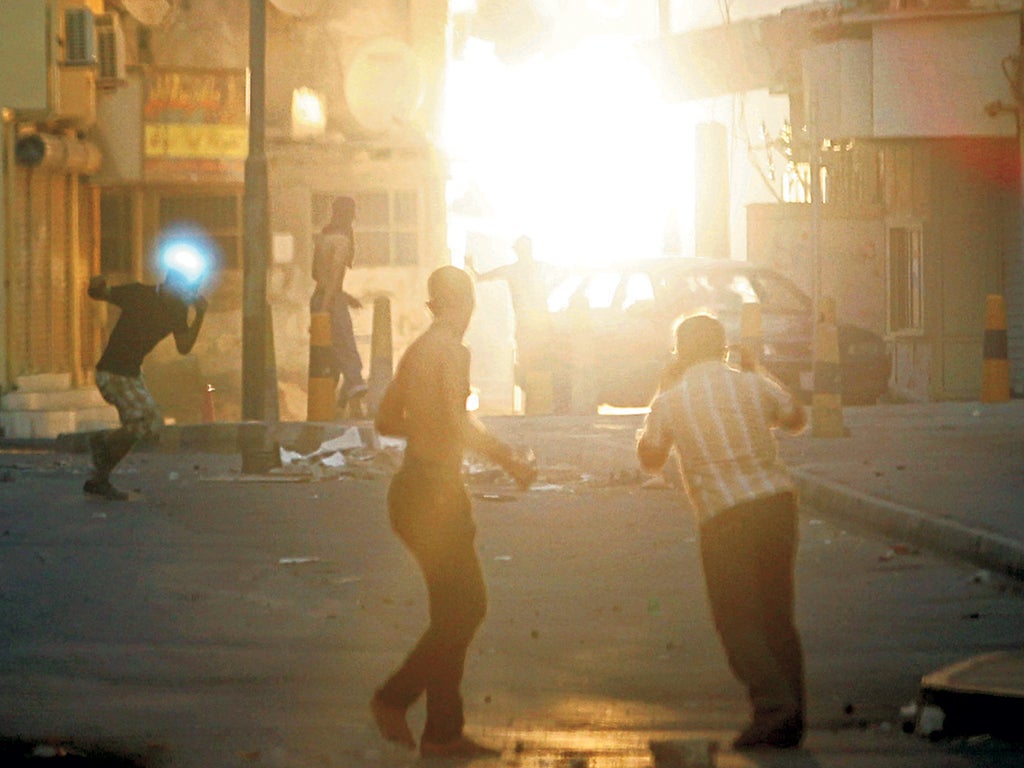
The continuing repression has not returned stability to Bahrain and is not likely to do so. There are nightly protests in Shia districts with the police using rubber bullets and stun grenades. Occasional deaths of protesters enrage the Shia community. Particular fury was caused by the death of Ali Jawad al-Sheikh, 14, apparently killed by a tear gas grenade fired at point-blank range.
The ruling family – from liberal voice to hardline colonel
Crown Prince Sheikh Salman bin Hamad al-Khalifa
Seen as the most liberal member of the Khalifa family, the Crown Prince had sought an agreement with opposition parties before protests began. Now, increasingly marginalised by hardliners in the royal family, he has lost much of his authority.
King Hamad bin Isa al-Khalifa
Conciliatory moves from the king aimed at the majority Shia community have not been followed up by action. Despite ordering state companies to reinstate employees sacked for taking part in protests, many have not yet been able to get their jobs back.
Colonel Sheikh Khalifa bin Ahmed al-Khalifa
As the leading hardliner within the royal family, the army commander has benefited from the support of Saudi Arabia, which sent a military force to help crush protests in March. He has seen his influence grow as the crackdown continues. Richard Hall
Join our commenting forum
Join thought-provoking conversations, follow other Independent readers and see their replies
Comments