UK and US 'should have realised Iraq evidence was suspect'
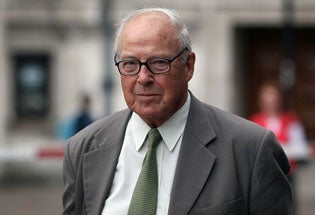
Britain and the United States should have realised that their intelligence about Iraq's supposed weapons of mass destruction was suspect, the former head of the United Nations weapons inspectors said today.
Giving evidence to the Iraq Inquiry, Dr Hans Blix said it should have set alarm bells ringing in London and Washington when the inspectors repeatedly failed to turn up any evidence that Saddam Hussein still had active WMD programmes.
"When we reported that we did not find any weapons of mass destruction they should have realised, I think, both in London and in Washington, that their sources were poor," he said.
"They should have been more critical about that."
Dr Blix said that he had privately confided to Tony Blair in the autumn of 2002 - before the inspectors returned to Iraq - that he thought it was "plausible" that Saddam did have WMD.
However in the weeks leading up to the invasion in March 2003 - after the inspectors had failed to uncover anything significant - he said that he had cautioned Mr Blair that there might not be anything.
He said that he told the then-prime minister: "Wouldn't it be paradoxical if you were to invade Iraq with 250,000 men and find very little?"
He added: "I gave a warning that things had changed and there might not be so much."
Dr Blix said that the inspectors had visited 30 sites based on tip-offs from British and US intelligence but found little other than some old missile engines and a sheaf of nuclear documents.
He acknowledged the pressure of the US military build-up in the region had led Saddam Hussein to agree to the return of the UN inspectors in September 2002.
However he said that he did not believe that Britain and the US had been entitled to invade Iraq without a further UN Security Council resolution specifically authorising military action.
He accused the administration of US president George Bush of being "high on military" in the wake of the 9/11 attacks on the Twin Towers in New York in 2001.
"They felt that they could get away with it and therefore it was desirable," he said.
He also condemned claims by Britain and the US that Iraq had tried acquire raw uranium for its supposed nuclear programme from Niger, based on a forged document.
"That was perhaps the first occasion I became suspicious about the evidence," he said. "I think that was the most scandalous part."
Dr Blix said the progress to war with Iraq was "almost unstoppable" by early 2003 and the UK was "a prisoner on that train".
He told the inquiry: "Once they went up to 250,000 men and March was approaching, I think it was unstoppable or almost unstoppable - the (US) president could have stopped it, but almost unstoppable.
"After March the heat would go up in Iraq and it would be difficult to carry out warfare."
He added: "The whole military timetable was, as rightly said, not in sync with the diplomatic timetable.
"The diplomatic timetable would have allowed more inspections. (The) UK wanted more inspections. The military timetable did not permit that."
The former weapons inspector questioned why the UK and the US declared that Saddam was refusing to cooperate with the inspectors when his team was saying the opposite.
He said: "I thought it was, both then and in retrospect, a bit curious that precisely at the time when we were going upward in evidencing cooperation, at that very time the conclusion from the UK side and also from the US side was that, 'no, inspections are useless, they don't lead us anywhere'."
Dr Blix told the inquiry that in March 2003 he gave Jack Straw a copy of a "cluster document" detailing Iraq's historic lack of cooperation with weapons inspectors.
But the then-foreign secretary apparently misunderstood the paper and read it as referring to Saddam's current attitude.
He said: "When it was on the table, Mr Straw was amazed and puzzled - 'why hadn't Blix presented this earlier?'
"He didn't say we withheld it, but he was amazed it had not been done earlier. This was sensational.
"I don't think anyone else took it as sensational. It was reporting on concealment and obstruction in the 1990s, but not much more than that."
Join our commenting forum
Join thought-provoking conversations, follow other Independent readers and see their replies
Comments