Our lessons in power
What can we learn from some of the 20th century's most noted leaders? And what message do Clinton, Gorbachev et al have for future heads of state? Brian Michael Till gets the word from the top
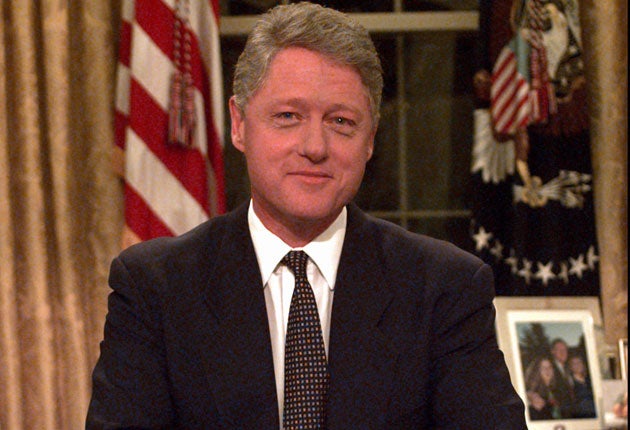
When a young journalist, Brian Michael Till, wrote an opinion piece for the San Francisco Chronicle in 2007 lamenting the prospects for college students in the wake of the financial collapse, it sparked a series of long interviews with former world leaders who, despite acknowledging the the challenges the world faces, continue to tackle them with the optimism that originally drew them into politics. In this selection of candid extracts, Till asks some of the most notable figure of the 20th century the lessons they learned in power – and the advice they would give to future generations of leaders.
Vaclav Havel
Czechoslovakia/Czech Republic, 1989-2003
There are young people in the world today who are in the situation you and your peers were, in which they have to make a choice – people in Cuba, in North Korea. They have to decide whether to seek something else, whether to fight against the system, or take an easier path and live their life as the system exists. What would you say to them?
Well, I wouldn't be so presumptuous as to give them much advice. But I might say in passing that when someone makes the effort to become a dissident and joins the opposition and runs the risk of being persecuted, that fateful step has two positive aspects to it.
The first is that they feel good about being in harmony with their conscience and their beliefs. When you lie a little or make compromises you shouldn't, you can have the ugly feeling of being soiled. If you decide to do something good, regardless of whether that advances your cause or not, you at least have the positive feeling of being on the side of truth. And the second aspect – and the experience of my country and of the other post-Communist countries bears this out – is that these seemingly pointless, quixotic efforts may rather quickly turn into something important and may eventually bear fruit. They just may be successful.
Mikhail Gorbachev
USSR, in power 1985-1991
There's a tradition of leaving a letter to your successor in the Oval Office. If you were to craft a letter to my generation about the most important lessons on leadership you've learned over the course of your career, what might it say?
If I were to give advice to your generation, I would say that one must believe that morality and politics can be compatible, but it is not a game for the faint-hearted. I was in politics for more than 50 years. In order to reach the Politburo, I had to struggle. I knew the system from within. I knew the power of the nomenklatura and how the bureaucratic machine could break and corrupt even good people. As a young man, I deeply resented the arrogance and lack of accountability of our bureaucrats. Most of them just followed the rules and went through the motions with total indifference.
I even thought of quitting politics on three separate occasions, but I didn't. I had a hot temper, too, and I had to struggle to not let it spill over into my public persona.
You also need the ability to learn. Just imagine – when I was starting my political career, live TV was unknown. When I served as first secretary of the Territorial Party Committee, I was afraid of the television cameras. But all of that changed.
Later, television interviews became my strong point. Tom Brokaw (of US network NBC) told me that someone preparing to interview me asked him how he should go about it, what kind of questions he should ask. He replied: "Based on my experience, you may ask him anything at all: He will still say what he wants to say."
FW de Klerk
South Africa, 1989-1994
In the context of your current work advising current leaders on the various challenges they're facing, I wonder if there are major themes that you have run across?
The first requirement is, perhaps, to encourage leaders to abandon their ideological approaches and other illusions and to assess the situation that confronts them as honestly and realistically as possible.
It is then quite often fairly easy for leaders to see what they need to do. The problem is to ensure that they will be able to take their constituencies with them – particularly if the course they advocate is difficult and will require sacrifices.
But that, to me, is really the essence of leadership.
Bill Clinton
USA, 1993-2001
As members of my generation look around the world today, we see climate change on the rise and nothing in the way of a successor for the Kyoto Protocol, the proliferation of nuclear weapons... I wonder if you worry that you and this post-Cold War generation of leaders will be judged harshly by history?
No. I think that's a cheap trick. I mean, all of this "the greatest generation is World War II"? – it just happens that they're the most horrible parents in human history, right? If all of us baby boomers were so bad, then our parents were terrible; they failed.
I think it's phony as a $3 bill. I think they had a chance to win World War II and it was clear. These are much more complex things [now]. We have no idea if the World War II generation would have made the decisions they should make on climate change if they thought doing so would bring an end to their prosperity.
The real problem in climate change is that we're paying for our past success. The established order has too many self-protecting economic entities and not enough people who yet understand what it takes to change. The World War II generation was thrown into a war by a madman, Hitler, and an expansionist empire in Japan, and we did what we had to do. Look, I admire the World War II generation; I'm just trying to make a point here. I don't think there are defective generations. There are times and struggles and they present different challenges.
I believe the United States will pass reasonably good climate-change legislation and I believe we will get a successor that will be better than Kyoto and I think that we're in a race against time and circumstance.
Jimmy Carter
USA, 1977-1981
If you were to draft a letter to the next generation of leaders, what would you include in that letter?
I was in Wales at [the Hay festival] and I was asked by the editor of The Guardian: "What can the next US president do in the first 100 days to change the image of America around the world?" And in a somewhat brash moment, I said: "He can do it in 10 minutes." And the editor kind of scoffed at me. He said: "What do you mean 10 minutes?" I said: "In his inaugural address, he can say the United States will never torture another person. The United States will abide by international law. The United States will not initiate a nuclear attack on another country." And so I went down the list.
"If he could say that in the first 10 minutes, the image of America would be transformed in the world."
Goh Chok Tong
Singapore, 1990-2004
If your children or grandchildren were to come to you and ask: "Should I enter public life? Should I be a politician?" What would you say?
I would say: "Know thyself." You must get to know yourself. If you are able to do it, it's something you like to do, it is a tremendous job because you make a difference in other people's lives – and if you get tremendous satisfaction out of that, then proceed.
But you must do this because you want to do good for other people, not to advance your own career. If you go into politics because you need the limelight and speaking to cameras and so on, or you walk with a swagger, don't do it. The public is not stupid. The public can see through you very quickly.
Gro Harlem Brundtland
Norway 1986-89; 1990-96; 2000
What advice do you have for women who are trying to ascend to these top political rungs all around the world?
It's a difficult challenge. It is. But I'll tell you one thing that I have repeated when young women have asked me similar questions. One thing I'm sure about is that if you have a high-pitched voice, like many women have, that becomes thin and not easy to hear. You have to speak up. So I usually tell women: "You must train your voice and you must use it by being heard." Because you are not going to be respected fully if people don't sense that you speak with a certain authority.
'Conversation With Power' by Brian Michael Till is published by Palgrave Macmillan (£14.99). To order a copy for the special price of £13.49 (free P&P), call Independent Books Direct on 08430 600 030, or visit www.independentbooksdirect.co.uk. Copyright © 2011. Reprinted by permission of Palgrave Macmillan
Join our commenting forum
Join thought-provoking conversations, follow other Independent readers and see their replies
Comments
Bookmark popover
Removed from bookmarks