The 40 million children who just didn't exist
One charity's campaign to register the births of all children in the developing world is transforming millions of young lives. Nina Lakhani reports
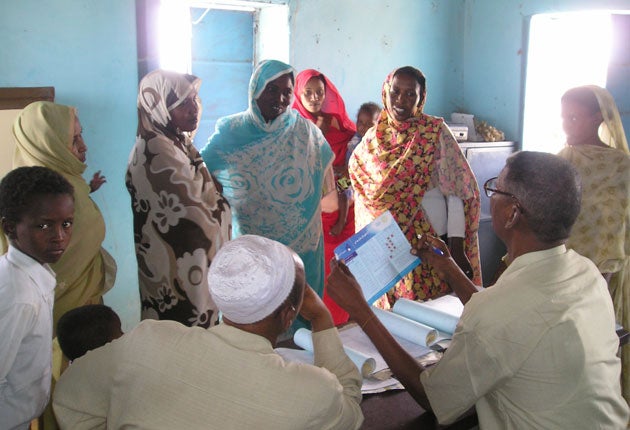
This is a story about a project which found 40 million children who didn't officially exist. A campaign that, over four years and across three continents and 32 countries, has helped to protect hundreds of thousands of children in danger of being trafficked, and girls as young as 12 being forced into illegal marriages – and it is now also saving untold numbers of unborn girls from being aborted because they are the "wrong sex". It is that very rare thing: a global good news story.
It is a mission to give millions of children in the developing world something that is taken for granted in Britain: the registration of their birth and, with it, an official existence. Before the campaign – mounted by the international children's charity Plan – there were parts of the world where registration was rare. In Cambodia, for instance, as late as 2005 96 per cent of the population went unregistered. Without registration, there can be no birth certificate, no identity card, no passport, no proof of age or parentage. Thus, millions are at increased risk of being press-ganged as child soldiers or prostitutes, of not being returned to their families if liberated, of having only limited access to healthcare and education, and being deprived of their legal rights.
The problem, Plan realised some years ago, was a cause of immense human misery, and so it launched the Count Every Child scheme. Its ambition was the registration at birth of every baby in the world. In a report published tomorrow, Plan tells the remarkable story of how it registered 40m citizens. In some countries, it has transformed registration rates, and pressured governments to waive the costs of logging a birth. The result is that a further 153 million people are now eligible for free registration.
Yet the task remains colossal. According to Unicef, 51m children born every year do not officially exist. In some rural communities in Asia, Africa and Latin America, more than 90 per cent of children are not registered at birth. In a conference tomorrow in London, Desmond Tutu and the Slumdog Millionaire actor Anil Kapoor will appeal to governments and non-governmental organisations to learn from, and repeat, Plan's unprecedented success.
Why is registration so low? A lack of awareness among parents and communities, a fear of persecution through identification, no money, poor public transport and illiteracy all work together to stop parents registering their children. And poorly trained registrars and inadequate registration systems are widespread.
There are an estimated 300,000 child soldiers fighting wars around the world. While a birth certificate cannot prevent a child from being kidnapped and forced to fight, it is a vital tool in efforts to reunite rescued children with their families. In Uganda, where the birth registration system collapsed, children rescued from the Lord's Resistance Army often wait months while officials try to track down their villages and families.
And prosecutions against abductors will only succeed if there is proof that the alleged child soldiers were children when recruited. One lawyer in the Philippines said 50 per cent of cases involving forced prostitution and child labour fail because a child does not have proof of age or identity.
Children can be trafficked within their own country or across borders and continents to work as domestic slaves, prostitutes or in cannabis factories. In 2002, Suborna, a seven-year-old from Bangladesh, was kidnapped and trafficked into India but was abandoned near a police checkpoint as her kidnappers fled. She was taken in by a village leader but had no idea where she was from. A local magistrate organised a radio announcement which her family heard, and her father travelled to India to collect her. But the magistrate refused to release Suborna until he produced her birth certificate, which thankfully he had in Bangladesh. Without this, Suborna may never have returned to her family.
A child who is arrested may be prosecuted as an adult if there is no proof of age. A Vietnamese "woman" caught working in a brothel in Europe is likely to be deported as a criminal, whereas a 16-year-old will be treated as a victim of kidnap, trafficking and forced labour, repatriated to her family or helped to seek asylum.
Plan reports cases of boys as young as seven in Bangladesh in court for
murder and rape. But the country's Birth Registration Act, which came into force in 2006 mainly as a result of the campaign, has meant that 40 per cent of Bangladeshis have received a birth certificate, and another 30 per cent have been registered. Workers focused on children living on the edges of society and helped more than 5m, including 28,000 street children in Dhaka, to acquire official identities.
It is almost impossible for an unregistered adult to work legally, so they are forced to take low-paid, hazardous jobs or become involved in crime. They may be unable to get a bank account or apply for a loan or benefits. They may be unable to vote; they will never pay tax. A missing child becomes a lost adult. Awawou, 18, lives in a small village in East Mono, Togo. Her father died shortly after her birth and her illiterate mother did not know about birth registration. Because she was unregistered Awawou was turned down by the local school. Though her grandmother finally convinced the headmaster to let her attend, she was unable to sit her final primary school exams and so could not continue her education; the late birth registration fee in this west African country is nearly £7, which her family could not afford. Awawou has spent several years working in order to save enough money and has finally sat her exams. She hopes to become a dressmaker.
So what did Plan do? It mobilised workers, volunteers, celebrities, communities and governments, using text messages, radio and TV advertising campaigns, and mobile registration trucks to change attitudes and beliefs, improve awareness, reduce costs and cut the distance people have to travel. Simple stuff, but it worked.
When Plan started work in Cambodia less than 5 per cent of people were registered because, under the Pol Pot regime, many Cambodians destroyed their identity papers to try to avoid persecution. But by working with whole villages to overcome these entrenched fears, by training officials, and undertaking a 10-month mobile registration programme, an astounding 56 per cent of Cambodians now have a birth certificate and another 40 per cent are registered awaiting a certificate.
The abortion of female foetuses still occurs in countries such as India and China where boys are preferred for cultural or economic reasons. This has distorted the gender balance in some areas; in the Indian state of Bihar there are six girls for every 10 boys. A pilot project in four Indian states monitors every pregnant woman until she gives birth and registers the child. It will now be replicated by Unicef across four more states.
Identity documents are often destroyed or lost as people try to escape war or natural disaster. After the Asian tsunami it was common for several traumatised parents to try to claim the same toddler from refugee camps, according to Nadya Kassam from Plan. Matching up relatives with children who were trying to cope with the tsunami's devastation took months.
Plan has since provided plastic folders and laminated birth certificates for communities prone to natural disasters or war, such as Indonesia, Sri Lanka and Vietnam.
Pakistan: How politicians and mullahs got the word out
Safdar Raza, 43, from Islamabad, co-ordinated the universal birth registration campaign in northern Pakistan
"Even though in some parts of Pakistan birth registration has been common for a century, in the vast region of Malakand in the North-West Frontier province (NWF), registration was at 0 per cent when we started. Even if parents wanted to register, it was a big hassle. People would have to travel 70 miles and pay 100 rupees (72p), a lot of money here.
We started by training registrars – 3,400 across Pakistan and 987 locally. We got the mullahs to make announcements about the importance of birth registration during Friday prayers, and we had the Prime Minister and other officials making announcements on the radio and TV, telling people that the government was waiving the fee for a year. We then set up mobile registration units – Jeeps which could get to rural areas – and the registrars went with loudspeakers, encouraging people to come out. Illiteracy is a big problem, so we would help people fill in the forms. Between 2004 and 2008 we registered 1.7 million children in the NWF, including 500,000 in Malakand. Nearly half of the children in the NWF now have a birth certificate; the fee has been halved for ever.
Having no birth certificate has serious repercussions. I heard of one man who divorced his wife and then claimed he wasn't the father of his daughter. Without a birth certificate this child will be treated as illegitimate and will not have access to education or marriage."
Join our commenting forum
Join thought-provoking conversations, follow other Independent readers and see their replies
Comments