'We can still afford to help the world's poorest', says PM
As powerful voices in his party and the press urge him to slash international aid, Cameron takes a stand
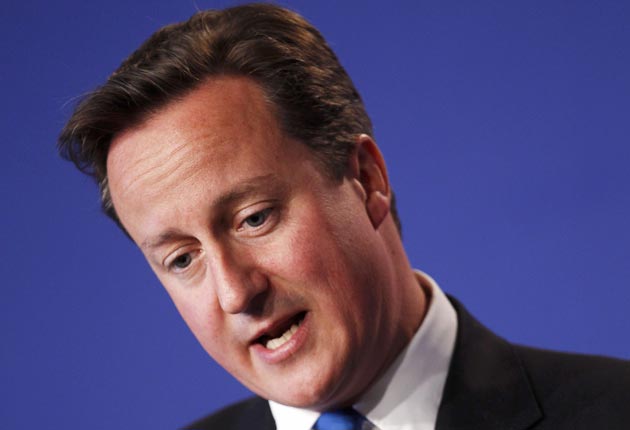
David Cameron took on his right-wing critics yesterday as he mounted a passionate defence of his determination to increase foreign aid despite the extent of the austerity measures facing Britain.
The Prime Minister spoke of the inspiration he had drawn from watching Live Aid as a teenager in 1985 – and insisted the country had a "moral imperative" to help save lives and tackle poverty in the developing world. He also argued that it was in Britain's self-interest to invest in nations such as Afghanistan and Somalia as a way of tackling terrorism, international crime and environmental damage.
His comments will put him on a collision course with Tory-supporting newspapers – as well as many Conservative MPs and activists – all of whom have been urging ministers to scale back their commitment to foreign aid because of the financial pressures at home. The Government has ring-fenced the international development budget and promised to increase aid spending from the current 0.56 per cent of gross national income (GNI) to 0.7 per cent in 2013 and to put that commitment into law.
Mr Cameron hit out after being accused by the Daily Mail of "politically correct posturing" and following the disclosure that Liam Fox, the Defence Secretary, was opposing enshrining the target in law.
Speaking at the end of the G8 summit of the world's most powerful economies in the French resort of Deauville, he retorted that he was proud that Britain would not "balance its books on the back of the poorest" and denied the 0.7 per cent pledge was unaffordable.
He said: "I remember where I was during Live Aid in 1985. If we are going to try to get across to the poorest people in the world that we care about their plight and we want them to join one world with the rest of us, we have got to make promises and keep promises."
He said: "Of course, it is difficult when we are having to make difficult decisions at home. But I don't think 0.7 per cent of our gross national income ... is too high a price to pay for trying to save lives in terms of the poorest people in the poorest countries."
Mr Cameron told a reporter: "If you are not convinced that it is right to vaccinate children against diarrhoea, to try to stop preventable diseases, to try to save mothers in childbirth, if that doesn't do it for you, what about this argument?
"That these countries that are broken, like Somalia, like Afghanistan – if we don't invest in them before they get broken, then we end up with the problems. We end up paying the price of the terrorism, of the crime, of the mass migration, of the environmental devastation."
He said: "I know this is a controversial argument and I'm looking forward to arguing it out in the pages of our your newspaper over the following years.
"But I think this is an argument that can be won, both as a moral imperative – that we care about people in the poorest parts of the world and want to help them – but also we are looking after our own self-interest by making investments now that will pay off in the future."
He added: "I think most people in our country want Britain to stand for something in the world and be something in the world."
Mr Cameron also made clear his frustration that other wealthy nations at the G8 summit were not fulfilling pledges on aid. He said: "Britain will keep its promises and I was tough in urging my counterparts to do the same."
Last night aid charities expressed their delight at Mr Cameron's intervention. Max Lawson, a senior policy adviser at Oxfam, said: "It is great the Prime Minister is championing aid. There are many in Africa who would be dead today without it. We should all be proud of what Britain is doing to help people in desperate need.'
"Aid remains a very small proportion of our national income, dwarfed by other government expenditures, yet it saves millions of lives each year."
He called for a Robin Hood tax on banks to "allow us to meet our aid commitments and stop the brutal cuts that are causing such misery".
Belinda Calaguas, the director of policy and campaigns at ActionAid UK, said: "Aid works very hard for people in Africa and saves lives – it ensures people in those countries can work themselves out of poverty."
She said diverting 0.7 per cent of national income to the poorest nations "paled by comparison with the resources in this country".
The last Labour government had committed itself to a long-standing international ambition for wealthy nations to spend 0.7 per cent of GNI on foreign aid.
Upon his election as Tory leader, Mr Cameron signed up to the same target as part of his drive to modernise and "detoxify" the party's image.
Last year George Osborne, the Chancellor, announced that the budget of the Department for International Development would rise by 34 per cent over four years to £11.5bn.
Join our commenting forum
Join thought-provoking conversations, follow other Independent readers and see their replies
Comments