WikiLeaks set to reveal what US really thinks of David Cameron
Website to release three million embassy cables, many of them distinctly undiplomatic
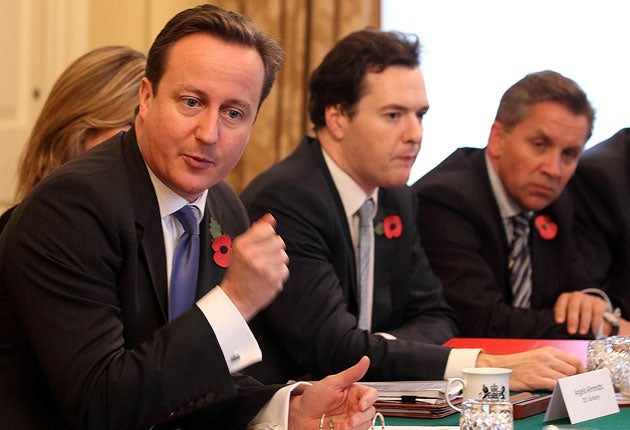
David Cameron was bracing himself for the humiliation of public criticism from the Obama administration last night, as whistleblowers prepared to publish millions of classified cables between Washington and US embassies around the world.
Almost three million confidential files detailing the US government's private views on hundreds of allies and rival states are expected to be released by the website WikiLeaks this week. The White House has sent ambassadors on official missions to dozens of allies to prepare them for any damage that the cables could wreak on their relationship with the US.
Louis Susman, the American ambassador to London, met officials in Downing Street on Friday to warn them what to expect when WikiLeaks finally begins publishing details of the communications. He did not speak to Mr Cameron directly.
The Independent on Sunday understands that State Department correspondence between London and Washington covers a catalogue of sensitive diplomatic issues, including the release of the Lockerbie bomber, Britain's contribution to the wars in Iraq and Afghanistan and the Conservatives' position on the economy before the election.
Two years ago, it was claimed that President Obama referred to Mr Cameron as a "lightweight" after he had met the then-opposition leader in London.
It is believed that some of the embassy cables echo the criticism of the Tories' stance in opposition, questioning their approach to the credit crunch, including their opposition to Gordon Brown's decision to bail out banks with taxpayers' money.
Government sources confirmed last night that the sensitive cables, covering the 18 months between January 2009 and June this year, also offered candid assessments of Mr Brown, his premiership and his chances of winning the election. Downing Street was confident that the revelations would not damage the Prime Minister's reputation – or the "special relationship" between the UK and the US. One source said the files, which had been expected yesterday, would be "far more embarrassing" to members of the former Labour government. He added: "There are quite a lot of references to Gordon Brown being perceived as weak and unstable."
A number of senior ministers said the Cabinet had not been warned of any damaging revelations expected to emerge in the coming days.
But even a hint of disapproval, particularly over economic policy, would be a dangerous development for a coalition Government still in the process of establishing itself at home and abroad. The Conservatives have condemned Labour over its handling over the economy under Mr Brown, but any criticism from the UK's closest ally would be seized upon by opponents. The Obama administration is understood to have had concerns over Mr Cameron's position on taxation, the Iraq war, and his "neo-conservative" allies.
David Rothkopf, a foreign policy analyst in Washington and critic of Mr Cameron, when asked if it was true that Mr Obama had a low opinion of the Prime Minister, said: "I think you have it about right as far as views go. Initial reaction to Cameron was dubious, although there has been some adjustment of late in a more positive direction. I know the White House is in an absolute swivet over this, as is the State Department. There could be very rough days ahead."
Ambassadors regularly send back observations of political events in their host countries, summarising developments and opinions. However, it is their more candid dispatches, giving their own views of individual figures, organisations and controversies, which present the greatest danger of embarrassment.
The cables between London and Washington are expected to detail views on broad themes including the economic crisis, defence and foreign policy. There will also be "quite interesting commentary" on Nelson Mandela, Libyan leader Colonel Gaddafi, Zimbabwe's Robert Mugabe and Afghanistan's Hamid Karzai.
Diplomatic sources said the most damaging comments are likely to come in telegrams sent before meetings, which are likely to include personal remarks on temperament, electoral prospects and personality.
WikiLeaks has said the publication of cables would be seven times the size of its controversial release of 400,000 documents relating to the war in Iraq last month. Washington maintains that it has known for some time that WikiLeaks had the information, but it has not taken action to prevent the publication – or to prosecute anyone for passing the cables to the website.
Join our commenting forum
Join thought-provoking conversations, follow other Independent readers and see their replies
Comments