Thomas Sutcliffe: Why TV must look to its past
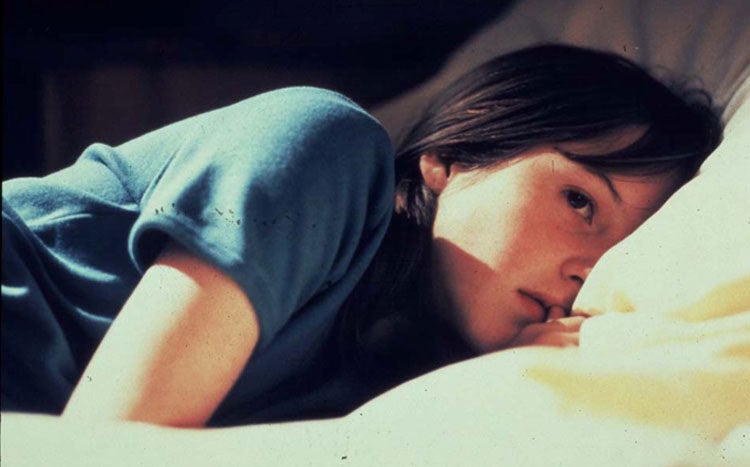
Good news this week for anyone who thinks that old television should be a bit more accessible than it usually is – one bit of good news being right on the doorstep and the other bit a little further down the road.
The immediate good news is this: from tomorrow, More 4 is going to be running a short retrospective of films by Peter Kosminsky, a documentary and drama director who has more Baftas than lavatories in which to store them, and a very distinguished record of tackling the kind of subjects other film-makers treat like a suspicious package on a Baghdad roadside.
If you're interested in his work – and if you're seriously interested in television you can't not be – the More 4 season offers you the chance to see some of his early documentaries, including Afghantsi, an award-winning film from 1988 in which Soviet soldiers talk about their "war on terror", and prize-winning dramas such as No Child of Mine, a gruelling film about child abuse, and the brilliant Warriors, an account of disillusioned British peacekeepers in Bosnia.
The long-burn good news is this: the BBC has announced that it is to create an online archive for its back catalogue, initially offering information and clips but eventually expanding to allow on-demand playback of entire programmes. Giving details of the service at a television festival in Canada, Jana Bennett explained that the service would offer the possibility of "hits that go on and on – or are rediscovered when the time is right".
I found it interesting that the words she chose might be offered as a paraphrase of the adjective "classic". That's what a classic is, after all: a work that persists beyond the times and fashions that first created it and does so because it will offer something new when it is looked at again.
But oddly, although "classic" has long been part of our vocabulary in talking about television, one essential condition for any kind of canon of classic work has always been missing – that is, the simple accessibility of the work. Indeed, it's hard to think of another medium or artform in which the best work is so rapidly put out of reach. Books have had an excellent archive and replay facility for close to a thousand years now, and though commercially available books are subject to passing fashions and disappearances, there's usually a way round it. Reading an encomium to the Sixties science-fiction writer Olaf Stapledon a few weeks ago, I realised that I would be very unlikely to find his books in the local bookshop. But it took me less than 10 minutes to find them through an online bookseller, not to mention the online catalogue of my local library. It would be hard to think of a pop record so obscure that it couldn't be tracked down through specialist dealers, and anything even a little less than obscure is likely to be readily available in the latest formats.
The theatre of the past, it's true, is a little more difficult to get at directly, since a new production is going to be necessary to give you a full sense of the work, but it is available in text form, and the fact that it is means that revivals and reconsiderations are possible. If JB Priestley had written An Inspector Calls as a television play, it would never have been a hit the second time round, as it was when Stephen Daldry completely reimagined it in 1992. Even contemporary dance has a more protective attitude towards its own back catalogue, keeping popular items in the repertoire for years.
And it matters when a cultural form has no proper sense of its own history, and no ability to place its current work in the context of past excellence. Things have got a little better in terms of television, of course, with DVD releases meaning that it is possible to revisit old series – but the coverage is patchy and heavily skewed towards popular drama. You'd have a very tricky job getting hold of Afghantsi (More 4 is showing it next Tuesday evening), so it would only persist as an inaccurate memory.
I had retained something of its general gist – and a sharp memory of the visit to a remote mountain-top outpost where some conscripts spent the entire 18 months of their tour of duty – but I'd forgotten how different the texture and pace of Eighties film-making was; the way that the opening of a film had time to breathe, rather than breathlessly orienting the viewers for fear that they would flick.
We're lucky that we've got another chance to see Kosminsky's films again. We'll be even luckier if the BBC's decision persuades other broadcasters to take such retrospection out of the realm of luck entirely.
Join our commenting forum
Join thought-provoking conversations, follow other Independent readers and see their replies
Comments
Bookmark popover
Removed from bookmarks