Adrian Hamilton: Assassination should never be a weapon of state
World View
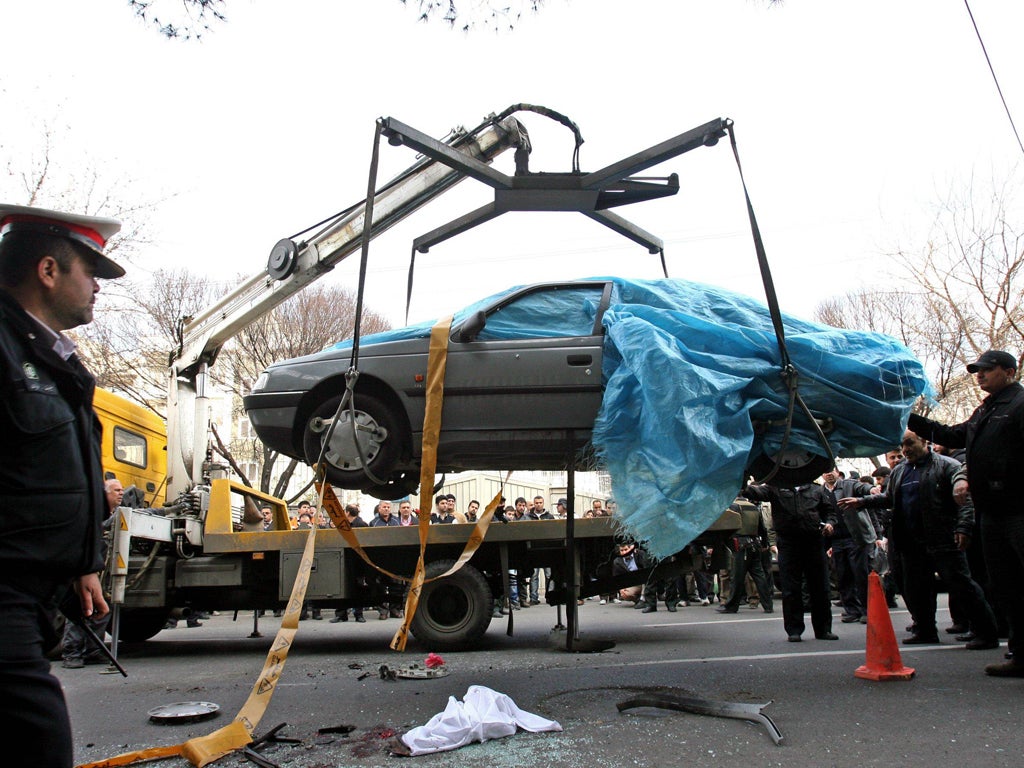
The US Secretary of State, Hillary Clinton, has denied in the most emphatic terms that America had anything to do with the assassination this week of an Iranian nuclear scientist in Tehran. As well she might. It was her husband, after all, who set in stone Jimmy Carter's legislation to forbid US security services from pursuing murder abroad.
George W Bush soon overrode that. But, if you might have expected President Obama's administration and Mrs Clinton to return to more civilised standards, you would be sorely disappointed. The opposite is the case. The retreat from military entanglements has been accompanied by a rise in assassinations, by agents and, of course, by drones.
Killing those you suspect of being engaged in nefarious activities has become not an extreme exception but the norm, whether they are with family, friends or anyone else who just happens to be passing by.
Personally, I believe Mrs Clinton. I don't think the US government participated in the Iranian killing. You don't have to look very far to see who did this, or the three previous assassinations of nuclear experts. Indeed, Israel quite likes to be thought of as a "Terminator", able to kill its enemies wherever they are.
But you would have to be very innocent to believe that the US didn't know of Israel's policy and that its services didn't share intelligence. We seem to have passed from the era of Le Carré spy thrillers, when death and killing were extreme facets of a war of intelligence, to a world when assassination has become simply an acceptable weapon in the armoury of the Western state.
Recently, several senior officials, or former officials, of the CIA have come out in public to accuse their organisation of turning from the gathering of intelligence to the killing of opponents, to the detriment of both the organisation and the country's long-term interest.
What is so depressing about it all is that it is happening because it is convenient. You are struggling in Afghanistan against insurgents supplied from across the border in Pakistan. You can't cross the border because it would be against international law. So you send in unmanned missiles, or helicopter-born troops, to kill individuals whose death, you believe, may hurt the enemy.
Iran, you believe, is developing nuclear capability. You can't do anything to stop it legally so you hope to slow its progress by knocking off its experts. And if Israel does it, you're all the happier. You can always condemn it in principle while applauding it in practice.
And the worst of it is that it is basically directed at the Muslim world, not elsewhere. President Obama may talk of redirecting US sights towards Asia and the rivalry with China. But in the Middle East, even more so with the Arab Spring, US policy remains, as it always has, directed towards exercising influence through military alliance, the support of authoritarian regimes, and intervention in domestic affairs. Yes, assassination has long been part of Middle East politics. Yes, those you kill might have no qualms about doing the same to you. You can argue, as many do, that the so-called "War Against Terror" demands different rules of engagement – that the end does now justify the means.
But there was a time when Western societies believed in, or at least claimed to believe in, different values, in which state murder and the killing of those on the presumption of guilt were regarded as not only outside the law, but outside civilisation.
Looking at the reaction to the assassination of the young Iranian scientist this week – or, rather, the lack of much reaction at all – you have to cry, "What are we coming to?"
The union needs a case
No one has seemed too anxious to point out the obvious, but there is something peculiarly perverse in David Cameron fiercely denouncing any Scottish moves to break up the UK, while half the members of the ruling Tory Party in Parliament are urging the same for the eurozone, if not the EU. What is sauce for the goose is sauce for the gander.
The problem for Cameron, as for Ms Merkel and Nicolas Sarkozy, is not the forces demanding a split, it is their failure to get across the value of association.
If I were a Greek, or even a Spaniard, I would think I would be far better off breaking free, devaluing my currency and fighting for growth on my own than submitting to an endless cycle of expenditure cuts, falling revenues and yet more cuts.
If I were living in Scotland, I would equally think that the nation could manage rather better with North Sea oil revenues and a more cohesive society than remaining part of a country whose economy was as lopsided and politics as feeble as the UK's.
There is a case to be made for unions, not least that the EU makes it possible for Scotland to live within the EU in a way it could not outside. But Cameron and Sarkozy are concentrating their firepower on their opponents, be they Alex Salmond or the markets, rather than making the positive case for keeping together.
Join our commenting forum
Join thought-provoking conversations, follow other Independent readers and see their replies
Comments
Bookmark popover
Removed from bookmarks