Dominic Lawson: Good riddance to the great solar scam
Britain's plunge into this grotesque subsidy has come at a time when other countries have pulled back
When the Confederation of British Industry and the big Trade Unions are in policy agreement, it amounts to reliable circumstantial evidence for taking the opposite view. For example, the employers' organisation and the TUC were both in favour of early British entry into the euro, a powerful establishment consensus which Gordon Brown was wise enough to thwart.
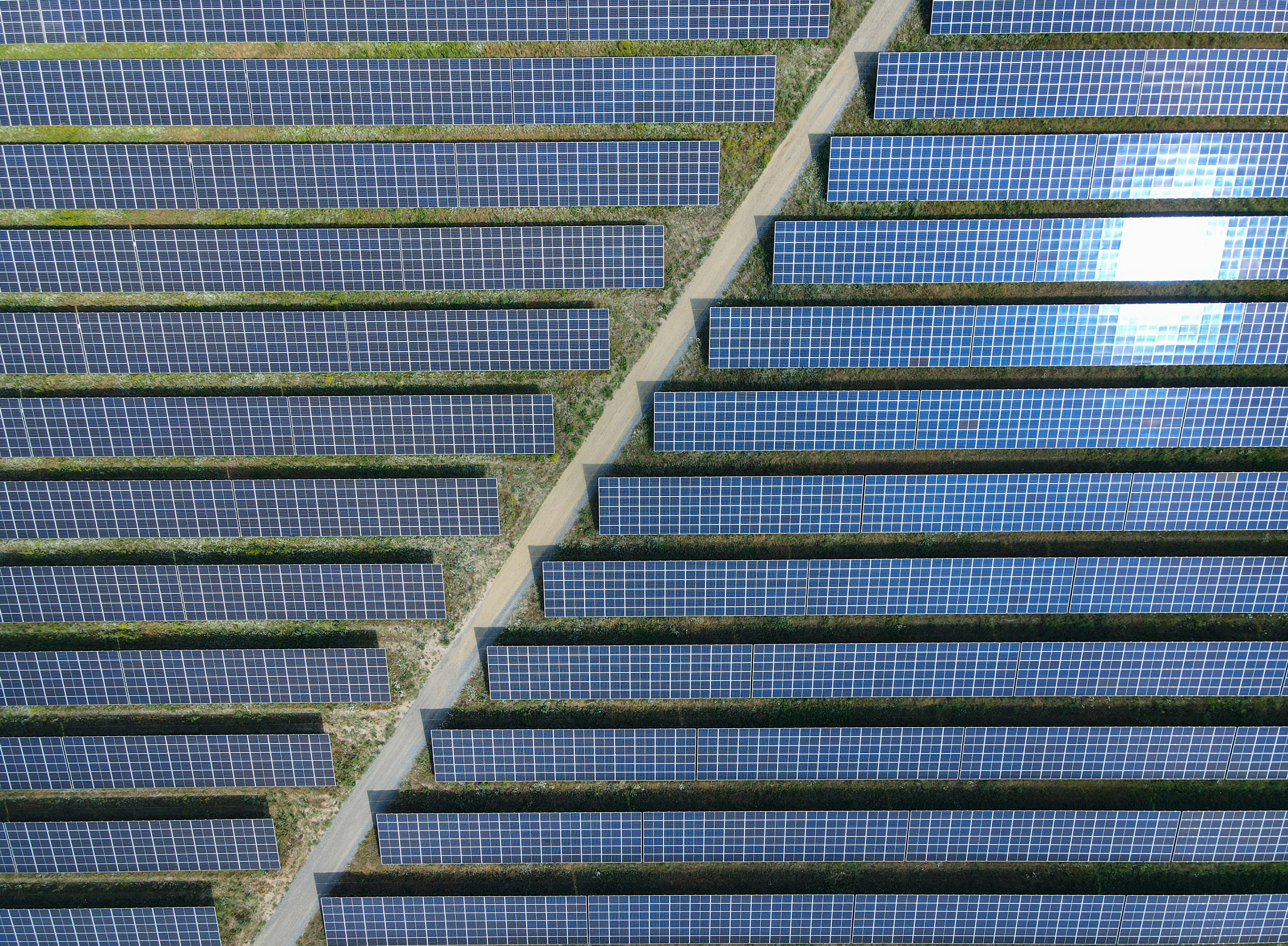
Now the CBI and the trade unions have joined forces again: at the weekend, The Independent on Sunday splashed on a letter signed by both employers and unions protesting that the cut of 50 per cent in the subsidy given to those installing solar panels on their roofs would "strangle at birth Britain's booming solar industry" and would "cost 25,000 jobs". The CBI director-general, John Cridland, described last week's announcement by the Energy Minister Greg Barker as "an own goal".
On the contrary, Mr Barker's decision is one-nil to the public against the forces of corporatism, the conspiracy of big capital and big labour against the consumer. It was an outrage that the scheme was ever implemented in the first place – with the support of all three main political parties. To continue with the football metaphor, let's call them Fools United. Just before it was introduced – appropriately enough on 1 April 2010 – that most analytical environmentalist George Monbiot wrote a devastating critique from the perspective of one completely committed to reduction in carbon emissions.
Monbiot pointed out that while the Government was paying those providing electricity from large wind turbines and hydro plants 4.5p per kilowatt hour, it was offering 41p per kilowatt hour for electricity fed into the grid from solar panels, thus acknowledging that solar photovoltaic panels (PV) required eight times more subsidy than alternative forms of renewable energy. In fact, it appears that the first £8.6bn of such solar panel subsidies would "save" – on the Government's own figures – about 20m tonnes of CO2. This equates to about £430 to "save" one tonne of CO2 – compared with just £8 by building a nuclear power plant to replace energy provided by coal-fired power stations.
For pointing out that nuclear power would be more than 50 times more efficient than domestic solar panels in reducing CO2 emissions, Monbiot was subjected to what he described as "a level of viciousness displayed on comment threads... [that] has to be seen to be believed." I believe you without seeing them, George: I've read some of the stuff that gets appended to this column from on-line readers confronted with an unwelcome fact.
The oddest aspect of the British plunge into grotesque subsidy for solar panels was that both Germany and Spain had only recently pulled back after they discovered just how much such schemes misdirected public funds. The Germans had sunk more than €35bn into solar PV at a similar rate of subsidy to ours, which, after 10 years, managed to supply little more than half of one per cent of the country's electricity: the International Energy Agency estimated it had cost German taxpayers €1,000 to "save" each tonne of CO2.
Germans who owned their own house – and therefore the roof on top – were the grateful recipients of much of this subsidy (along with the companies supplying the panels), notably at the expense of taxpayers without such property assets; exactly the same perverse outcome is taking place here. Even in Spain, where the weather is much more propitious than in northern Europe, the government had retreated, after a solar gold-rush ended with thousands of poorly designed solar plants stretching across empty plateaus, and in the words of a New York Times report: "Spanish officials came to realise that they would have to subsidise many of them indefinitely, and that the industry they had created might never produce efficient green energy."
The USA has also fallen for the great solar confidence trick. Nearly 90 per cent of subsidised federal "clean energy loans" of $16bn have been sucked up by solar, with beneficiaries such as Goldman Sachs, General Electric and even Google (which uses the federal clean energy tax breaks to offset its profits from web advertising). The chief executive of the utility NRG told Wall Street analysts early this year that the government's largesse was a once in a generation opportunity and that "we intend to do as much of this business as we can get our hands on". Business entirely motivated by tax breaks is invariably misdirected, even when it is not straight misappropriation: in September, the US solar energy company Solyndra, which had promised to "create 4,000 new jobs", filed for bankruptcy.
Solyndra was a poster boy for President Obama's economic stimulus, having received a federal loan guarantee of $535m dollars, and visited by the Energy Secretary Steven Chu as a model for "government investment in Green technology". More than a third of the shares in Solyndra were owned by the family trust of George Kaiser, an Obama fundraiser who, it turns out, had made 16 visits to the White House since 2009. Yes, folks, that's corporatism in action.
When the CBI and the GMB protest about the "25,000 jobs" at risk in the British solar-panel trade, instead of joining their protest you should ask yourself what the billions lavished on this subsidy could achieve in long-term economic benefit and employment if directed more rationally at the infrastructure – or even (which would horrify the corporate state) left for us to spend.
Join our commenting forum
Join thought-provoking conversations, follow other Independent readers and see their replies
Comments