Dominic Lawson: If we are all under suspicion, then we are all threatened
People meekly accept official behaviour, even if they might strongly suspect it is the police who are behaving illegally
Even were I to live within walking distance of the Queen's Sandringham estate, it would never occur to me to spend any part of Christmas Day standing outside its church to take photographs of attendant members of the Royal Family. Yet, odd as such behaviour might seem – it's not as if the media don't produce film and pictures from the same event, saving everyone else the trouble – it is about as harmless as anything can be.
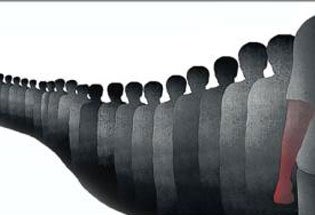
That, however, is not the view of the constabulary, which increasingly sees – or pretends to see – the most innocent acts as pregnant with potential criminality. I realise this attitude is inevitable in an organisation that daily encounters the bleakest aspects of human character, but traditionally the British police have managed this moral challenge without descending into obvious madness. Yet it was a peculiarly modern form of bureaucratic insanity, surely, which compelled the Norfolk Police officers in charge of this annual Christmas spectacle to confiscate the cameras of all the well-wishers lined up outside Sandringham church on Christmas Day.
Over a fortnight later, the security officer responsible for the Royal Family has admitted that the impounding of those ardent Royalists' cameras was "an error" – while pointing out that there are signs on the Sandringham Estate warning visitors that photography is not allowed. Chief Inspector Stuart Offord now explains: "The officer concerned decided the provision was a way to look at the new measures on photography."
Yes, that's what the Chief Inspector said. The provision was a way to look at the new measures on photography. No, I don't have the faintest idea what he meant, either. That's the thing about organisations when embarrassed by some bad publicity: their explanation of their behaviour is usually much harder to understand than the errors they seek to mitigate.
At first I thought that Ch Insp Offord might be referring to a new anti-terrorism law specifically designed to prevent some little old ladies taking a picture of another little old lady. It seems, however, that he was talking about a recent legal warning against paparazzi by the Royal Family's solicitors. Still, we can be forgiven for thinking that this episode was yet another in the series of impertinencies by police officers or special constables against members of the public under the catch-all of "anti-terrorism".
They stem from section 44 of the 2000 Terrorism Act, which designates particular areas as vulnerable, and within those places the police can stop and search whomever they want, even without what is legally termed "suspicion". As the Metropolitan Police's website helpfully explains: "Officers have the power to stop and search a person who they reasonably suspect to be a terrorist."
Thus, last year, police officers must presumably have thought they had reason to suspect that Alex Turner, taking pictures of a fish and chip shop in Chatham called Mick's Plaice, was in fact a terrorist. Chatham no longer has its dockyard, or indeed any army barracks... but that didn't stop two officers from stopping him taking his fishy snaps; and when Mr Turner – quite rightly, in my view – questioned their authority to stop him, he was arrested, held handcuffed in a police van, searched. and interviewed by two plain-clothes officers.
This is the most unpleasant aspect of such encounters, as most of us will intuitively realise: if the innocent citizen reacts with the outrage of the genuinely guiltless, the officers involved may well take a special pleasure in humiliating him – and it is this which makes most people meekly accept official behaviour, even if they might strongly suspect it is the police who are behaving illegally.
Thus, though the 2000 Terrorism Act gives the authorities no power, without a warrant, to make people delete the film in their camera, there are a number of well-attested cases of this. Last year an Austrian father and son, Klaus and Loris Matzka, were forced by two policemen to delete pictures they had taken of red double-decker buses in Walthamstow. Given their national provenance, it would have been a delightful irony if Klaus Matzka had accused the police officers concerned of being "Little Hitlers"; but instead he contented himself with observing: "I've never had these experiences anywhere, never in the world, not even in Communist countries."
As Mr Matzka also pointed out: "Google Street View is allowed to show any details of cities on the worldwide web." This is the biggest idiocy of all: do police officers really believe that al-Qa'ida needs to recruit tourists to get the film they need of London buses, or of any other landmarks? If any such terrorist group wanted, for example, to see exactly how to get around the Palace of Westminster, they merely need to log on to its official website, where they can view a very impressive "virtual tour" of its interior, including various offices.
Besides which, if the officers who stop such types as the Matzkas from filming truly suspected them of acting with terrorist intent, then why did they merely delete their film and send them on their way? Surely they should have taken them down to the cells, and questioned them (without charge) for up to 48 days; who knows, they might have cracked and revealed an entire network of Austrian bus-spotters all in the pay of Osama bin Laden. After all, they can not have become less suspicious characters simply minus the sinister film of red buses in their cameras.
Or is it – and I say this without knowing the characters who apprehended the unfortunate Austrian tourists – that these cases are actually the result not of pressure on police officers from terrorism, but the absence of such pressure?
To put it another way, some officers are perhaps a little bored with the mundane aspect of their work, and wish to inject a bit of James Bond glamour into the daily grind of dealing with the usual drunks and layabouts. What's certain is that if such constables on the street were really overwhelmed with the burden of dealing with genuine terrorist threats, they would have neither the time nor the inclination to behave as they did.
This is the background which makes the way in which a Nigerian man was able to detonate an explosive on a transatlantic flight all the more irritating – and it would have been vastly more than irritating if Mr Abdulmutallab's home-made bomb had ignited as he intended. It turns out that, following an explicit warning by his father to the US authorities about his "extreme" political views, Abdulmutallab's name had been put on a security watch list, known as Terrorist Identities Datamart Environment (Tide). Now, guess how many names are on this list. A thousand? Ten thousand? No, this list, according to Washington officials, contains more than half-a-million names.
So no wonder Abdulmutallab was not subject to any special concerns by officials as he boarded Northwest Airlines Flight 253 on Christmas Day. If, through sheer bureaucratic over-enthusiasm the authorities have managed to create a list of over half-a-million possible terrorists (perhaps including a handful of Austrian bus-spotters) they might as well have an invisible list with no names, for all the use it will be.
If we are almost all potential terrorists, then we have entered a world of such morbid suspiciousness that none of us can feel safe: exactly the inverse of what our masters' policies are supposedly designed to achieve.
Join our commenting forum
Join thought-provoking conversations, follow other Independent readers and see their replies
Comments