Hamish McRae: A sweet deal – or a takeover that is hard to swallow?
It is hard to argue that chocolate is an issue of strategic national interest
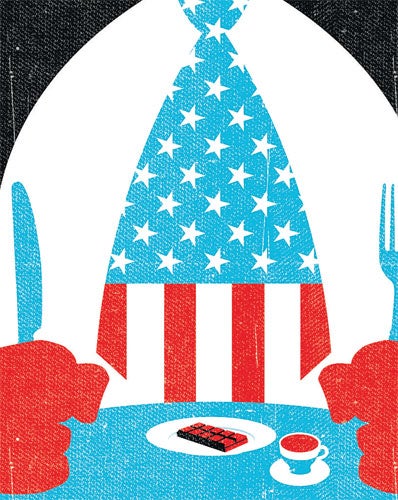
We know deep down, don't we, that the Kraft takeover of Cadbury will end in tears. Investors will get their money and be able to reinvest that in other British businesses, and that is good. But as for Cadbury itself... well, it is hard to see Kraft being a wise custodian of the Cadbury empire, either from the perspective of the Cadbury people here or from the perspective of the future of the global brands the group has developed.
And that leads into the huge debate as to whether we in the UK are right to have become so open to foreign takeovers. Are we really winners from globalisation, of which cross-border takeovers are a key element? Or are we mugs? Anyone who believes that globalisation does on balance bring huge benefits, as I do, has at least to answer this charge.
Start with the deal itself. There are two central questions. One is whether there is a fundamental synergy between a food business and a confectionery business: does this takeover make commercial sense? The other is whether over the years Cadbury has been a good manager of the business and therefore more likely on balance to run it to the benefit of all the people involved, including its workers but also its suppliers, customers and shareholders.
On the first you might imagine that there must be a synergy: you have your sausage and tomato rigatoni (that was the Kraft Foods recipe of the day on their website yesterday) and then you have your creme eggs or whatever to finish up the meal. But the world is not so neat. Cadbury itself has demonstrated that there is really no link between confectionery and soft drinks, for it merged with Schweppes in 1969 only to sell it off, along with other soft drinks brands acquired along the way, in 2008 – by which stage it had become known as the Dr Pepper Snapple Group Inc.. We may like to think of the company as still the Quaker family business that built the model town of Bournville for its workers but actually it is a global conglomerate of different confectionery brands.
But what about Kraft, which most of us think of as producing nasty processed cheese? It is still basically a food business, but one with global reach. It has owned Suchard, as in Toblerone, for more than 20 years and more recently took over the French brand Danone. Less successfully it was itself taken over by the tobacco giant Philip Morris in 1988, and was only finally spun off as an independent company three years ago when it became clear that the investors that wanted to own a food company had rather different objectives from those that wanted to own a tobacco one.
So you see the point. We have in our minds the embedded notion of Cadbury as a British chocolate company with a strong ethical tradition and Kraft as a fast-driving American cheese firm, once family-owned but now more of a ruthless driving conglomerate. But the reality in both cases is rather different. Both are global conglomerates. And both are owners of a whole range of food- related brands that have been pieced together and taken apart over the years. Companies produce all sorts of arguments about the synergies between their businesses but actually the main thing in common between Cadbury, Kraft (and indeed Philip Morris) is that they produce something people stick in their mouths.
The issue, then, is who might be the better manager of these brands. Here the response must be subjective. My own impression is that Cadbury has in the past been a company without a sufficiently clear objective; it became a hodge-podge of brands rather living on its reputation. But in recent years it has lifted its game and is currently well-managed.
Kraft has had only three years since it fully emerged from the Philip Morris umbrella and has yet to prove itself. I hope I am wrong in my instinct that it will make a mess of this purchase. The one really big lesson of all giant cross-border takeovers is that it is very hard to predict whether they will succeed. BMW ought surely to have been able to make a success of its takeover of Rover, just as Daimler-Benz should have succeeded at Chrysler. Both failed.
So the jury is out on this deal, and will remain out for some years. What about the wider principle? Are we selling the family silver? Well it is hard to argue that chocolate is an issue of national strategic interest. It is a big British employer, to be sure but more than 80 per cent of the company's workers are overseas.
Confectionery is an industry where the UK may have some sort of competitive advantage but it is a mature business and there are reasonable concerns about the health implications of the product. I don't think it is quite in the position of tobacco 30 years ago but it is an industry that may well find itself on the wrong side of social change. Both processed food and confectionery are huge businesses but they are hardly likely to be fast-growing ones. There is, despite all efforts to demonstrate the opposite, only a certain amount of chocolate people can eat. Moreover the margins in the future will surely be at the top end of the business, not the mass market end that Cadbury dominates.
There are some industries where you can argue national strategic interest. I happen to think it was a disaster that a Spanish construction company was allowed to take over the main British airports. Heathrow may not have been very well run under the previous management but it was not quite the catastrophe it subsequently became. It is will be interesting to see if the new owners of Gatwick do any better. Most of us too would be very worried were Rolls-Royce aero engines to come under foreign control and I personally feel twitchy at having so much of our electricity generation owned by foreign companies. But chocolate? Surely it is hard to get too worked up about that.
Then there is the general point. The UK is a huge earner of revenue from the companies we own abroad. If you look at the net income on direct investment – that is, income from overseas plants and subsidiaries of British companies, minus the income we pay out for foreign-owned plants and subsidiaries here – the surplus in 2008 was nearly £60bin. That is huge. Our trade deficit that year was £93bn. So the income from these direct investments abroad covers two-thirds of our trade deficit.
I find those figures stunning – and all the more stunning because hardly anyone seems to know them. (If you are interested, this is all in the Balance of Payments "Pink Book" published each summer by the Office of National Statistics.) We think of Britain as being the land where everything is for sale and being snapped up by foreigners but actually we earn a huge surplus on our investments abroad. We would be real trouble if we did not have them.
Nevertheless there are some troubling issues raised by the Cadbury tale. One is why families that have built up businesses feel the need to sell them. It is all very well for a scion of the Cadbury family to rage against the "asset-strippers" taking the business over. But the Cadbury family lost control years ago. That happens to many family businesses here, whereas in Germany for example, middle-sized family businesses carry on for generations.
A second issue is whether we are creating enough new businesses, and if not, why not? And a third is whether the ethical values of those great Victorian family businesses, including Cadbury, are reflected in British commerce now. I wish I were more confident that they were.
Join our commenting forum
Join thought-provoking conversations, follow other Independent readers and see their replies
Comments
Bookmark popover
Removed from bookmarks