Henry Kissinger: The world must forge a new order or retreat to chaos
Not since JFK has there been such a reservoir of expectations
As the new US administration prepares to take office amid grave financial and international crises, it may seem counterintuitive to argue that the very unsettled nature of the international system generates a unique opportunity for creative diplomacy.
That opportunity involves a seeming contradiction. On one level, the financial collapse represents a major blow to the standing of the United States. While American political judgments have often proved controversial, the American prescription for a world financial order has generally been unchallenged. Now disillusionment with the United States' management of it is widespread.
At the same time, the magnitude of the debacle makes it impossible for the rest of the world to shelter any longer behind American predominance or American failings. Every country will have to reassess its own contribution to the prevailing crisis. Each will seek to make itself independent, to the greatest possible degree, of the conditions that produced the collapse; at the same time, each will be obliged to face the reality that its dilemmas can be mastered only by common action.
Even the most affluent countries will confront shrinking resources. Each will have to redefine its national priorities. An international order will emerge if a system of compatible priorities comes into being. It will fragment disastrously if the various priorities cannot be reconciled.
The nadir of the international financial system coincides with simultaneous political crises around the globe. Never have so many transformations occurred at the same time in so many different parts of the world and been made accessible via instantaneous communication. The alternative to a new international order is chaos.
The financial and political crises are, in fact, closely related partly because, during the period of economic exuberance, a gap had opened up between the economic and the political organisation of the world. The economic world has been globalised. Its institutions have a global reach and have operated by maxims that assumed a self-regulating global market. The financial collapse exposed the mirage. It made evident the absence of global institutions to cushion the shock and to reverse the trend. Inevitably, when the affected publics turned to their political institutions, these were driven principally by domestic politics, not considerations of world order. Every major country has attempted to solve its immediate problems essentially on its own and to defer common action to a later, less crisis-driven point.
So-called rescue packages have emerged on a piecemeal national basis, generally by substituting seemingly unlimited governmental credit for the domestic credit that produced the debacle in the first place, so far without achieving more than stemming incipient panic. International order will not come about either in the political or economic field until there emerge general rules toward which countries can orient themselves.
In the end, the political and economic systems can be harmonised in only one of two ways: by creating an international political regulatory system with the same reach as that of the economic world; or by shrinking the economic units to a size manageable by existing political structures, which is likely to lead to a new mercantilism, perhaps of regional units. A new Bretton Woods kind of global agreement is by far the preferable outcome.
America's role in this enterprise will be decisive. Paradoxically, American influence will be great in proportion to the modesty in our conduct; we need to modify the righteousness that has characterised too many American attitudes, especially since the collapse of the Soviet Union. That event and the subsequent period of nearly uninterrupted global growth induced too many to equate world order with the acceptance of American designs, including our domestic preferences. The result was a certain inherent unilateralism – the standard complaint of European critics – or else an insistent kind of consultation by which nations were invited to prove their fitness to enter the international system by conforming to American prescriptions.
Not since the inauguration of president John F Kennedy half a century ago has a new administration come into office with such a reservoir of expectations. It is unprecedented that all the principal actors on the world stage are avowing their desire to undertake the transformations imposed on them by the world crisis in collaboration with the United States.
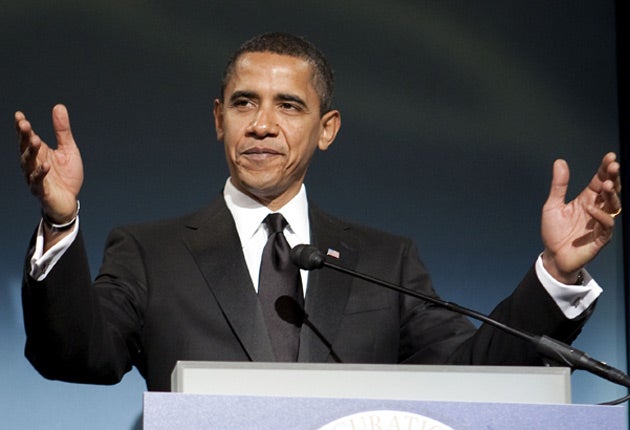
The extraordinary impact of the President-elect on the imagination of humanity is an important element in shaping a new world order. But it defines an opportunity, not a policy. The ultimate challenge is to shape the common concern of most countries and all major ones regarding the economic crisis, together with a common fear of jihadist terrorism, into a strategy reinforced by the realisation that the new issues like proliferation, energy and climate change permit no national or regional solution.
The new administration could make no worse mistake than to rest on its initial popularity. The role of China in a new world order is crucial. A relationship that started on both sides as essentially a strategic design to constrain a common adversary has evolved over the decades into a pillar of the international system. China made possible the American consumption splurge by buying American debt; America helped the modernisation of the Chinese economy by opening its markets to Chinese goods.
Each side of the Pacific needs the cooperation of the other in addressing the consequences of the financial crisis. Now that the global financial collapse has devastated Chinese export markets, China is emphasising infrastructure development and domestic consumption. It will not be easy to shift gears rapidly, and the Chinese growth rate may fall temporarily below the 7.5 per cent that Chinese experts define as the line that challenges political stability.
What kind of global economic order arises will depend importantly on how China and America deal with each other over the next few years. A frustrated China may take another look at an exclusive regional Asian structure, for which the nucleus already exists in the ASEAN-plus-three concept. At the same time, if protectionism grows in America or if China comes to be seen as a long-term adversary, a self-fulfilling prophecy may blight the prospects of global order. Such a return to mercantilism and 19th-century diplomacy would divide the world into competing regional units with dangerous long-term consequences.
The Sino-American relationship needs to be taken to a new level. This generation of leaders has the opportunity to shape relations into a design for a common destiny, much as was done with trans-Atlantic relations in the postwar period – except that the challenges now are more political and economic than military.
The complexity of the emerging world requires from America a more historical approach than the insistence that every problem has a final solution expressible in programmes with specific time limits not infrequently geared to our political process. We must learn to operate within the attainable and be prepared to pursue ultimate ends by the accumulation of nuance. An international order can be permanent only if its participants have a share not only in building but also in securing it. In this manner, America and its potential partners have a unique opportunity to transform a moment of crisis into a vision of hope.
The author was National Security Adviser, 1969-75 and US Secretary of State, 1973-77.
© 2009 Distributed by Tribune Media Services, Inc.
Join our commenting forum
Join thought-provoking conversations, follow other Independent readers and see their replies
Comments