Mary Dejevsky: It will be our fault if Egypt's revolution is lost
World View

As the caravan celebrating one year of the Arab Spring moves on from Tunisia to Egypt, the mood in the West, at least, is one of remembered joy and present relief. Remembered joy as the tumultuous scenes from 2011 roll again across our television screens; relief that elections are being held, mostly in good order, and that nothing has so far significantly reversed the gains made.
With Egypt, though, those gains are in imminent jeopardy, and not primarily because Islamic parties – Freedom and Justice, the political wing of the Muslim Brotherhood, and the Salafi Nour – have won between them more than 60 per cent of the new parliamentary seats. These parties should be judged by what they do with their new-found authority, not by Western trepidation about Islam. No, the more immediate and destructive threat to Egypt's revolution is economic.
On holiday in northern Egypt last week, I saw close-up the catastrophic state of the country's tourist sector, and how far international trade and business have languished. Cairo's two-year-old international air terminal echoes with silence. The crowds of last year can barely be imagined. I dare not even guess at the occupancy rate in the international-standard hotels. The number of tables with anyone sitting at them could be counted on one hand. Even the local wedding reception booked into one hotel would have come nowhere near making up the shortfall.
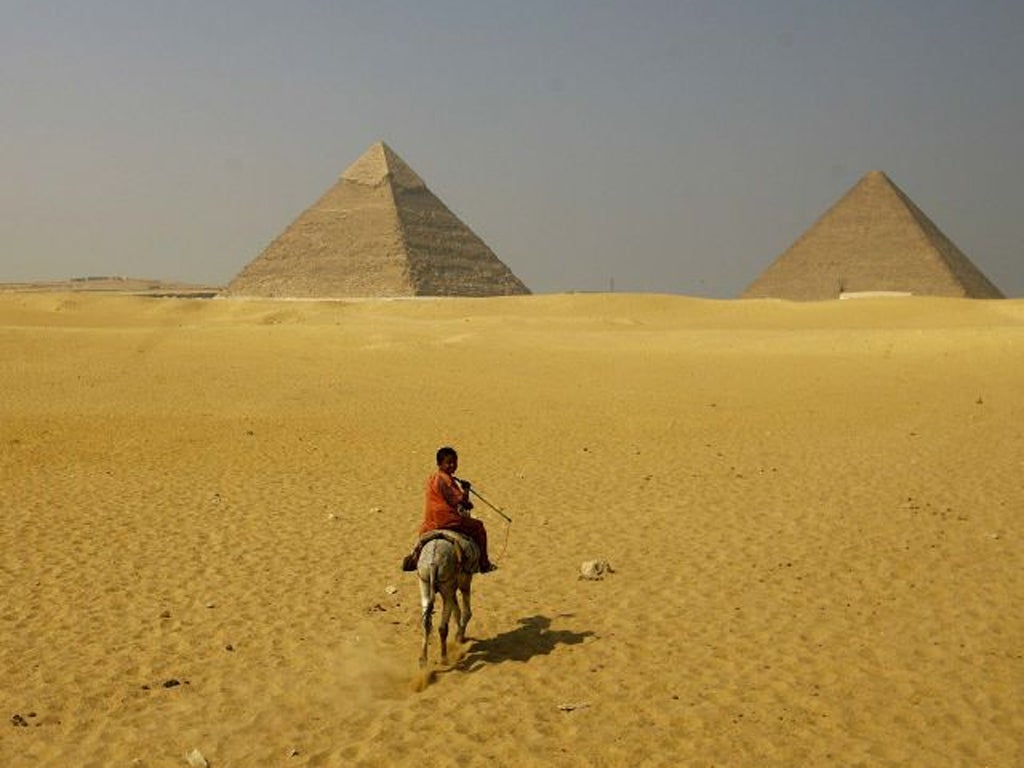
The yawning emptiness almost everywhere related to tourism reminded me of nothing more than Beijing in the wake of Tiananmen Square – where, unlike here, the void was deserved. If you want to see the Pyramids, go now; you won't be hassled by hawkers; most have accepted the hopelessness of even trying to drum up trade.
Now it is true that Cairo, for obvious reasons, has been worse affected by the collapse of tourism than the Nile Valley or the Red Sea resorts. And the confrontation in Tahrir Square in mid-December hardly helped. So the reality may be slightly less grim than it looked. But official figures tell their own story. In 2010, tourism accounted for 11 per cent of Egypt's GDP; receipts have halved over the past year, even as foreign investment plunged and other inflows became outflows.
The result is a halving of the country's foreign exchange reserves over the past year and the possibility that they could run out completely by April or May – just as the military is supposed to give up power. And the sad truth is that the outside world, which was so quick to hail the overthrow of Egypt's old regime, has been scandalously slow to help redress the negative economic consequences of political disruption. It is a reluctance that has only been compounded by divisions within Egypt's leadership about accepting foreign cash.
In one sense, this could be a merciful deliverance, if it has spared Egypt the armies of fast-talking, free-marketeering consultants who ruled the corridors of power in Russia after communism fell, or the juvenile MBAs who swarmed around Ukraine after the Orange revolution. As in many other places around the world, they were more of a liability than an asset; the transferability of their experience, if they had any, left much to be desired.
Yet there is something patently unjust – as well as shortsighted – about the lack of engagement with the new Egypt on the part of those countries and institutions that supported Mubarak for so long. Nor should it have to be the sort of financial engagement that stores up future debt. There must be something between the diplomatic and economic isolation into which Egypt risks falling, and unwanted and incompetent interference.
Of course, tourists cannot be conscripted into visiting places where they worry about safety, just as businesspeople – except for the most free-booting variety – will eschew places they judge unstable. But the gaps that then open up threaten even greater instability, as jobs, opportunities for casual earnings and other prospects evaporate.
It is not hard to believe that Egypt today is teetering on the edge of something deeply undesirable, whether it is bankruptcy, violent unrest, Islamic fundamentalism or, indeed, all-out military rule. The popular appeal of order, even repressive order, should never be underestimated when chaos seems the only alternative.
Egypt is a big country, with 85 million people, two thirds of them under 30, and vast infrastructure and educational needs (the rate of illiteracy is 40 per cent). Yet economic growth in the past year has slowed from 5 per cent to 1.6 per cent (and even that seems hardly credible).
Belatedly, both the outside world's indifference and Egypt's proud self-reliance may be changing. Financial help from Saudi Arabia has not materialised, but last week found the US deputy secretary of state and that one-man diplomatic institution, Jimmy Carter, both in Cairo. An IMF delegation followed, amid talk of (all-too-modest) assistance to stave off a currency crisis, while the European Bank for Reconstruction and Development – which did well in the post-Soviet countries – is also working on ways to help.
This sudden flurry of activity may reflect the mutual recognition that Egypt needs help and needs it fast. I hope that is what it means. But I also fear that it could be too late.
Join our commenting forum
Join thought-provoking conversations, follow other Independent readers and see their replies
Comments
Bookmark popover
Removed from bookmarks