Steve Richards: Elected mayors are a great way to return power to the people
Local government became moribund in the 1980s and has never recovered

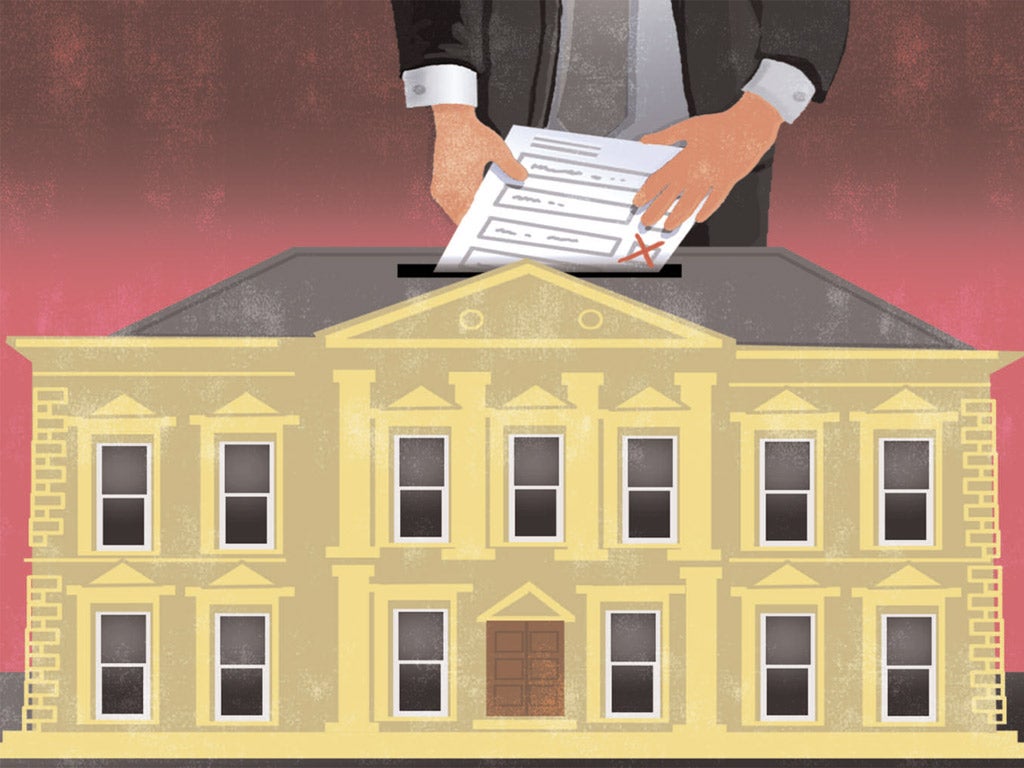
The Government is almost going full speed ahead with the introduction of mayors to run our cities. Excuse the qualification, but the Liberal Democrats are still wary, the Communities Secretary, Eric Pickles, has his doubts and he is by no means alone in the Conservative Party. Referendums on the principle must still be won so heading at almost full speed does not mean the destination will be reached. Nonetheless, the Cities Minister, Greg Clark, has given the struggling cause a boost. If voters support the principle in May, he has announced there will be mayoral elections in Britain's biggest cities outside London in November.
In theory, the speed of the sequence should be welcomed across the political spectrum and especially in the Coalition, where both parties regard a redistribution of power from the centre as a defining mission. In some policy areas, particularly in relation to public service reform, their apparent transfer of power from state to citizen will prove illusory and will leave most citizens even more powerless. But if most cities elect mayors, the redistribution of power will be real, as significant as the devolution of powers to Scotland, Wales, Northern Ireland and London, and in some ways more so.
In British politics, accountability takes a single form. When a powerful figure is in the public eye, he or she is held to account, largely by the media but also by voters who, even if largely indifferent to politics, keep half a watch on prominent individuals. This may not be the purest form of accountability but it is the only form we have, which is why national politicians are kept on their toes, while other powerful figures are allowed to get way with a lot because they are not especially well known. Senior bankers, top civil servants, the multi-millionaires who run the energy and train companies, all operate without much scrutiny. Council leaders are also on the list. Most people would struggle to name their council leader. As a result, scrutiny is not as intense as it should be.
In striking contrast, the Mayor of London is better known than most cabinet ministers. Such prominence has, at times, worked to Boris Johnson's advantage. Being a personality has got him a long way and might propel him to victory this May. But recent polls suggest that his opponent, Ken Livingstone, is ahead. This was not meant to happen. Before Christmas, the media narrative was in place: a triumph for Boris, humiliation for Ken and a crisis for Ed Miliband. Perhaps this will still be the story that unfolds, but I would not bet on it. A majority in London voted Labour in the 2010 general election and, if they did so then, they could do so again as George Osborne's inept economic policies make their mark. But the reason why there appears to be a shift of support towards Livingstone is that Tube fares are high and the service remains poor. Voters make connections when a mayor rules. They know who is in charge. Johnson has a point in arguing that the exorbitant fares pay for urgent investment in the Underground, but he will have to make that case with forensic force over the next few months to stand a chance, while Livingstone will have to prove his alternative sums are credible. The mayoral contest gives life to a city's democracy and makes a direct impact on lives in a way that voters can recognise. This is wholly positive.
A whole series of Conservative former cabinet ministers from the 1980s acknowledge that the abolition of the old Greater London Council in the 1980s was a big mistake. In this area at least, Cameron does not follow Margaret Thatcher. Mayors would mark a very big break with the 1980s, where anonymous urban development corporations accountable to the Environment Secretary in Whitehall were given the remit to revive inner cities.
The 1980s is part of the context that makes mayors more urgently necessary now. Local government became moribund then and has never recovered. Livingstone once noted that anyone who wanted to be a councillor in the 1980s needed psychiatric help. He was joking, but if that generation of councillors were not all bonkers they were not the greatest talents, either. Why would ambitious figures head for an institution being cut to bits? Fearing mediocre councillors, or ones in need of psychiatric help, Tony Blair expressed his ambiguity by telling a local government conference in 1996: "We will give you more powers as long as you use those powers responsibly." He omitted to outline who would judge what was responsible.
Labour preferred regional development agencies over which it could retain control. The introduction of city academies was another sweeping act of centralisation, taking power from local authorities and transferring it to the Department of Education. Local authorities used to build affordable homes and run schools. They do little of either now. Central government or private contractors responsible for local services hold sway. Local government is much weaker in the UK than in most equivalent economies in Europe.
Yet ambiguity within government allows for more than one point of view. There has always been a view from some influential figures in successive administrations that the imbalance is deeply damaging. When he was in No 10 working for Blair, David Miliband wrote a powerfully argued paper calling for cities to become powerful municipal forces once more, citing the impact of Joseph Chamberlain on Birmingham. Michael Heseltine has spoken in the same way recently as he has urged swifter action on the mayoral front. Miliband's successor in No 10, Andrew Adonis, was another big advocate of mayors. He should have been knocking at an open door as the idea was Tony Blair's in the first place.
So why is there so much resistance? Above all, much of the centre shares Blair's ambiguity about ceding power. In this case, Eric Pickles wonders fearfully whether voters in the northern cities will have the temerity to elect Labour mayors, creating a new stage for the party, as Labour did for the Scottish National Party in Scotland. The Treasury frets about losing control of how money is spent. Mayors are the only way of reviving local government in the cities, but it is the very fear of such a revival that makes much of the centre nervous.
Cameron should press on. If he is serious about redistributing power, this is one of the only ways of doing it.
Join our commenting forum
Join thought-provoking conversations, follow other Independent readers and see their replies
Comments