Small debts, low prices, more fans: here come the Germans
Sound finances and retaining talent have made the Bundesliga Europe's powerhouse

Sign up to Miguel Delaney’s Reading the Game newsletter sent straight to your inbox for free
Sign up to Miguel’s Delaney’s free weekly newsletter
It was a bloody awful party. Even the host, Bayern Munich's managing director, Karl-Heinz Rummenigge, said he would rather not be there. The cameras at the Postpalast conference centre on the night of 19 May this year lingered on Arjen Robben. The Dutchman was slumped in a chair staring into the middle distance, not even looking at his wife. The glasses on his table were all empty; not because the players were drunk but because nobody felt like drinking.
Bayern Munich had scheduled their party for a few hours after what they expected to be the lifting of their fifth European Cup and their first since 2001. Chelsea had snatched their destiny from them in their own stadium. It was wrong to call it a wake because wakes are full of memories and laughter. There was none. Just the president, Uli Hoeness, reminding his audience: "We all laughed at Bayer Leverkusen when they blew the Treble a decade ago. Now you know what it's like." The Bundesliga, said Rummenigge, had blown it.
The Bundesliga have not blown it so far this season. All three German clubs qualified as group winners for Thursday's Champions' League draw, which pitted Bayern Munich against another London club, Arsenal. The celebrations may only have been delayed.
The Bundesliga enjoy the largest football economy in the world. There were more of their players in the last World Cup than from any other league. They carry less debt, produce more profit, their stadiums are fuller and their ticket prices lower than in any other major league – an average of €19 (£15) compared to £41 for the Premier League.
Before Borussia Dortmund faced Manchester City in October the club's managing director, Hans-Joachim Watzke, who had reduced their debt from £116 million to £9m and bought back the giant Westfalonstadion from creditors, remarked that if City's owner, Sheikh Mansour, wanted to invest in Dortmund, he would refuse to meet him. "We want to keep our soul," he said.
When you look at the figures, it is easy to gauge Watzke's contempt. Manchester City, Paris St-Germain, Chelsea and Zenit St Petersburg, the four great oligarch clubs, have a net spend of around £800m on players over the past three years. Dortmund's is £1.6m.
Keeping Dortmund's soul meant keeping their players, something Bundesliga teams had found difficult before a £2bn TV deal. This month's 1-1 draw between Dortmund and Bayern Munich was screened in 203 countries.
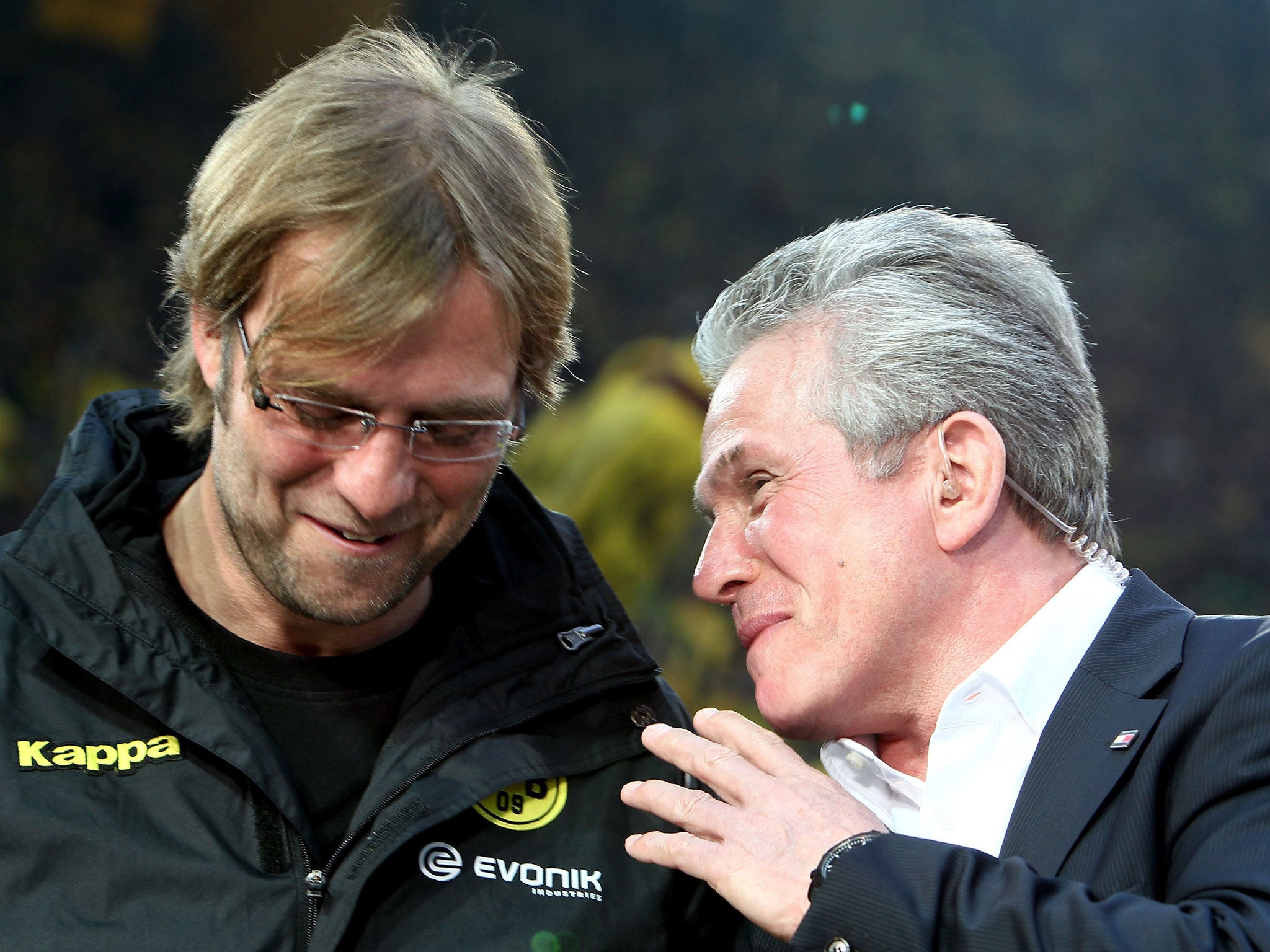
The loss of players such as Mesut Özil, Sami Khedira and Nuri Sahin, the jewels of a radical youth policy imposed on the Bundesliga by the German FA after the embarrassment of finishing last in their group at Euro 2000, is slowing down. When Jürgen Klopp took over as manager at Dortmund in May 2008, Sahin, who had made his debut as a 16-year-old, was his most precious asset. When the player demanded to fulfil a dream, one that swiftly rusted, of playing in the Bernabeu, Klopp felt unable to refuse. Shinji Kagawa left for Old Trafford but Dortmund were able to use the money to bring in Marco Reus from Borussia Mönchengladbach. And despite enormous pressure, they clung on to Mario Gotze.
"There are only a few clubs who can now match our package of aura, title chances and salary," said Klopp. "Manchester City might be able to pay €11m [£9m] per annum. In Russia you can earn crazy money but you'll have to travel 800km to a derby. From Dortmund, there are only five clubs that might attract you." He said Barcelona was a good club to go to. "It's a lovely city," he smiled. "Or so they tell me."
Once that grim party at the Postpalast was done and dusted, Bayern Munich began the recovery. The club's motto is "Mia san mia", which in the Bavarian dialect means "We are who we are". It is rather like the Millwall chant of "No one likes us, we don't care" but with rather more money attached.
For the past 19 seasons Bayern have turned in a profit. Their commercial income last year was £140m, a figure matched only by Real Madrid, and Hoeness decided it was time to spend some of it. They outbid Manchester City for Athletic Bilbao's Javi Martinez and tied Thomas Müller to a long-term contract.
Nobody expected the survival of Jupp Heynckes, the Bayern manager who might have delivered the Bundesliga, the German Cup and the European Cup last season but finished with nothing. The 67-year-old talked fondly of going back to his farm and of missing the long walks with his sheepdog Cando. Apart from Angela Merkel's lot, Heynckes said that managing Bayern was the hardest job in Germany. "You can't enjoy it. You live from game to game." Despite Heynckes insisting he would retire next June, he was kept on.
Sir Alex Ferguson has always admired Bayern's policy of relying on a core group who grew up with the club: Hoeness, Rummenigge and Franz Beckenbauer. Manchester United, he argued, should do something similar, but they have never got past appointing Sir Bobby Charlton and Bryan Robson as "ambassadors".
Heynckes was part of that group. Hoeness thought the decision to sack him as manager in 1991 was the worst he had ever taken, so this time around he stayed and thrived. Bayern have gone into the German winter break nine points clear and with a goal difference of plus 37.
The challenge for the Bundesliga is the same one that faces Joachim Löw's glitteringly youthful national side. There have been plenty of plaudits but little of the silverware carried off by earlier, more functional teams. The platform is there. All they have to do is win.
Subscribe to Independent Premium to bookmark this article
Want to bookmark your favourite articles and stories to read or reference later? Start your Independent Premium subscription today.
Join our commenting forum
Join thought-provoking conversations, follow other Independent readers and see their replies