Paulo Sousa: the forgotten man of the Swansea story
The Swans take on Arsenal in the FA Cup tonight in high spirits

Sign up to Miguel Delaney’s Reading the Game newsletter sent straight to your inbox for free
Sign up to Miguel’s Delaney’s free weekly newsletter
Swansea’s remarkable success this season has drawn acclaim and admiration from all sections of the football community. While Michu’s goalscoring exploits take centre stage, and their unexpected progress in all three major domestic competitions continues unabated, Michael Laudrup is establishing for himself a place alongside Brendan Rodgers, and Roberto Martinez before him, in the esteemed managerial lineage of 21st-century Swansea.
The fairytale narrative of a fallen giant, a once title-challenging side consigned to the fourth tier of the football league, only to dust itself down and return to the higher echelons of the beautiful game leaves football purists purring. Neglected in this now well-told tale is the role of Paulo Sousa, the forgotten man of the Welsh club’s resurgence.
Laudrup is believed to have inherited a footballing philosophy which runs directly from Martinez, through Rodgers to the present day. Sousa’s year in charge is for the most part overlooked, erased almost, but his involvement, and his ensuing fall from grace, is an intriguing episode of the Swans’ rise to prominence.
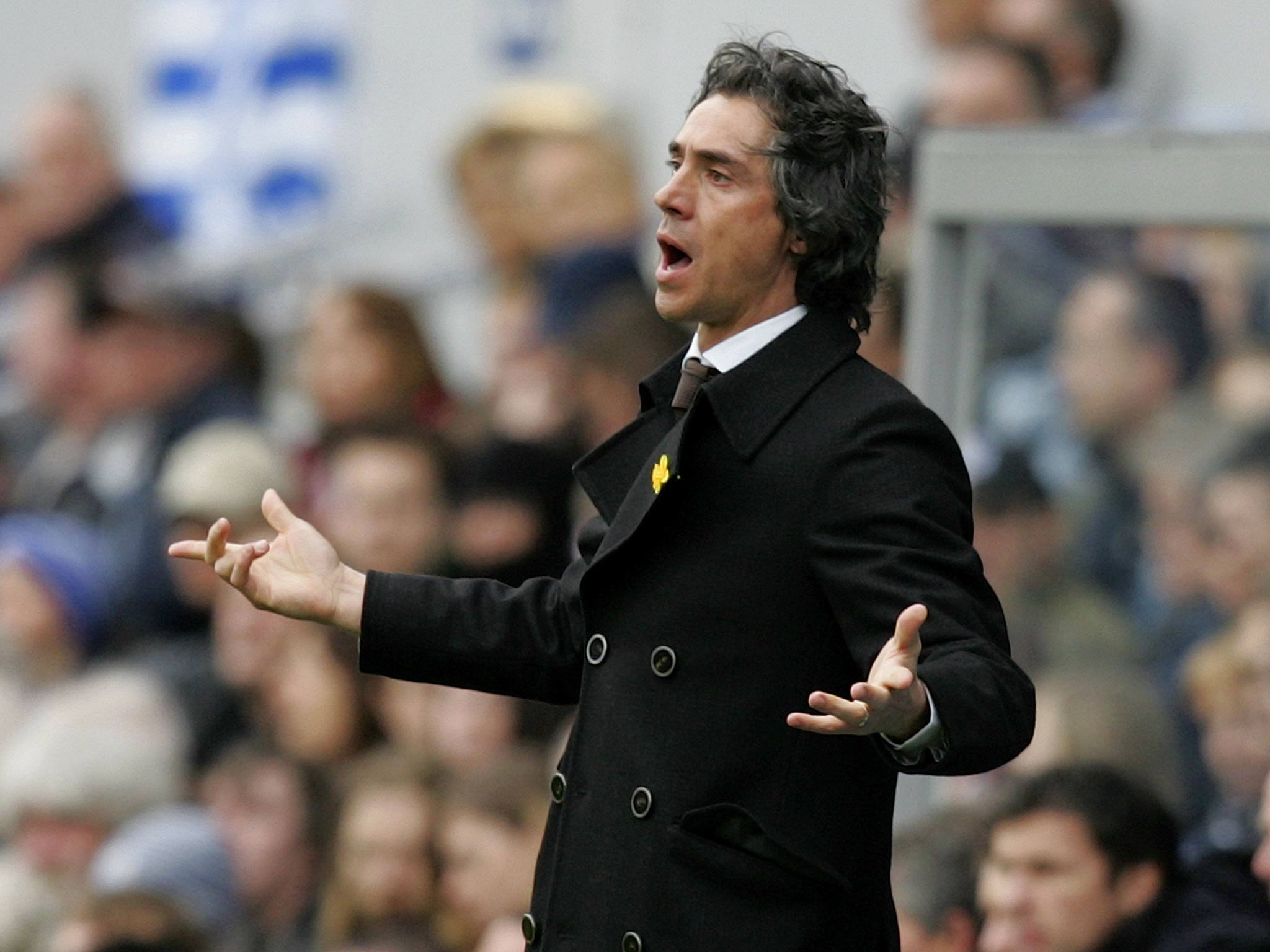
The Portuguese manager took charge at the Liberty Stadium in June 2009, succeeding Martinez, who had taken the top job at Wigan that summer. Sousa’s limited experience to that point had seen the two-time Champions League winner spend a turbulent 26-game period as QPR boss, where he was sacked after falling out with chairman Flavio Briatore over the club’s transfer dealings.
Despite the inglorious five months spent at Loftus Road, which saw just seven league victories, Sousa maintained a good reputation following an earlier spell as assistant first-team coach to Carlos Queiroz with the Portuguese national team. His glittering playing career, which saw European success with Juventus and Borussia Dortmund in the mid-nineties, as well as international plaudits as part of Portugal’s golden generation alongside Luis Figo and Rui Costa, gave him great standing in the game.
Sousa topped a list of notable candidates for the role, which included Gus Poyet, Gary Speed and Aidy Boothroyd. He became their 12th manager in 14 years, promising to continue their footballing ideology that was developing at the club as he signed a three-year contract.
Sousa was under pressure from the start following the great job his predecessor had done in his two years with the club. Martinez implemented an attractive passing style which earned promotion from the third tier in his first full season in charge. The Spaniard took them to the brink of the play-offs the following year, finishing in eighth place, before he was lured to the Premier League by Latics chairman Dave Whelan. But Sousa was young, still aged only 38, bright, stylish, and also Portuguese, a characteristic that still held great attraction in the post-Mourinho glow.
In his first and only season in charge, Sousa marginally surpassed Martinez’s achievements, taking the Swans to seventh in the table, their highest league position in 27 years. A run of just three wins from the final 13 games of the season meant Sousa’s side missed the play-off places by a solitary point, pipped by Ian Holloway’s Blackpool. As the pressure built towards the end of the campaign, Sousa made public his frustrations regarding the financial constraints that he felt were put upon him.
Sousa then left the Swans to take the vacant post at Leicester. His decision to walk away angered some, who claimed he showed a lack of loyalty to a club which had offered him a second chance after his brief encounter with Briatore.
Sousa was sacked after just three months in charge of the Foxes, with the club bottom of the table having won just one of their opening nine games. Swansea ended that season in euphoria at Wembley as Scott Sinclair’s hat-trick earned Brendan Rodgers’ team top-flight football for the first time since 1983. Rodgers became the first manager to take a Welsh team into the Premier League; two weeks earlier Sousa was appointed coach of Hungarian side Videoton.
Rodgers continued to achieve success in the Premier League, ensuring his team avoided relegation while showcasing the talents of Sinclair, Joe Allen, and soon-to-be-named Welsh captain Ashley Williams. Sousa’s Videoton failed to reach the Champions League group stage, while relinquishing their league title to Debrecen. He left Videoton this month, with the club 12 points off top spot.
Rodgers’ replacement, Michael Laudrup, is in many ways a similar appointment to that of Sousa, three years earlier; an intelligent, well-liked foreign coach, one of the best European footballers of his generation, who started his managerial career as assistant coach of his national side. Laudrup has taken Swansea to the next level in the latest chapter of a fascinating tale. Lost in the whirlwind success of the club is one of European football’s greatest players, Paulo Sousa; the forgotten man of the Swans’ story.
Subscribe to Independent Premium to bookmark this article
Want to bookmark your favourite articles and stories to read or reference later? Start your Independent Premium subscription today.
Join our commenting forum
Join thought-provoking conversations, follow other Independent readers and see their replies