Nick Harris: Billionaires and bad debts mean 'financial fair play' is an illusion
Few would argue with a person's right to buy a house if they can comfortably and legally cover the mortgage, and if there is no extreme social reason such as a string of ASBOs, to provoke a "Nimby" reaction from the neighbours.
Debt, to a greater or lesser extent, is a perfectly normal function of most people's everyday lives. We have overdrafts. We pay for things with credit cards. We buy houses.
Football is part of a society where all that happens, and if some football clubs, like other institutions in society recently, have used what might be called "extreme finance" to purchase or extend their abodes, that does not necessarily mean all of them have.
The problem for Uefa in seeking a "one size fits all" licensing policy to deal with a perceived debt scourge is that no two clubs, and no two debt situations, are identical. Any new piece of legislation would ideally be simple and objective. For example: a) no clubs must ever have external debt above x per cent of income; and b) no club's wage bill can ever be more than 60 per cent of turnover. But such rules, especially the first part, would be unworkable, not to mention open to abuse and legal challenge.
Maybe Uefa can try subjective rules, which in one sense is the only "fair" way, because individual cases would be considered on their merits. But that would lead to a nightmare of inconsistency. Uefa first of all needs to establish exactly what it wants to achieve.
The organisation's former chief executive Lars-Christer Olsson has described debt-fuelled success as "economic doping". His aim, it seemed, was to stop rich people "buying" titles and cups. But then Uefa's president, Michel Platini, clarified: "There have always been some clubs, and some countries, with more money at their disposal than others and I have no problem with that."
That would appear to mean the traditional "butcher-baker-tycoon-whatever" owner can remain, and perhaps too his modern plutocrat equivalent. But Platini adds: "The problem occurs when the clubs who run up huge debts always win – and that we must stop."
Idealism is a minefield. Might Uefa ban any one person owning more than 50 per cent of a club (as in Germany), or seek proof of local ties and investment (as the Swiss game aspires to)? It could, in Utopia, demand that every club become a club in the truest sense, fan-owned like Barcelona or Real Madrid, although that would not in itself preclude indebtedness.
But in the real world, which clubs, exactly, does Platini want to target? Just those who have triumphed on the back of debt? Chelsea? Zenit St Petersburg? Gretna? (Whoops on that one. Too late. That's natural selection for you). Leeds? (Whoops again, and they didn't even win anything).
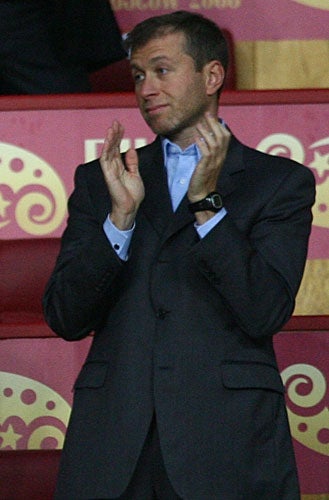
To understand the different debt situations, even just within England, a housing analogy is useful. Roman Abramovich came up trumps on the (oil) lottery and bought a mock Tudor off the King's Road. It was a dump when he got it, but he spent a mountain of cash doing it up, and a load more hiring staff. The housekeeper, Mrs Kenyon, revels in the great parties she throws there, and insists one day she'll earn enough on the door for them to be self-financing.
Yet Chelsea are technically insolvent. They do not make enough to cover their costs and have filed record losses for years. Without Abramovich there would have been no league titles or Champions League final. Would Uefa be right to rule that Abramovich's £578m of "soft" loans, interest-free, mean Chelsea cannot play in Europe? Or should we accept Mrs Kenyon's word that Mr A will pay the bills for ever?
Across London, we see a different debt at Arsenal. They used to live in a nice old Victorian. It was bit tired, frankly, and poky. Not like the swanky, ultra-modern new pad in the most upcoming part of Islington. OK, so the mortgage on the new place is huge (£318m at the moment), but my goodness it will pay its way in the future. And Arsenal's debt is almost solely to fund this investment in the truest sense. What's the problem?
Up north, the Glazer clan from Florida got themselves a stately pile that has been opening its doors to the public for donkeys years. It's got history. It swung in the Sixties. It's got the biggest gift shop of its kind. So the Glazers got a kind of buy-to-let mortgage. They've basically bought a second home using the "rent" (ie: the basic £250m annual income United expect to announce in January) to pay the mortgage (£666m of loans, currently). It looked a bit risky for a while but you cannot argue that the place isn't paying for itself.
Unlike along the M62, where Mr Hicks and Mr Gillett, two unknowns from the land of the sub-prime mortgage, bought a run-down terrace in Anfield with borrowed money and now can't afford to paint it, let alone knock it down and build the flash replacement they and their financiers need.
Elsewhere, traditional working-class "homeowners" from Wigan to Blackburn to Middlesbrough struggle to pay their "mortgages", but just about get by. They have debt. Their clubs aren't in any immediate danger of winning anything. Exactly what is Uefa going to do with them? The truth is it doesn't have a clue yet.
Join our commenting forum
Join thought-provoking conversations, follow other Independent readers and see their replies
Comments