Sam Wallace: All those who profit from our game share an obligation to end this taboo
It is remarkable that rugby has beaten football to the punch with Gareth Thomas
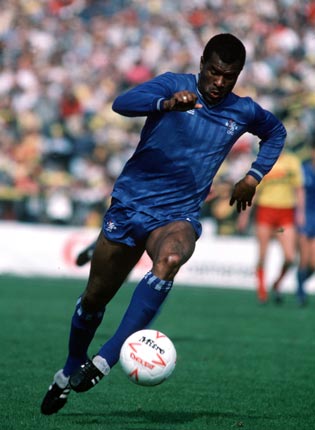
In the autobiography of Paul Canoville, who suffered horrendous racial abuse as Chelsea's first black footballer, there is a remarkable subplot about one of the few people at the time who stood up and publicly condemned those at Stamford Bridge who abused him.
That person was Pat Nevin, whose ability as a player and latterly his good sense as a pundit make him a thoroughly likeable individual anyway. Once you have read Canoville's book, Black and Blue, you find that you have plenty more reasons to admire Nevin who was, quite simply, way ahead of his time.
That is not to detract from Canoville's suffering, which was wretched and contributed to many of the problems he endured later in his life, but Nevin's contribution stands out a mile. He would come to post-match press conferences at Chelsea and refuse to discuss the game until he had condemned the abuse that Canoville had taken from the stands, largely from his own fans.
This was early 1980s Britain, long before many people had recognised that racial abuse was utterly unacceptable. It was long before anti-racism campaigns had been given the profile they enjoy now. It was a time when, as the reaction of the managers Canoville played under at Chelsea proved, racism was something that English football preferred to ignore rather than deal with.
As one of Chelsea's most popular players, Nevin had nothing to gain by forcing Chelsea fans to confront an embarrassing, shameful truth about their behaviour. In fact, it would have been a lot easier to ignore it and let the only black man in the team soldier on alone. But he didn't do that. He spoke out, however uncomfortable that made people.
It is relevant because in English football today we could do with a Nevin for a new cause. The Football Association's anti-homophobia campaign was stopped in its tracks this month when the governing body decided to can the release of a short film addressing the issue. It came out anyway on the internet but unlike every other FA campaign – from Umbro adverts to bowel cancer awareness – it lacked one thing: a high-profile England footballer to front it.
It is not the FA's fault that no player agreed to front up. The FA is at least trying to address an issue that most people in the game tend to dismiss. Mention Graeme Le Saux, who became an unofficial spokesman for anti-homophobia because of Robbie Fowler's pathetic, homophobic taunts in 1999, and people say he overreacted. There is a snigger factor about homophobia in football.
But if football really does not have a problem with gay footballers then one big question presents itself: why is there not a single out gay footballer in all four professional divisions?
That would suggest to me that English football does have a problem with homosexuality; one that is expressed crudely with chants from the stands and probably more subtly in the dressing room. There must be a reason that no footballer has had the courage to come out and it can only relate to its likely effect on his career – the most important thing any player, gay or straight, has to consider.
In fact, it is remarkable that rugby union has beaten football to the punch with Gareth Thomas. This, after all, is a sport that routinely condones punch-ups on the pitch that would provoke public outrage if they took place in football. A sport that often revels in its unreconstructed image. Yet rugby has its first out gay star before football.
Flicking through Le Saux's autobiography Left Field once again, he makes an eloquent, compelling case that homophobia in English football is alive and well. He even has the courage to name the culprits. As well as Fowler there are special mentions for Paul Ince and Robbie Savage. Presumably BBC Five Live's current pundit of choice has been told to keep those prejudices quiet on air.
Le Saux got as close as anyone to doing for the anti-homophobia campaign what Nevin did to combat the racists 20 years earlier and he deserves great credit for it. He exposed that nonsensical, offensive attitude that homophobic, and previously racist, footballers hid behind, the "I was only doing it to wind him up" excuse. He recognised just how hurtful and unpleasant the abuse can be – and Le Saux is straight.
The great triumph of football's anti-racism campaign is that it has become part of the fabric of our sport. In fact, it has done so to the extent that it has become commercially successful, as witnessed by the charity wristbands that Nike released for Arsenal and Manchester United's game at Highbury in 2005. Yet it is almost impossible to imagine the marketing men of Nike or Adidas sanctioning a similar endorsement of an anti-homophobia campaign.
It is not just the players who have a responsibility to step forward and take the kind of stance that Nevin once did on racism, it is the responsibility of the corporations who profit from football too. Because you can be sure that once this taboo is cracked, and there is a marketable gay footballer with great commercial potential, the likes of Nike will be at the front of the queue to sign him up.
In the meantime, we live in hope. Unfortunately, when you talk to players and agents within football they all say the same: fronting an anti-homophobia campaign might just mean the player in question faces exactly the kind of homophobic taunts they seek to discourage. As Le Saux's case proved, it does not matter whether you are gay or not – if you are branded so then football tends to shun you.
Frank talking
Chelsea's Under-18s beat Watford 4-0 in the FA Youth Cup last week to reach the semi-finals. Could Frank Arnesen be coming good at last? Certainly the highly rated coach Dermot Drummy is delivering. Interesting that a top player such as Josh McEachran was scouted the old-fashioned way and Conor Clifford came from Crumlin United in Ireland.
League lost in the loan-star state
Portsmouth's ultimately failed attempt to sell players outside the transfer window reminded me of a similarly bizarre piece of football legislation. The Football League's emergency loan system has to be one of the most blatant example of legal shenanigans on the rulebook.
A week after the January transfer window closes, the Football League's emergency loan window opens. Football League clubs can loan players from each other or the Premier League for one to three months. It is supposed to be for "emergencies" – whatever they are – but guess what? Every loan gets signed off. Apparently the only reason Fifa has not stopped this is because it just has not got round to it yet.
He has come far, but Rooney remembers where it all began
Wayne Rooney taking the initiative in making peace with David Moyes is one of the most heartening pieces of news all week, even if the former must have felt a bit raw after Saturday's result. It shows how far Rooney has come as a person and demonstrates just how much he clearly still loves Everton – no matter what has happened.
Join our commenting forum
Join thought-provoking conversations, follow other Independent readers and see their replies
Comments