Why fans struggle to feel at home with foreign owners
Millions of pounds of debt, three managers in seven weeks, lack of communication, ignorance of tradition – just some of the reasons why supporters are growing alienated
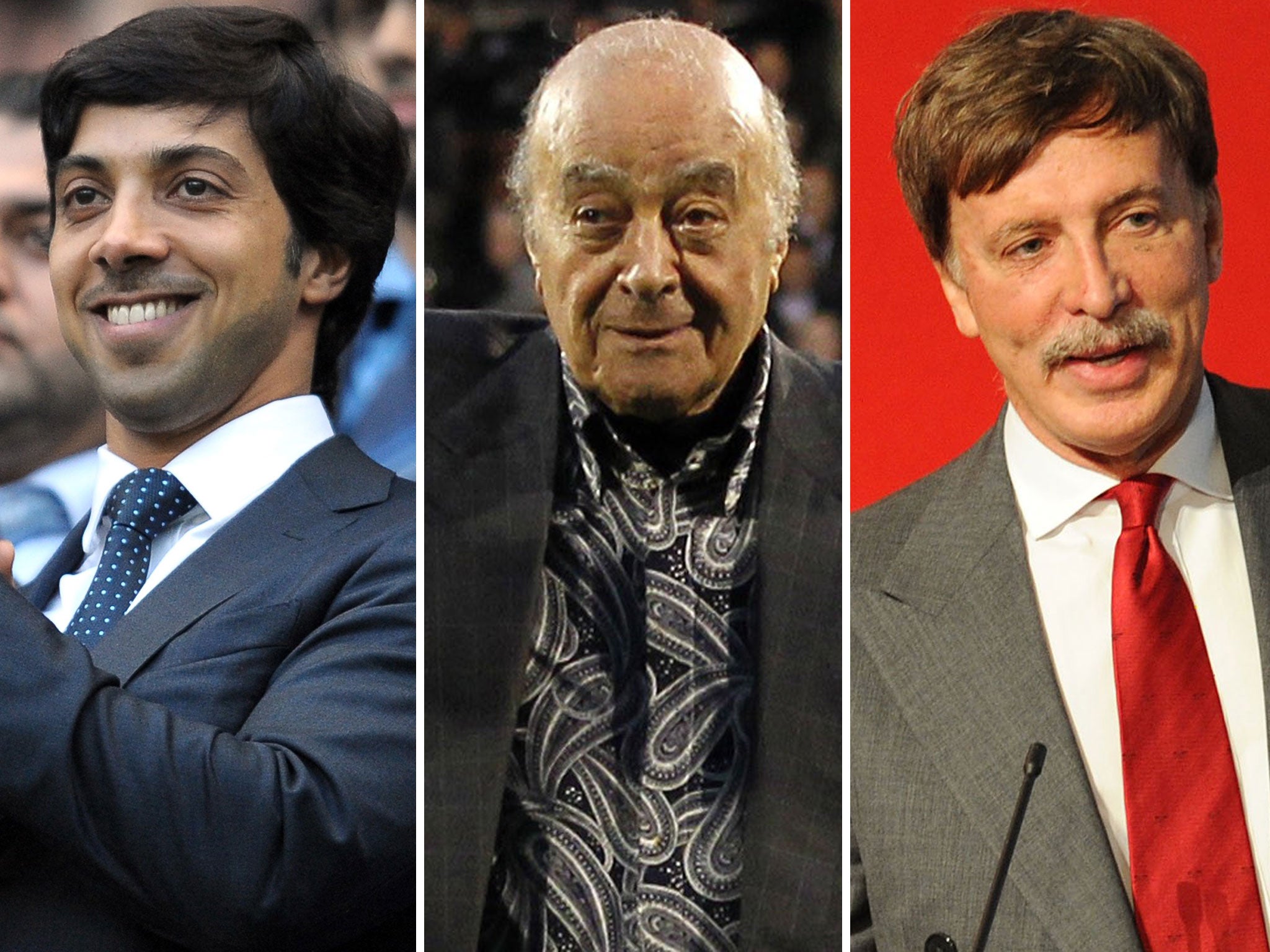
"Great news," tweeted the Nottingham Forest striker Dexter Blackstock in July when the Al Hasawi family from Kuwait finally completed their takeover of the club following the death of the previous owner, Nigel Doughty, five months earlier.
Yet Blackstock could hardly have imagined that by the middle of February he would have had four different managers plus a caretaker, two of whom, like a number of executive staff, having departed in bewildering circumstances.
Half of the 44 clubs in the Premier League and Championship now have foreign owners and many supporters are deeply critical of their motives and methods. Although exceptional by anyone's standards, the kind of chaos at Forest, where Billy Davies follows Sean O'Driscoll and Alex McLeish this week as the third manager in seven weeks, does seem more likely with new owners from abroad, who by definition have a background in different football cultures.
Hiring and firing at these clubs often appears to be done on even more of a whim than normal – see also Venky's record at Blackburn and Roman Abramovich's at Chelsea – but other dangers highlighted by supporters include buying a club purely to make a profit; lack of financial transparency; poor communications and relationships with staff and fans; ignorance of history and tradition (e.g. the decision of Cardiff City's Malaysian owners to push through a change in the club colours from traditional blue to "lucky" red); and possible vested interest in such matters as playing games abroad and watering down promotion and relegation.
As ever with football, the bottom line mostly concerns results. Supporters of Chelsea, Fulham and Manchester City, enjoying their most successful periods for 40 or 50 years, tend to be delighted with their generous masters and take out any frustration on managers and players instead. With the owners of that trio converting huge debts into shares over the past year, there is also far less anxiety about what would happen if they suddenly walked away. At places like Reading, Cardiff City, Hull City, Leicester and Watford, new overseas owners have either funded a return to the promised land of the Premier League or improved the team's chances of doing so this season, just in time for the lucrative new television contracts to kick in.
Far more common, however, are the sort of fears expressed from such different quarters as Manchester United and AFC Bournemouth. United supporters' objections to the Glazer family have prompted a whole protest movement, their arguments summarised by the Independent Manchester United Supporters Association: "The Glazers are largely unknown to the fans, they are infrequent visitors to the ground and uncommunicative. Hence, we can only judge them by what they do – which has so far been to plunge the club deep into debt, at a cost of over half a billion dollars wasted on interest charges and fees while still leaving us with half a billion still to pay off. They have touted the club's name around the planet and sold it to anyone who wants to use it, and extracted as much money from the fans as they will stand."
Complaints are remarkably similar at the other end of the financial spectrum, where Bournemouth are one of the lower-division clubs with named, as opposed to anonymous, overseas backers, such as Crawley Town have. The Russian Maxim Demin now owns 50 per cent of the South Coast club and there are two other Russian directors.
Dave Jennings, who runs a Bournemouth supporters' website, says: "On the surface, things have never been better. However, there is little transparency, Maxim Demin has never spoken to the media and most fans wouldn't even recognise him. The amount of money being spent is clearly not sustainable at this level and that is a concern to fans when details on club finances are non-existent." For Jennings, the danger of more foreign owners is: "The loss of connection between a community and its football club."
That sense of community is a key point for Richard Bevan of the League Managers' Association, who caused alarm 18 months ago when he suggested that a number of foreign-owned clubs wanted to end relegation from the Premier League and could vote it through if there were enough of them (14 votes out of 20 are required). The League have denied that could happen under their statutes, but Bevan says: "Owners in the past lived in the community, so they saw the effect of their actions. Remote owners are at times out of touch with the terraces.
"Obviously with the global appeal of the Premier League, it will always attract foreign investment. However, the most important aspect of any owner is that they buy into and appreciate the values of a club, including tradition, history, community, supporters, philosophy."
Harry Redknapp, who has worked with more foreign chairmen than most managers, is among those who believe that the threat of the so-called 39th game – playing some fixtures abroad, as American football's NFL do – will grow in proportion to the number of foreign owners. "Eventually they will take the games to where they want to play them," he has said. "If you have owners from China, India, Russia, America, they will want to take their teams there to play."
Clear developments this season are an increase in the number of accountants and lawyers being appointed as chief executives, as opposed to those with a football background, and consequently new owners/chairmen wanting to take a more hands-on role on the football side; and the number of sackings resulting not so much from poor results as broken relationships.
Then there are the owners whose view from afar sees the upper tiers of English football as a gold mine, one that can only be further improved by the new legislation limiting potential losses. The old view used to be that the way to make a small fortune in football was to invest a large one. With the new broadcasting contracts guaranteeing the worst team in the Premier League £60 million a year, that need no longer apply. It will therefore become less of a gamble to buy a PL club and an attractive proposition to acquire a Championship club who have either fallen on harder times, like Leeds and Forest, or boast solid support and a wide catchment area.
Birmingham City and Portsmouth came into that category, but were allowed to fall into the hands of little-known overseas investors, both of whom passed supposedly rigorous tests as fit and proper owners. City's owner, Carson Yeung, is awaiting trial in his native Hong Kong for alleged money laundering, while Ports-mouth will be expelled from the Football League if their Supporters' Trust do not complete a takeover by the end of the season.
The Football League chairman, Greg Clarke, admits they do not have the resources for forensic investigation of newcomers and says: "We have to be careful what we say and act only on fact, otherwise we'd get sued. If we start being prejudiced against people just because they don't come from England, it's a long and slippery slope. We are not against foreign ownership, but we want people to be able to own clubs in a sustainable way that did not demand billions of pounds."
The Premier League's attitude is similar, chief executive Richard Scudamore saying: "It's not about their nationality or where they're from, but how they behave within the regulatory structure."
What the fans are saying
Tim Payton
Arsenal Supporters' Trust
"In 2010 Stan Kroenke took over majority ownership of Arsenal and now holds a stake of 66.6 per cent. There is a lack of understanding among fans as to his long-term ambitions for Arsenal and why he chose to purchase the club. The AST believe that Arsenal is too important to be owned by any one person."
Verdict Negative
Dave Johnstone
Chelsea fanzine cfcuk
"There's no doubt that some of the foreign ownership has been good for the English game. While some people aren't happy with some of the managers that have been imposed upon Chelsea, people weigh that against the success that our owner has brought to the club."
Verdict Positive
Independent Manchester United Supporters' Association
"The Directors and Owners Test is a myth. Imusa's inquiries revealed that all the Premier League do is take the word of the 'owners' that they are indeed the owners. The PL also claim to verify this using forensic financial investigators but won't show us the information."
Verdict Negative
Ian Bason
Chairman of Foxes Trust (Leicester)
"We do not have any real issues with foreign ownership, in general, as long as they: 1) do not have any history of being involved in club failures before; and 2) do not saddle clubs with debts they cannot afford, then look to sell. And there is the sense that foreign-owned clubs are not part of their local community and its issues and problems."
Verdict Mixed
Jon Keen
Reading fan
"The big problem is the culture and traditions of English football will mean nothing to foreign owners, and so will be sacrificed in favour of international/financial interests. I'm unhappy supporters don't know for sure who owns Reading, plus 101 other questions a transparent ownership regime would reveal."
Verdict Negative
Join our commenting forum
Join thought-provoking conversations, follow other Independent readers and see their replies
Comments