World Cup teams hire security firms from Iraq amid kidnap risk
Private guards and armoured vehicles from war-zone specialists drafted as flaws in South African plans emerge
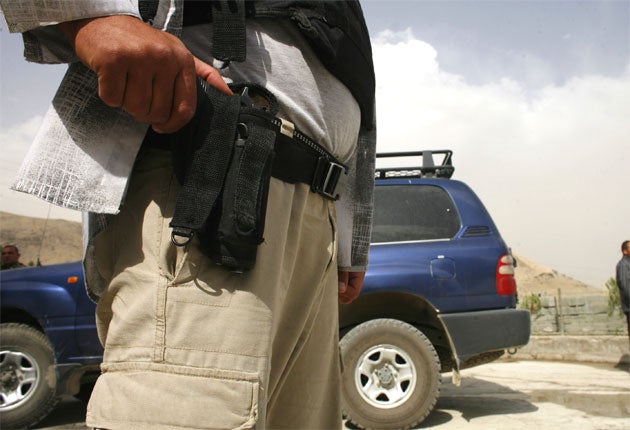
Many of the nations competing at next summer's World Cup will use private security firms – including war-zone specialists who operate in Iraq and Afghanistan – to safeguard their players and officials.
Sources within the private protection industry have told The Independent that high-profile football associations from Europe and South America have already hired firms that will use ex-military personnel, some of them special forces veterans, to look after players and their families during the tournament. These companies will provide round-the-clock armed bodyguards, bulletproof vehicles, hijack prevention advice and "crisis management" squads that can handle kidnap situations. Kidnap insurance is also offered by some agencies but by nature is ultra-secretive; public knowledge that a specific party is insured typically means that policy becomes nullified.
These revelations come amid fears there could be "gaps in the coverage" provided by the organisers. A number of football associations from around the world and senior figures within international administrative circles have ongoing concerns sparked by lapses at last summer's Confederation Cup, which was effectively a small-scale test event for 2010.
"There was no single major mishap but some worrying gaps were noted, suggesting there won't be enough properly trained security at every place they'll be required [at the World Cup]," one source said. "[Security] contracts weren't in place until very late, some players had property stolen from hotels, and some fans were victims of crime.
"And at the Confederations Cup there were just eight teams, playing in four stadiums, three of which were within 70 miles of each other. The World Cup is in a whole different league, with 32 teams, 10 stadiums in nine cities across more than a thousand miles, and millions of fans, hundreds of thousands from overseas."
Another source said: "South Africa has a fantastic reputation for sports events. It has staged the rugby world cup, Lions tours, and major international cricket – but its infrastructure is under pressure. Booking rooms and internal flights is already a struggle, and the security is just as susceptible."
Though the English FA routinely takes its own "immediate security" (bodyguards) on England trips to supplement local arrangements where deemed necessary, it has not ruled out boosting further its measures for South Africa. There has been no suggestion from the FA that it is unhappy with South African security but it will still make individual arrangements as it sees fit. No details will be disclosed, but an FA source said: "We always have more security than would appear the case to the casual observer."
Adrian Bevington, the FA's director of communications, told The Independent last night: "We carry out a full and detailed risk assessment of every destination to which we travel, many months in advance, and follow that with multiple site visits. We always have to make extensive security plans wherever we go in the world, not just at a World Cup, and we'll be doing that for South Africa."
Fifa, football's world governing body, says, in public at least, that it is satisfied the South African authorities have done everything they can to secure the safety of players, officials and fans. Around 41,000 of the country's 200,000 police officers will focus solely on World Cup duty next summer. A squad of 200 specially trained anti-terrorist officers with military hardware at their disposal will be on permanent standby.
South Africa has a notorious crime problem, with high rates of murder and carjacking in particular. Private security firms are consequently common, and many will be employed during the World Cup by visiting VIPs, corporate guests, sponsors, and some teams.
"People seek protection because South Africa has inherent risks, with high rates of commercial and violent crime ranging from robberies to hijackings to rape," says Jared Higgins, the managing director of Arcfyre International, one of South Africa's biggest specialist private security companies, based in Johannesburg.
Join our commenting forum
Join thought-provoking conversations, follow other Independent readers and see their replies
Comments