How Green will the London Olympics really be?
Rows about sponsors and merchandising have overshadowed the effort which has gone into limiting the actual damage to the environment
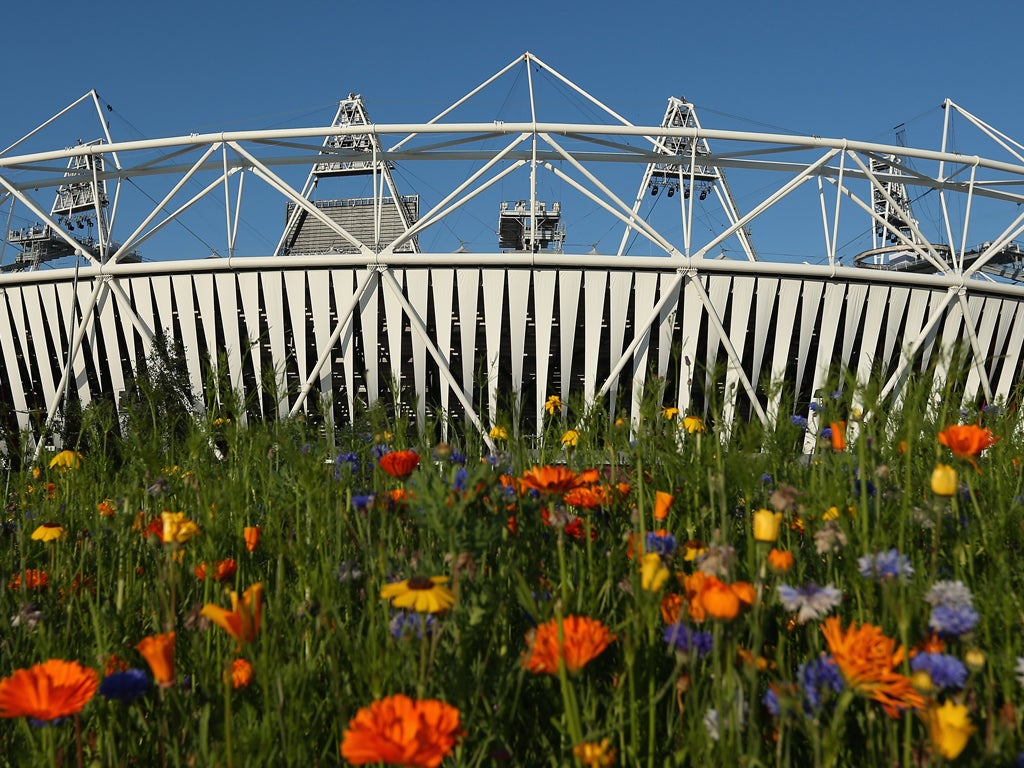
Nine years of planning and effort to minimise the environmental impact of the London Olympics come to a head this month, with organisers hoping that 2012 will see the greenest Games ever.
Yet to make a judgment on that may be difficult, as headlines so far about the environment side of the games have focused on major sponsors who have been deemed environmentally inappropriate by some pressure groups, such Dow Chemical, McDonalds, the oil giant BP and the French power company, EDF, and allegations about poor working practices in the Chinese factories supplying some games merchandise.
The rows about sponsors and merchandising have been serious, but they have overshadowed the effort which has gone into limiting the actual damage to the environment that a mass event on the scale of London 2012 is capable of causing – from waste generation to carbon emissions – and providing instead a legacy that will be of genuine sustainable benefit to London and its people.
‘Sustainability’ is in fact the word the organisers have preferred over ‘environment’, as they feel it has a greater reach than merely green matters, and brings in questions of equity, and social inclusion, and generally refers to doing things in a thought-through and careful way.
The sustainability ideal has been a central part of London’s bid for the games; indeed, it may have played a key role in London winning. Since 2003 and the early stages of the bid, one of Britain’s leading experts on the interaction of sport and the environment, David Stubbs, has been Head of Sustainability for the organising committee.
A zoologist by training, Mr Stubbs has presided over the effort to minimise environmental impact in building the Olympic Stadium and the other venues, and running the event itself, matched by a lot of thinking about the legacy in the area of east London whose regeneration the games have made possible.
Attention has centred on a number of key themes, including transport, food and waste; but the highest priority for the sustainability team has been delivering a low-carbon games, which. to some extent reflects the political priorities of 2005, when global warming was at the top of the political agenda, although it has slipped down considerably in the wake of the recession.
Analysis showed that the biggest part of the carbon footprint would be in the “embedded carbon” in the Olympic Stadium: in other words, how many CO2 emissions had already been generated by sourcing the materials used to build it. This has been brought down by using recycled materials throughout the construction, and by building temporary structures wherever possible. The organisers say they cannot yet give a figure for the games’ carbon footprint as a whole, but they estimate it has been reduced by about 20 per cent from initial estimates.
In terms of the energy supplied to the Olympic Park, there was an initial target that 20 per cent of it should be from renewables; but health and safety considerations prevented the installation of a large, two-megawatt wind turbine that would have made this figure possible. It is currently thought that about 11 per cent of the power will come from renewable sources, including biomass boilers in the dedicated Energy Centre, and a small amount of solar power.
Carbon management has also influenced the transport strategy: these are to be the public transport games. It will be difficult if not impossible to get to venues by car (unless you are a bigwig in a dedicated limousine in a dedicated Olympic lane). But everyone holding a ticket for an event will also be given a one-day travelcard enable them to get there using buses, the London Underground or trains. The organisers, with their “Active Travel” campaign, would prefer it even more if you walked or rode a bike: there will be 7,000 secure cycle bays around the Olympic Park.
Much thought has gone into a food strategy, although critics point to the fact that one of the biggest McDonalds restaurants in the world will be the centrepiece of the catering. However, the games organisers stress there will be nearly 800 concessions where food and drink are available, and in them, they say, the food will be affordable and sustainably sourced from environmental and ethically secure sources, from the fruit and the coffee to the fish and the meat.
The food strategy is matched by a waste strategy whose ambitious aim is to deliver zero waste to landfill (that is, to rubbish dumps): every scrap of food and drink packaging will be either recyclable or compostable, and different recycling streams are clearly indicated to the public by colour codings.
Mr Stubbs and his team feel that one of the principal sustainability aspects of the London 2012 Olympics is the thought being given to what happens afterwards: there has been a formal legacy strategy in place since 2009, which will see, for examples, the athletes’ village converted into the most environmentally-friendly housing development of its size in Britain, and the games site become a new and imaginatively-landscaped park for the people of Stratford and the surrounding area, although the future use of the stadium itself is yet to be determined.
Close observers of the sustainability efforts give a generally favourable verdict. The independent Commission For A Sustainable London 2012, a body set up specifically to monitor progress, said in its last report that “overall, this has been a great success” although it adds: “not everything is perfect.”
Another close observer has been Simon Lewis, 2012 Programme Manager for WWF (formerly the World Wide Fund for Nature). Mr Lewis praises elements of the carbon management, transport, food and waste strategies, but he feels that the choice of some of the commercial sponsors has been damaging.
In particular he feels that the choice of BP and EDF as “sustainability partners” has been inappropriate. “They’ve just bought their sustainability tag, rather than earning it,” he says.
Greenest games ever?
Low Carbon Games
New permanent venues built only where there was a strong legacy case. Temporary structures where possible (such as water polo venue and wings of aquatics centre). Estimated carbon footprint published 2009. For the operation of the games this is expected to be 315,000 tonnes of carbon dioxide and other gases – a 20 per cent reduction on the initial estimate. “Embedded carbon” in the structure of the stadium reduced by using recycled materials, such as old gas pipes which provide the truss – the ring around the top of the stadium.
Renewable Energy Games
Original target was 20 per cent of all energy supplied, largely provided by a large two-megawatt wind turbine on the Olympic site. Health and safety considerations ruled out the turbine. Renwable energy now expected to be 11 per cent of the total, provided by biomass boilers in the dedicated energy centre and a small amount of solar panels on the roof of the press centre car park.
Public Transport Games
All ticket holders given a Games Travelcard to use on public transport on the day of their event. Discounted fares available on national train and coach services. Walking and cycling to venues encouraged by Active Travel Programme – with a target of 300,000 spectator journeys. 7,000 secure cycle spaces at the Olympic Park. Absence of parking means travel by car to games a virtual impossibility, except for athletes, officials and celebrities using the Olympic Route Network. The Games Family Fleet of 4,000 cars supplied by BMW will be low-emission, with emissions of under 120 grammes of CO2 per kilometre.
Good Food Games
London 2012 thought to be first major event in the world to have a food strategy, stressing choice and balance, affordability, sustainable sourcing across 800 food and drink outlets. All meat and dairy and fresh produce from the UK is Red Tractor farm assured. All fish is certified as sustainably sourced. Much overseas pr oduce, from tea and coffee to babans and wine, is Fair Trade.
Zero Waste Games
London 2012 expected to generate about 8,000 tonnes of consumer waste overall. The target is send none of this to landfill. All food packaging, including that used by McDonald’s, recyclable or compostable – all provided by a single supplier – and colour-coded to match colour codes on different bins for different waste streams. All PET drink bottles to be recycled. All waste handled by a single specialist contractor running a dedicated line for Olympic waste.
Join our commenting forum
Join thought-provoking conversations, follow other Independent readers and see their replies
Comments
Bookmark popover
Removed from bookmarks