James Lawton: Safety is not the driving force of our, or a horse's, instinct
No matter how dangerous this event is, Synchronised died not as a result of being pushed beyond either its limits or appetite
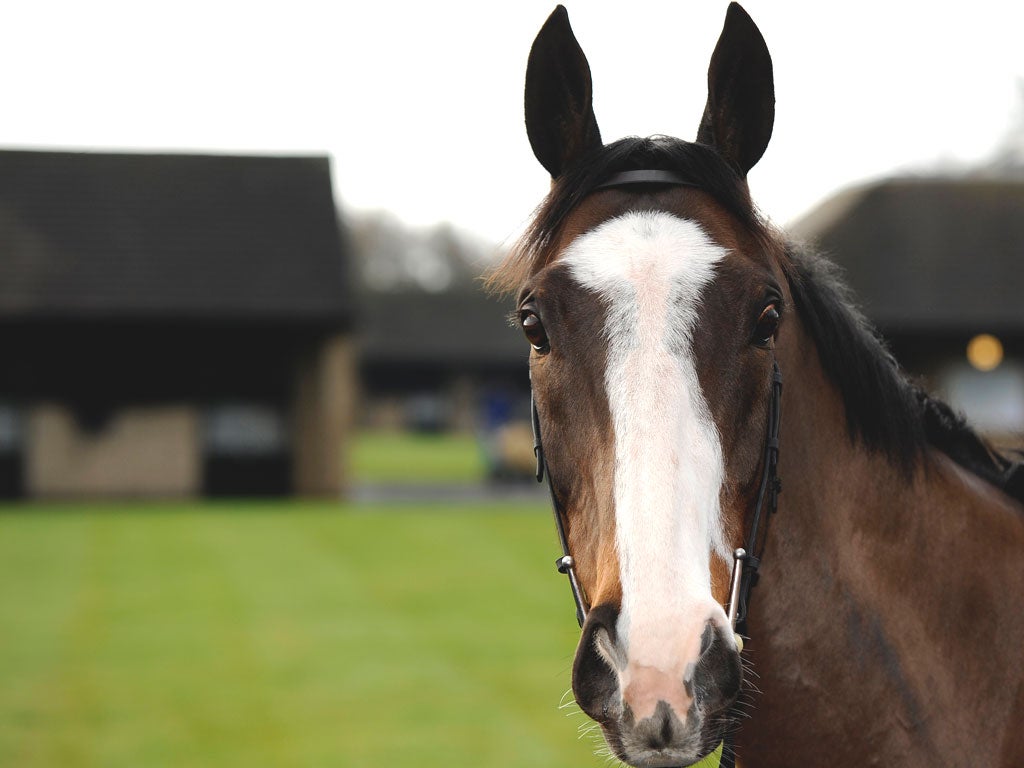
Amid all the angst and the loathing it should not be forgotten that Synchronised, the late and notably courageous Gold Cup winner, died at Aintree not under the pressure of the whip but the instincts of its own nature.
This will not, of course, begin to placate the animal-rights activists, no more, to be fair, than it will remove any significant amount of the ambivalence that comes to most of us when we watch either a great steeplechase or prize fight. But then maybe it is something to think about when we are told that the inclination of horses to run and jump, and some men to fight, is no longer acceptable.
What the abolitionists wield most profitably in the wake of the demise of a Synchronised, or the crippling and blinding of the American boxing champion Gerald McClellan that so many years later continues to haunt all those who saw it, is the force of a single-track argument.
It is one which permits few shades of debate. You cannot say the short and essentially happy life of Synchronised should be balanced against the miserable existence of so much of the animal kingdom. Or that if McClellan became a victim of appalling circumstances, it does not automatically invalidate the redemption and the glory and a discipline so much superior to that of the street that the ring offered to men like Muhammad Ali and Sugar Ray Robinson.
But then we can return to the detail of Synchronised's end. He died doing something of his own volition. Separated from his jockey AP McCoy, he kept running and jumping. He wasn't pushed beyond either his limits or his appetite. When the champion addressed the fatal fence, having recovered from his mishap at Becher's Brook, he was in charge of his own destiny and unaffected, either way, by any of the possibilities of new reforms that might be put in place this side of abolition.
It is a proposition bulldozed by one animal-rights declaration that claimed: "The Grand National is a disgusting and shameful spectacle masquerading as sport. There is nothing sporting about an event that routinely kills so many horses. For anyone who genuinely cares about horses, this was an utterly depressing and melancholy experience."
Of course it wasn't so. If there was deep sadness at the loss of Synchronised and According to Pete, if there was a bleak return to the mood of 2011 and the big screens and the blocked-off fences, as Ornais and Dooney's Gate died, there was the earlier reality that this year's race had in many ways been a glowing advertisement for the world's most famous chase.
We never had a closer, more tumultuous finish. We had never got nearer to seeing a woman jockey triumph in the most daunting of challenges offered by her line of her work and when Katie Walsh, sister of Ruby and operating in a world that had shaped so much of her life, reflected on her "fantastic spin", inevitably she pointed out that whenever she erred her mount Sea Bass had provided instant corrections.
This was hardly an example of a careless riding of the risks facing her equine partner – and in truth any such examples were extremely hard to find outside of the catch-all slogans of the protesters. Of course there are issues, and an acknowledgment came swiftly from John Hales, the owner of winner Neptune Collonges.
He spoke of the residual pain left by the loss of his fine horse One Man at Aintree 14 years ago and the family agonising over whether the honourable Gold Cup performer should be entered in the National.
Nor was it hard to imagine the turmoil of Synchronised's trainer Jonjo O'Neill when he moved so vertiginously from the exhilaration of imagining that his Sunnyhillboy had landed the great prize to the news that his hero of Cheltenham had been put down.
Should he have recommended the running of the champion here? Plainly, it is a question that will linger in his mind at least as long as any of the glory he found in the saddle or the training establishment.
Some of the questions, obviously, stretch beyond the gallops. Most of them hinge around the possibility of eliminating risk and, ultimately, whether or not the concept does not directly contradict the nature of life – especially in some of its most thrilling forms.
The winning trainer, Paul Nicholls, voiced a typical caution against a new rush for reform when he said: "The worst thing you can do is go too far. If you make the fences smaller, they go faster and you get more fallers." And if you make the race safer, you dilute some of its appeal, and once again we are in the middle of a much more basic argument.
Could it really be true that in the second decade of the 21st century the National has run its course as one of the most compelling spectacles in all of sport?
Those who say yes talk about their fight against a remnant of barbarism and say that the emotions generated by the likes of Red Rum and Tony McCoy can no longer be dressed in any kind of glory.
Against such claims, the Aintree authorities can only sound as though they are fighting a relentless tide. But maybe there are a few practical things they can do as they insist that safety will always be their chief priority. They can look again at the size and the quality of the fields – they can examine the misadventures of Saturday which so drastically reduced the starting number of 40, and decide how many of them were caused by the size of the fences or the problem of mere clutter. They can also clean up a starting procedure which has rarely looked so error-prone and, frankly, amateurish.
Most of all, maybe, they can recognise that they organise an inherently dangerous event. If safety was indeed the priority we could save Becher's Brook for museum purposes and consign the rest, along with Red Rum and all his breed, to the memory of a more dangerous and uncaring age.
Then we could all live happily in the dubious security of our own skins.
Join our commenting forum
Join thought-provoking conversations, follow other Independent readers and see their replies
Comments