Brian Ashton: England will never get back to the top unless we welcome mavericks

Sign up to our free sport newsletter for all the latest news on everything from cycling to boxing
Sign up to our free sport email for all the latest news
Once again, I was riveted by the dynamism of southern hemisphere rugby as the All Blacks and the Wallabies ran down the curtain on this year's Tri-Nations Championship.
Last weekend's game in Sydney was not as high-scoring an affair as some of those we've seen in recent weeks and it seemed to me that there were more errors, but there was still an enormous amount to admire, particularly from a New Zealand side who were outplayed for 50 minutes yet still believed – correctly, as it happened – that if they stuck to their road map, they would find a way of reaching their destination. As rugby journeys go, the All Blacks' version is rarely less than exhilarating.
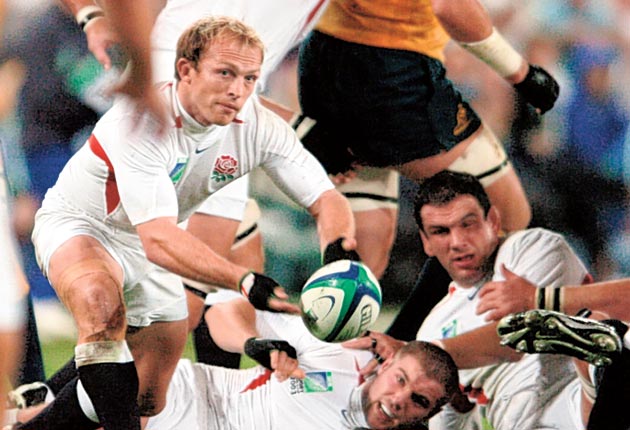
This depth of belief, which manifests itself in a determination to play from anywhere on the field while keeping the tempo high and maintaining the highest level of physicality, reminds me of the great England side that flowered in the early 2000s. Looking back, we coaches had a very special group of players at our disposal, and this raises a fundamental question about success at the very top level: is it an accident of birth? When you think of the "big beasts" at the heart of that team, from the Johnsons and Dallaglios and Hills up front to the Dawsons and Greenwoods and Robinsons outside the scrum, it is fair to suggest that we'll be very lucky to see such a concentration of fully developed talent again. And if that is the case, what is to be done?
If taking the top-down route to fulfilment is a once-in-a-lifetime luxury, is it possible to achieve something similar by evolving from the bottom up? Over the summer, I've worked with scores of youngsters aged between 10 and 16, spent a good deal of time with school sides in the mid-teens bracket and made my way back into a thoroughly enjoyable form of senior coaching with Fylde. I've tried to make each and every session as inclusive as possible by attempting to draw from these many and varied people a firm view on the sort of game they want to play. Virtually all of them talked about the rugby produced recently by the Antipodeans and in so doing, they trotted out all the modern buzzwords. But when I pressed them to come up with precise ways of delivering that rugby on the field, the words tended to dry up. Words are cheap; actions are more challenging.
This takes me back to the roots and structure of the game in England: how children are introduced to rugby, how skills are taught and how the competitive environment is presented to them. As I've argued before, we're not getting things right. This is not a criticism of the teachers, parents and coaches who give freely of their time to ensure a constant stream of new players at the lower levels of the sport. They have a big responsibility in giving these kids an insight into rugby, and in a vast number of cases they do a brilliant job.
But the ex-teacher in me wonders whether the freedom of games-playing in the street and the schoolyard is lost to our youngsters the moment they show any sort of talent for rugby and are picked in a team. If we really want to produce a generation armed with both the core skills and the ambition to play like the All Blacks have over the last few months, we need them to retain the spirit of the street game. Why not recreate the best of it in training? Why not tweak the laws a little in age-group matches in an effort to reclaim some of the individuality and improvisatory qualities that mark out the gifted sportsman in his formative years?
If we can offer young players a judicious mix of skills development and pure excitement – not just on the practice pitch but in game situations too – we might find them enjoying their rugby a bit more. Too many of them play union to the exclusion of everything else, and as a result, I'm not sure they find as much enjoyment in it as they should. Our World Cup-winning side of 2003 was full of individuals who had played as amateurs and had spent a good deal of time dabbling around in other sports, in some cases rather successfully. Even now, many of the top southern hemisphere names play touch rugby as a means of clinging to the old, invigorating notion of sport as a glorious hobby.
As I said at the start, rugby journeys can be thrilling. In fact, they should be. Who knows? If we move away from the overstructured coaching that too easily leads to a cloning of our young players and concentrate more on encouraging self-expression, we may find ourselves on a road with treasure at the end of it.
Robinson gets up and running again
Jason Robinson returned to the competitive arena with Fylde last weekend and as expected, his appearance in the local derby against Preston Grasshoppers generated a good deal of interest. The game was pretty close for 40 minutes, partly because people came up with a number of "interesting" ways of preventing the great man getting involved, and partly because some of those around him had an attack of stage fright.
But once he'd dusted off the cobwebs and his colleagues had come to terms with playing alongside one of the true legends of the sport, we saw a second-half display of relentless running rugby resulting in a comfortable victory. Jason didn't score, but he was bewitching in creating opportunities for virtually everyone else. I wonder if Graham Henry and Robbie Deans would appreciate the DVD.
Subscribe to Independent Premium to bookmark this article
Want to bookmark your favourite articles and stories to read or reference later? Start your Independent Premium subscription today.
Join our commenting forum
Join thought-provoking conversations, follow other Independent readers and see their replies