Peter Bills: What we learnt from the 'June lunacy' tours

Sign up to our free sport newsletter for all the latest news on everything from cycling to boxing
Sign up to our free sport email for all the latest news
So the phoney interlude of international rugby, what we might call the June lunacy, comes to an end. For that, we should all give thanks.
South Africa plays a meaningless match in Wales to make £600,000 (Wales made £1.5 million out of it), an exhausted Ireland and Wales trek across the world to New Zealand with predictable outcomes and France are so disinterested in rugby this time of the year they crash 41-13 to Argentina in Buenos Aires. Who cares?
Regular readers of this column will well know my views on this particular subject. The players are being used as chattels, the public taken as fools. The only purpose of these internationals, like the November ones in the northern hemisphere, is to fill the coffers of the host unions. It is a naked money-making exercise.
Yet having said that, three words come repeatedly to mind when I reflect upon this month's matches. Pace, tempo and intensity. They were spoken by the Welsh coach, New Zealander Warren Gatland and they go to the heart of the differences between the leading countries of the northern and southern hemispheres.
Teams from north of the equator have plenty of talented players with a multitude of skills; in many cases, the latter too often unused in the modern game, their value forfeited by the rigidity of coaching mantras. But what players and teams from the northern hemisphere lack are the three qualities identified by Gatland: pace, tempo and intensity. They cannot demonstrate those qualities, certainly not for the full 80 minutes of a Test match, because they are unaccustomed to doing so in their own domestic and even international rugby.
Wales did well in the first half of their 1st Test against New Zealand in Dunedin but then collapsed. They could not sustain the effort for the entire game.
Even the much-vaunted 6 Nations Championship, a commercial success to make anyone in the southern hemisphere drool with envy, does not offer a similarly intense, fast game with the high tempo that is the norm in the southern hemisphere.
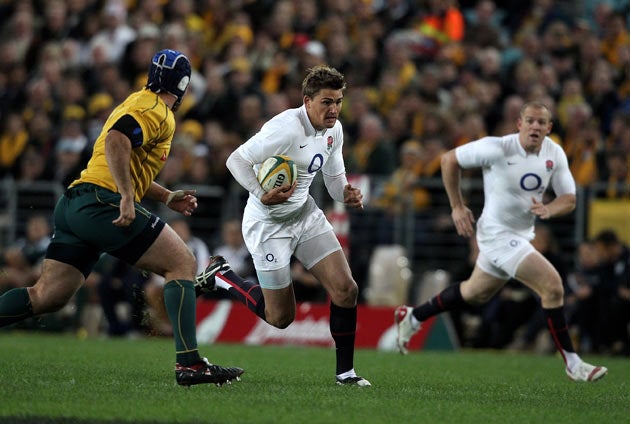
Yet until players from the northern hemisphere can match their southern counterparts in these critical areas of play, how can they expect to beat them on anything like a regular basis? Sure, there are the occasional successes of northern countries: England beat Australia in Sydney (but only because Matt Giteau missed a penalty in front of the posts from 18 metres with seven minutes left) and Scotland just kicked a barrage of penalties to win the Test series in Argentina.
But come the World Cup next year, who in their right mind believes any of the northern hemisphere nations has a serious chance of winning the trophy? It has been that way in five of the six World Cups to date.
It won't change, in my view, until the game changes significantly in the northern hemisphere. That means coaches taking a far less dictatorial approach, and allowing players the freedom to make decisions for themselves based on what is in front of them, not what has been agreed six days or six weeks earlier on the training ground. Too many present day coaches have created a squad of pre-programmed robots, not rugby players with a brain to think and find solutions to difficulties they encounter on the field.
How is it, for instance, that England returned from the southern hemisphere extolling the virtues of a more attacking approach, when they had played like a constipated cow, unable to pass anything, in the 1st Test against Australia in Perth? In Paris back in March, England had played all the rugby as France froze in their Grand Slam game. It was heartening and encouraging to see an England back line attacking the French, even running out of their own 22 when they deemed it propitious so to do.
If ever there was a template for how to play the modern game that was it. Yet two months later, in Perth against the Wallabies, England had retreated, gone back into their shells in which they played no attacking rugby of any serious intent behind the scrum. Then, in adversity, after losing the 1st Test, they go out and play again in the 2nd Test, picking up where they had left off in Paris.
So who decides on this alarmingly topsy-turvy, stop-start approach? Why didn't England have the courage to stick with the Paris format? The reason is, most of their coaching staff are uncomfortable with the open, attacking philosophy; it is not what they know or understand. All their careers, they played a hard, slow, forward orientated grinding type of game based around the pack. Old habits die hard.
But unless the northern hemisphere countries embrace this faster, more open, attacking style of play on a regular basis, especially now that the new law interpretations have come in, they will continue to come up woefully short whenever they play the top southern hemisphere sides.
And there is little evidence of that happening at the present time.
Subscribe to Independent Premium to bookmark this article
Want to bookmark your favourite articles and stories to read or reference later? Start your Independent Premium subscription today.
Join our commenting forum
Join thought-provoking conversations, follow other Independent readers and see their replies