All things being unequal: Women in aerospace
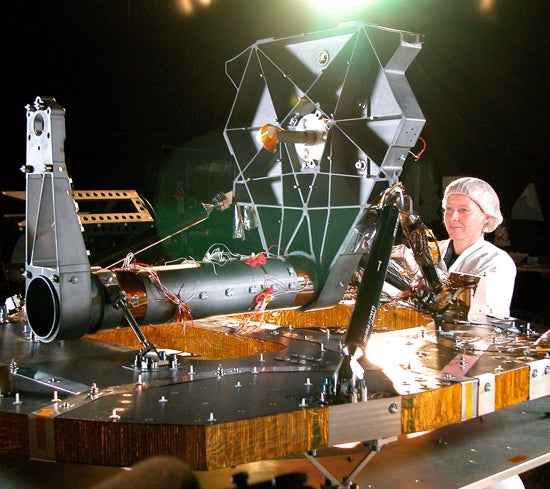
Women may be woefully under-represented in aerospace, but there’s a fightback underway.
There is a dearth of women working in the aerospace sector. A recent survey by the Office for National Statistics found that only 16 per cent of people working in the aircraft, spacecraft and manufacturing industry were female. Which begs the question, why?
Early divide
The problem starts at school level: by the same principle that boys are given Lego to play with while girls sit in the Wendy house putting on a tea party for Barbie and friends, female students making decisions about their career are not looking at aerospace as an option, nor is it being suggested to them. Dr Jane Neal-Smith, acting subject group leader for civil aviation at London Metropolitan Business School, has done research into the subject. “Because girls tend to choose non-scientific subjects at school, they are disadvantaged in flying sponsorships which ask for science subjects,” she says. “Furthermore, in my doctoral research I found that many women received incorrect careers advice at school and were discouraged from flying as a pilot.”
Maggie Aderin head of optical instrumentation at Astrium – a European space company – has seen it first-hand. “When I go out to schools, which is something I do a lot, many of the girls say they can’t do a job in engineering because they don’t see any other female engineers, so it’s obviously not something that women do. They also don’t see many female engineers high up in the system, and I think that’s off-putting as well. A lot needs to be done.”
How to improve the situation
The good news is that there are organisations trying to turn things around. The UK Resource Centre for Women in Science, Engineering and Technology (UKRC) has an agenda across those sectors – which of course includes aerospace – to provide the support and advice necessary to encourage women to enter the industry. “We’re coming from a perspective of choice and opportunity,” says Jane Butcher, assistant director of UKRC. “The profile of the engineering industry as a whole is of one that is ageing and not very diverse. The industry needs to be looking outside the box as far as their recruitment strategies and retaining the women that they do get. We’re doing all we can, along with the professional societies – we have to ensure that the right, positive messages are going out.”
Jenny Goodman, who studied a PhD in aerospace engineering at the University of Oxford, now works for the wind turbine manufacturer Vestas. “In all the places I have worked I’ve felt that being female is a bonus rather than a hindrance. I’m much more memorable, which is great for networking, and I can add a fresh approach to the teams I work in.” However, one could argue that being memorable is a positive spin on what is the crux of the problem – being in a minority – and Goodman’s career has not been without discrimination. “The very few brushes with prejudice I have come across have been with blue-collar workers. I’ve never encountered prejudice from fellow engineers,” she says.
Elizabeth Cain did a year’s placement at British Aerospace. “There was quite an even mix of men and women on the graduate scheme at British Aerospace, but most of the women worked in the offices. So, when I had a six-month stint on the shop floor, I was the only woman. I wouldn’t say I experienced prejudice over the whole year but it did reduce me to tears for the first week or so,” she says. Miranda Mills, vice president of sales in India for Airbus, is also disinclined to paint the industry in an entirely rosy light. “It can be quite a macho culture. I started my engineering studies when I was 16 so I’ve got used to prejudice. I can remember doing my first shop floor visit when I was still a student and being horrified by all the whistles and cat calls. Maybe now it doesn’t happen so much or I just don’t notice it – you get immune to certain things. Also, as you get more senior, people give you more respect.”
It’s possible to see that strides in the right direction are being made, but is it worth putting in the extra effort to achieve parity? Definitely, says Rosalind Azouzi, learning and development manager at the Royal Aeronautical Society. “We need to encourage women to not be afraid to stand up. At the RAeS, our annual Women in Aerospace and Aviation event aims to dispel myths, not by singling women out, but by showing that, despite low representation, there are many success stories which will inspire others. “Aerospace offers such fantastic opportunities: the chance to develop or use the latest technology, lots of support for professional development, the excitement of flying and space, and a complex network of companies with interesting ways to move laterally and vertically during your career. There’s something for everyone, women included!”
- E-mail career@raes.org.uk for more information about the Women in Aerospace and Aviation event
- Visit the UKRC website at www.ukrc4setwomen.org – or call them on 01274 436485 – for career advice
Join our commenting forum
Join thought-provoking conversations, follow other Independent readers and see their replies
Comments
Bookmark popover
Removed from bookmarks