Medicine
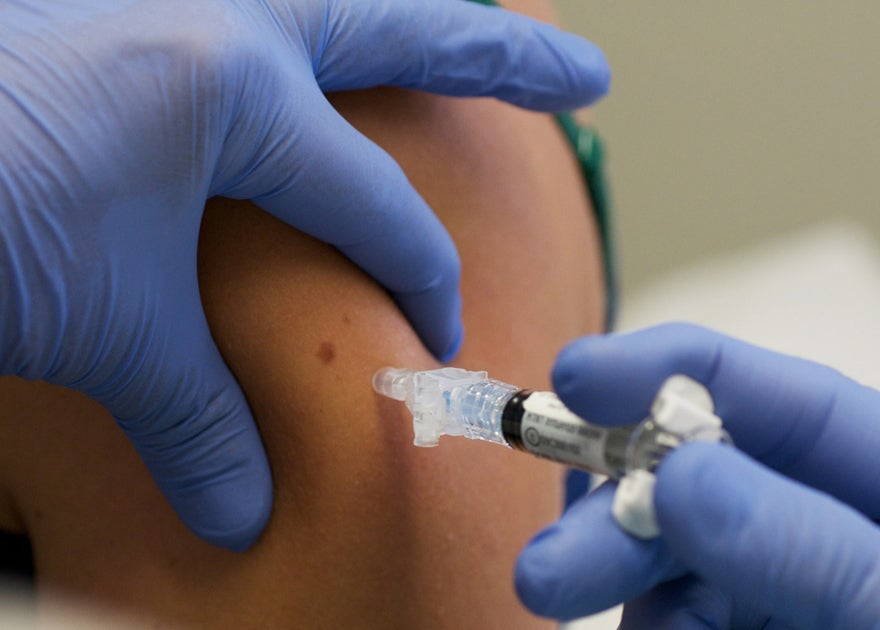
What courses? Medicine.
What do you come out with? MB or MBChB usually, but you can also get a BMBS, or an MBBS.
Why do it? "A career in medicine is immensely rewarding and, with more than 60 different specialties, offers many varied opportunities. Advances in medicine are made daily, with constant progress in treating illness and disease. In the past 50 years alone medical advances have included heart transplants, IVF and the use of CT and MRI scans. As well as clinical work, a career in medicine also offers the opportunity to become involved in research and shape medical treatments for the future." - Professor John Iredale, professor of medicine and dean of clinical medicine at the University of Edinburgh
What's it about? Becoming a doctor, silly! Whether you want to be a GP, a surgeon or a psychiatrist you’ve got to learn it all. Your degree will be a mix of academia and clinical practise and the levels vary depending on the medical school you choose. At older institutions like Oxford, Cambridge and Edinburgh you’ll get more traditional medical training with very distinct modules in theory and practice, so you’re unlikely to come into contact with patients until your third or fourth year. There’s an emerging trend towards Problem-Based Learning (PBL) which has been adopted by universities such as Manchester, Keele and Liverpool that really emphasise the practicalities of medicine. Students are given clinical scenarios (like a cubicle with a real patient or dummy and a proposed problem) and graded on their approach and treatment by a moderator. At medical schools like Barts and the London, St George's Medical School (University of London), Birmingham and Nottingham the approach is a mix of old school medicine and PBL, which means you get a bit of experience with patients early on but it’s still pretty theory-focused. Just over 30 institutions teach medicine in the UK and competition to get in is extremely competitive. It’s intense from the outset. Students relay stories about arriving on their first day to be taken down to the dissection rooms and shown dead bodies. Not for the faint hearted!
Study options: Courses are typically five years but some places offer six-year courses (with a foundation year) and there’s now a new fast-track four-year course for students who’ve already got a degree. At most places the practical side of things is assessed via Objective Structured Clinical Examinations (very much like PBL) but students also get regular written work. The first two years are spent mainly in lectures, the third and fourth years on rotation in hospitals, and the fifth is spent consolidating the first four years with a mixture of both or shadowing the doctor whose job you’re taking over (most students apply for and get their first job while in their final year of study, most often at the hospital where you do your rotation). The ratio of written exams, continual assessment and practical varies according to whether your medical school has a traditional, mixed or PBL emphasis.
What will I need to do it? Unsurprisingly, you can expect to be asked for science subjects. You need A-levels in at least two of the sciences - biology, chemistry, maths and physics – but, in reality, most applicants have three or more sciences. You’re going to need As in pretty much everything - Aberdeen, Bristol, Glasgow, Leeds and Nottingham all ask for straight As. Hull York Medical School and Liverpool ask for AAB with chemistry and biology at grade A; Oxford and Cambridge require AAA. At Leeds, you’ll also have to pass a UK Clinical Aptitude, while at Oxford it’s the Bio-Medical Admissions Test (BMAT). You’ll almost certainly be asked for interview if they like your application. You’ll need to be articulate, describe exactly why you’ve chosen the medical school you have and demonstrate a real understanding of what you’re getting yourself into. Admissions officers won’t touch anyone with a whiff of flakiness about them, so you’ve got to appear determined.
What are my job prospects? Fantastic. Graduate prospects for Medicine are some of the best. Of the 30 institutions that teach medicine 24 have a 100 per cent graduate employment rate, according to The Times’ Good University Guide 2012, with the six others all scoring 99 per cent. A stunning 92 per cent of graduates walk straight into jobs, earning a whopping £29,129 average starting salary.
Where's best to do it? Oxford came top in the Complete University Guide 2012, followed by Edinburgh, UCL and Cambridge. Students were most satisfied at Oxford, with St. Andrews, Peninsula and Dundee just behind.
Related course: Pharmacy and pharmacology; dentistry; nursing; osteopathy; health and social care; chemistry; biological sciences; medical sciences.
Join our commenting forum
Join thought-provoking conversations, follow other Independent readers and see their replies
Comments
Bookmark popover
Removed from bookmarks