
For free real time breaking news alerts sent straight to your inbox sign up to our breaking news emails
Sign up to our free breaking news emails
What courses? Pharmacy and pharmacology; applied pharmacology; pharmacy; pharmacology; medical pharmacology; pharmaceutical chemistry; pharmaceutical management; pharmaceutical and cosmetic science; pharmaceutical science; herbal medicine.
What do you come out with? MPharm, BSc or MSci
Why do it? "The role of a pharmacist is continually changing and now is certainly an exciting time to choose this subject as a study option. A good pharmacy student needs a strong education in the sciences, must give meticulous attention to details, and have excellent communication skills. A degree in pharmacy is the first step into an exciting, fast-paced career, which is both challenging and rewarding at the same time." - Professor Rex Tyrrell, head of department, pharmacy and pharmacology, University of Bath
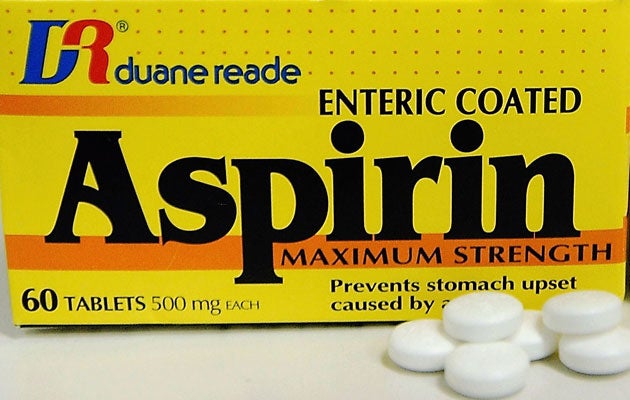
What's it about? Pharmacology is the study of drugs and how they work on people, bodies and tissues. You examine single cells and how these integrate in an organ such as the liver, how disease changes the normal condition, and the effect of drugs on different conditions. Topics may include physiology, cell biology, biomolecular chemistry, zoology, immunology, medicinal chemistry, biochemistry, and analytical methods. When training to be a pharmacist you study the clinically relevant aspects of pharmacology. The pharmacist is concerned not only with the drug and how it works on the body but how to make that drug into a medicine. Aspirin is a basic drug but it becomes a medicine when it is manufactured into a stable tablet that can be kept in the bathroom cabinet for a few months and has a recommended safe dosage for use in specified circumstances. You may also study pharmaceutical chemistry and pharmacognosy (extracts of medicines from plants or natural substances). Pharmacists learn how to give advice to you at the chemist's, but they also advise hospital doctors and GPs. It is rapidly becoming more clinically-orientated. It is a professional training so you need to study the law relating to medicines too.
Study options: The MPharm takes four years at most schools of pharmacy, although some offer a five-year sandwich course that integrates the pre-registration year. A BSc takes three years and four years in Scotland. Pharmacy courses are modular and organised under European directives for accreditation by the Royal Pharmaceutical Society of Great Britain. Check your course is accredited - there are 26 universities that offer the fully-accredited 4-year MPham course. All have a common core with a mix of coursework (including practicals) and exams for assessment, and include placements in hospitals. Graduates must complete a year of pre-registration training and pass the Registration Exam set by the Royal Pharmaceutical Society of Great Britain. Pharmacology can be taken as an individual degree or as a specialisation in years two and three of a more general life-sciences degree course. Courses will generally be modular, in which case assessment will take the form of end of semester exams.
What will I need to do it? Chemistry is a must-have. And as it is such a science-based course, most places will ask that you have at least one other science A-level (sometimes two) – from maths, physics and biology. For pharmacy, Aston, Bath and Nottingham ask for AAB; Manchester AAB-ABB. Cambridge offers pharmacology as part of its natural sciences degree and asks for A*AA; UCL asks for AAA-AAB and Bristol ABB. Nottingham offers pharmacology as a joint degree with neuroscience and asks for AAB.
What are my job prospects? It's a dead cert for pharmacy - once students have registered. Both subjects develop skills that will always be in demand. The majority of pharmacology graduates remain in the industry, either continuing with further study or teaching, or working in forensic science, health laboratories or the pharmaceutical industry. There are also non-lab based jobs available in the latter, such as marketing, product registration, or audit of quality assurance. According to The Times’ Good University Guide 2012, 61 per cent of graduates go straight into graduate-level jobs, earning an average salary of £20,059.
Where’s best to do it? Nottingham, East Anglia and Bath reach the top three in the Complete University Guide 2012, followed by Cardiff, Manchester and Aston. Students were most satisfied at Huddersfield, Greenwich and East Anglia.
Related courses: Medicine; medical sciences; chemistry; biological sciences.
Subscribe to Independent Premium to bookmark this article
Want to bookmark your favourite articles and stories to read or reference later? Start your Independent Premium subscription today.
Join our commenting forum
Join thought-provoking conversations, follow other Independent readers and see their replies