What's it like to study... Architecture
Liam Houghton studied BA Architecture at the University of Westminster and was awarded First Class Honours. He writes that his experience was challenging but extremely useful
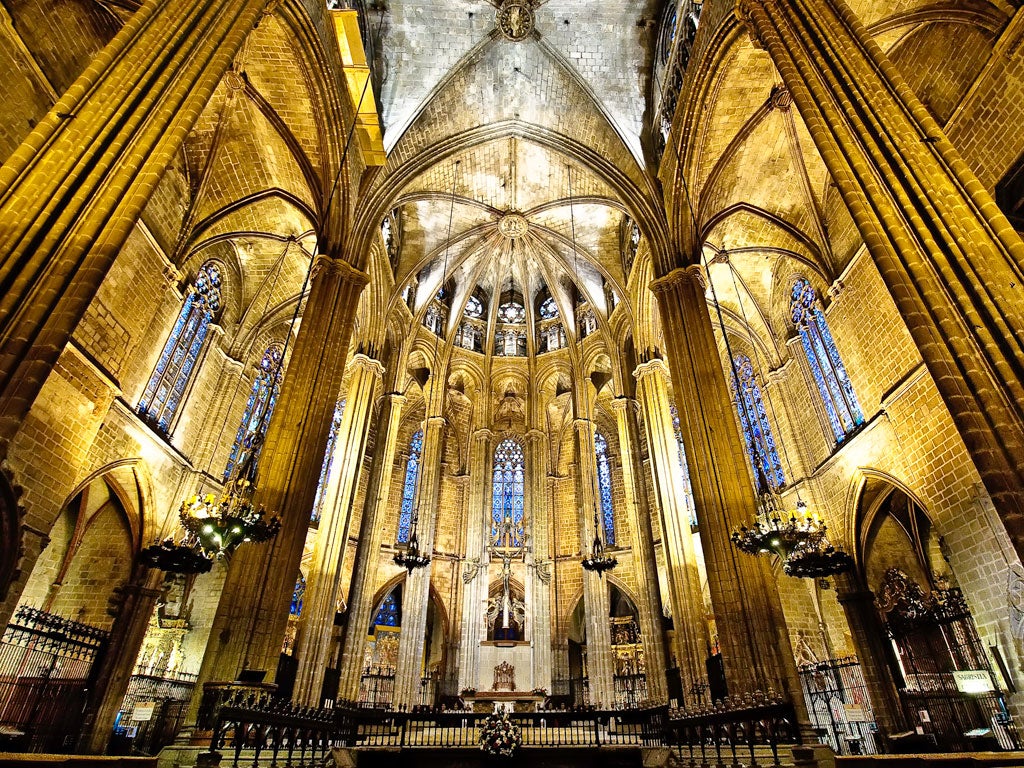
With developing countries now a fundamental part of the global economy, the world has never been so competitive. The skills one needs to survive and thrive in this environment are thus very highly valued - however, these are not skills one can simply buy.
A degree in architecture is about refining your mind more than anything else. Of course you will learn the iterative process, how to draw technically, or the engineering know-how to support designs, yet, for me, it is the intense psychological training which holds the most value.
If you are hoping to study architecture in the years ahead I can promise you that, so long as you do yourself justice by investing all your effort, you will be rewarded for the remainder of your life, even if you eventually choose not to go into architecture itself.
You will very quickly be introduced to 'crits'. A fundamental part of the degree, crits are designed to teach students how to put forward an argument and then support it. You will be asked to explain the thought process behind your design and it will often be put under close scrutiny by your tutors, visiting experts or even your fellow students. Years of dedication to this experience - though sometimes nerve-wracking and intimidating - will have profound results. You will become well-practiced at presenting your pitch, improvising to meet challenges, and arguing your case with reason; all highly valuable - and a combination that is often lacking - in business today.
The breadth of study is significant factor which gives a degree in architecture its gravitas. From research, theory and history on one side, to design, engineering and politics on the other, architecture is the silent linchpin of society in the modern world. It is one of the few careers which can genuinely influence people's lives all day and every day, which explains why qualification takes so long and why the degree is so intense.
My personal experience is that you will have to make sacrifices in order to do well. Anyone who has friends studying architecture will report that these students appear to always be up and always be working, and often 7 days a week too. This is not an enforced timetable - in fact you are actively encouraged to teach yourself. This is the iterative process. You are continually exploring architecture, yourself, and your own reasoning. There simply is no defined point to stop; your references are your peers and you will continually encourage each other to improve and to keep at it. It is for this reason that architecture is not something you can just fall into. You have to want it.
It is a varied subject; one in which it is definitely an advantage to be a good all-rounder because you need to be able to do good business as a result. Yet because it encompasses so much, it needs its experts too. In the middle of the course you will usually be encouraged to take some specialist modules which allow you to apply a greater degree of focus in a particular area of interest to you. I was grateful for this chance to explore myself and ended up producing a body of work in the field of urban design which has taught me a lot. Knowing and understanding how a city works is not too dissimilar to a doctor understanding the vast complexities of the human body. A metropolis like London is like biology on an epic scale, but, unlike in biology, we have the opportunity in architecture to effectively play God.
Dedication is paramount. There is an undeniably high percentage of drop-outs compared to most other degrees, but that is precisely because it is so hard. If you are doing a degree for the student lifestyle, this is the wrong choice for you. The responsibility that comes with the profession is a serious one. Mistakes made just once have the possibility of affecting people for decades, but most importantly, the opposite is true too. The power of architecture is immense and thus the process of harnessing it is not easy, and nor should it be. It is a challenge, but a hugely rewarding one, for society and for yourself.
Join our commenting forum
Join thought-provoking conversations, follow other Independent readers and see their replies
Comments
Bookmark popover
Removed from bookmarks