'We need to recover the spirit of true academia'
The dean of a Spanish business school argues that tutors have become too ensconced in their ivory towers and should be getting back to solving problems in the real world

For free real time breaking news alerts sent straight to your inbox sign up to our breaking news emails
Sign up to our free breaking news emails
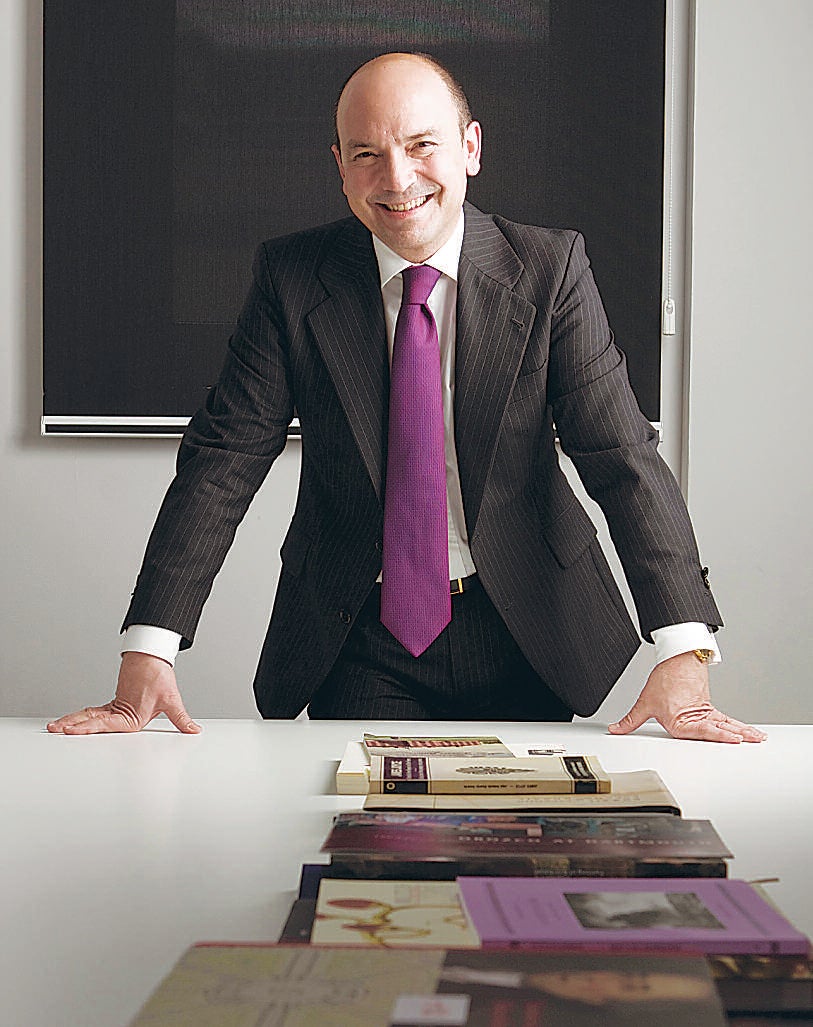
Santiago Iñiguez is well-suited to being the dean of Madrid's IE Business School. He describes the institution as "disruptive – in a positive way. In times of change, being disruptive implies being in the vanguard. When you come through the door at IE you feel the speed, the energy and the innovative spirit. We enjoy experimenting."
Iñiguez avoided the archetypal academic background of those leading business schools. His colleague Paul Danos, dean of Tuck Business School, says he is not the "conventional drummer". Iñiguez qualified as a lawyer and was a graduate researcher at Oxford University, where he gained inspiration and ideas from the concentration of eminent moral philosophers, including Sir Isaiah Berlin, who were there at that time. Their teachings have influenced his theories on the future of business education, crystallised in his recently published book The Learning Curve: How Business Schools are Re-thinking Education.
On the most basic level, what are business schools for? According to Iñiguez, their main point is to develop people who can transform their environment in order to create a better world. "Good managers and entrepreneurs are the best antidotes to many of the world's ills" he argues. He examines in his book how business schools can become effective hubs for developing managers and entrepreneurs.
Iñiguez believes in the need to pursue a traditional form of education that combines specialisation with the study of humanities and the social sciences. "This enhances the experience of the student," he says. "At IE, we have introduced modules in architectural design thinking, because we believe that by introducing basic architecture skills we will teach our MBA students to observe things in a more reflective way. Architects look at buildings from different angles. These skills can be developed in managers for assessing risk by observing it from different approaches."
He argues that management education in the broadest sense should embrace literature and history. "Through reading novels by Charles Dickens or plays by William Shakespeare you will understand human nature far better than by studying a pile of manuals on self-improvement. If you read history and understand what happened a century ago, you may avoid future crises by recognising that events are cyclical. In cultivating the humanities you develop well-rounded managers who can lead cross-cultural teams, understand diversity and work together with people from different cultures," says Iñiguez.
Business schools, first established a century ago, are the new kids on the academic block. They have generated many management tools, golden rules, case studies and experiences that are applied to the world of business, yet are still depicted as being divorced from the reality of business. Iñiguez sees pragmatism as key to the future of management education, defining a new breed of academics as "kangaroos".
"At IE, we encourage our faculty members to be engaged in the world of business. We don't just want wise people who can produce original knowledge – they should combine that with being good communicators in class and also good communicators with top management in the professional world. We want kangaroos that can jump from one of these fields to another with equal excellence. These academic kangaroos will bring closer the worlds of university and business. For too long we have cultivated processes that nurtured the ivory tower existence of academe, and we need to recover the spirit of true academic institutions, which are close to the world of business and aim to solve real problems."
Iñiguez sees competent and honest entrepreneurs and managers as the architects of social structure. Therefore, he suggests that business schools should be focusing on teaching and developing "managerial virtues". Ethics plays a major part in the research and teaching at IE. "Instead of having specific modules on sustainability or business ethics, we look at them in the context of every subject where you encounter dilemmas or ethical issues."
But in a global economy, surely this brings Westerners into conflict with emerging countries who don't share the same values? Iñiguez counters this with the example of Brazil, which is more committed to sustainability through legislation than the US. "A truly entrepreneurial culture depends on having human rights embedded. You can fly professors into business schools in an emerging economy, but to generate true knowledge and develop complete managers you need to have the conditions for innovation, experimentation and freedom."
What is the main challenge that keeps Iñiguez awake at night? "It is undoubtedly how to search and retain talent." Iñiguez sees the newly established business schools in China as a serious threat. "They are trying to drain the resources from US and European business schools, and are sometimes succeeding, because they pay more than we can afford. China has become a centre of gravity in business and the economy on a global scale."
The world is full of books on business education. What does he hope The Learning Curve will achieve? "Business education is a very conservative, traditional industry and change comes slowly. Some of my proposals can be implemented swiftly. For example, the reforms which are necessary to create a single market for higher education, as was intended by the Bologna Process. Implementation needs consensus between academics and many different stakeholders across borders, but I believe that the will is there. We are already seeing a number of institutions which are transforming the way we teach, and reaching out to embrace innovation."
Iñiguez champions what he calls "blended lives". "We are all going to have to work longer and retire later. Our professions will change beyond recognition, so continuous education should be a reference. I enjoy jumping from one field to another, and we encourage it at IE. For example, we have sociologist and maths graduates who teach strategy – bridging subjects rather than thinking in silos, which were the norm in academia in the past." But it won't be until Shakespeare and Dickens enter the curriculum for managers that Professor Iñiguez will have achieved his aim of making the humanities an integral part of business education.
Subscribe to Independent Premium to bookmark this article
Want to bookmark your favourite articles and stories to read or reference later? Start your Independent Premium subscription today.
Join our commenting forum
Join thought-provoking conversations, follow other Independent readers and see their replies