Enjoy a career on - and under - the ocean wave
Marine biologists are in demand, writes Russ Thorne
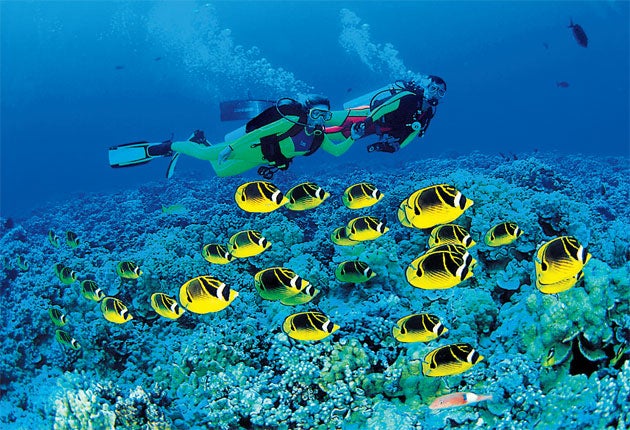
The oceans have always provided a rich variety of life for scientists to study, and with rising concerns about the world’s changing climate the role of highly qualified marine biologists is becoming more important, meaning that skilled postgraduates are increasingly in demand.
“Postgraduate study provides knowledge and skills that are directly relevant to emerging careers in marine biology,” says Professor Richard Geider, Head of the Marine Sciences Group at the University of Essex, “such as resource management and conservation and ecosystem assessment techniques.”
Studying at this level is challenging but rewarding, adds Dr Mark Briffa, course leader on Plymouth University’s MRes course. “It offers more than simply another degree. It’s a time when you can completely focus on your subject of choice at a very high level, work alongside leaders in the field and start to establish a network of contacts.”
Anyone wishing to pursue marine biology at postgraduate level and gain those higher qualifications will have a good range of places to study. Unsurprisingly, there are options in coastal towns, with Portsmouth and Plymouth both offering courses, plus further opportunities at Essex, Glasgow and Bangor universities among others.
Course lengths can vary between institutions and depend on the path a student wishes to take. Full- and part-time options are available, as are programmes with a greater focus on research – the MRes qualification – as opposed to an MSc, which may have more taught elements. The exact subject title and focus can range from Glasgow’s marine & freshwater ecology & environmental management” to the more compact marine biology at Essex and Plymouth.
The exact content of courses will vary, but students can expect to encounter core theoretical areas of marine biology and ecology such as zoology, primary productivity, mariculture and fisheries. They may also gain applied knowledge of mariculture and fisheries, along with examining biotechnology and gaining management skills as part of project work.
Methods of study can include lectures, tutorials, lab work, computer labs and field work (for example, at Plymouth, students use the Marine Biology Association’s boat; at Essex, an optional module teaches students coral reef conservation management in Tanzania). The style of assessment will depend on the course of study, but on both MRes and MSc courses, a significant amount of weight is given to long research projects, where students may be expected to complete funding proposals and grant requests along with conducting field work.
Although applicants will need a first degree in a relevant science subject, it doesn’t have to be in marine biology, explains Geider. “In addition to ecology and physiology, marine biology increasingly relies on chemistry, molecular biology and even mathematics, and therefore it is helpful to have a broad undergraduate education, complemented by life experience.”
Students can go on to find diverse careers in a number of areas. Geider points out that while many marine biologists are attracted to the idea of working in a marine wildlife park or conservation organisation, there are few marine biologist jobs advertised. “However, there are other job opportunities,” he explains, “for example as a biological technician in a research lab. More specialised opportunities include fishery biologist, marine mammalogist, marine microbiologist, or aquaculturist.” In addition, students may stick to the academic route, or move into work with the government or in teaching and communication.
Whatever route candidates take, there’s little doubt that the world’s oceans can offer a challenging and satisfying career. “It’s the huge breadth of the field that I find most fascinating,” says Briffa. “Marine biology can mean everything from studying the migratory patterns of seabirds or fish to working out how marine viruses are transferred within blooms of plankton. “While marine biologists all work intensely in their own particular areas, we also need to be able to see the bigger picture if we want to contribute to the wider world,” he adds. “A major way that marine biologists are doing this right now is in trying to understand how climate change will impact on all aspects of the marine environment and, as a consequence, the marine resources that humans rely on.”
Marine biology is a complex field, but offers great rewards. Those who come away from their studies with the ability to see that bigger picture and pull together the different strands of knowledge that make up the subject will have a lot to offer future employers – and the planet as a whole.
Join our commenting forum
Join thought-provoking conversations, follow other Independent readers and see their replies
Comments
Bookmark popover
Removed from bookmarks