The magnetic pull of Scandinavia
Apart from its solid academic credentials, Scandinavia offers countless attractions to students, including zero tuition fees
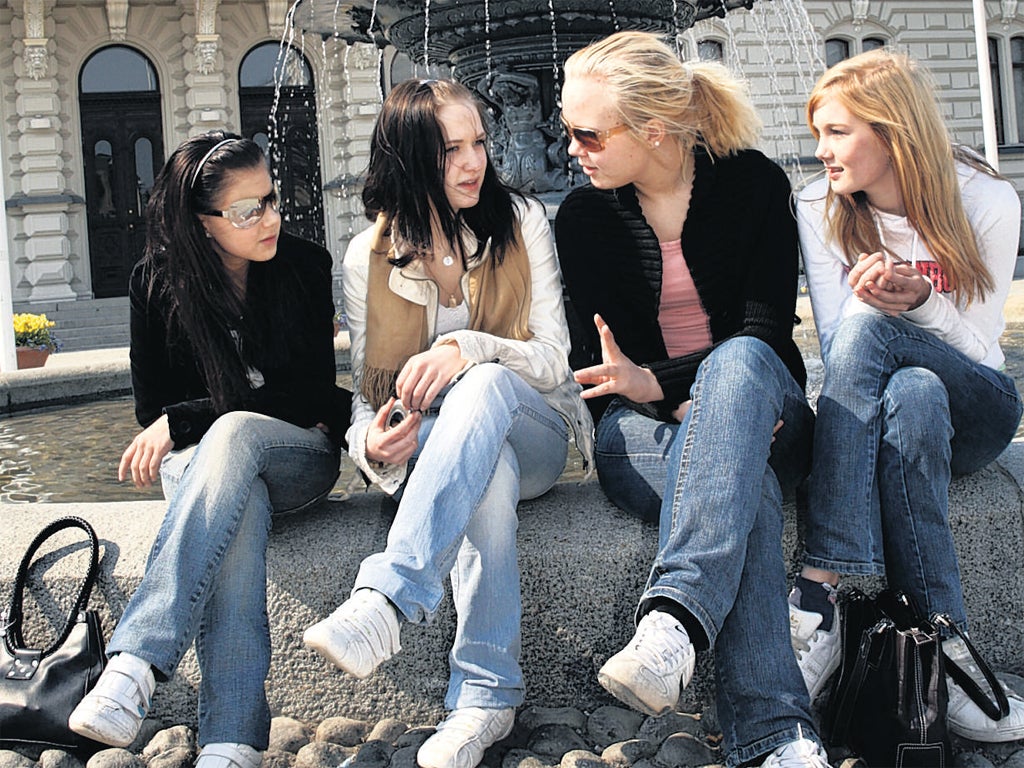
“The problem for English students wanting to learn Danish would be that they can’t,” warns Bo Kristiansen. “That’s because the Danes will always speak to them in English! They love to speak English and want to practise – everyone speaks English, from bus drivers to shop assistants.”
It’s a light-hearted comment that hints at a seriously useful aspect of culture in many parts of the Nordic countries for prospective students: English is widely spoken. According to Kristiansen, a chief consultant in the Communication department of the University of Southern Denmark, language is something that UK students need not worry about when considering studying in Scandinavia. “It won’t be a problem. Students will meet teachers who are very good at teaching in English.”
Of course there’s no real obstacle to students picking up the native tongues of Denmark, Finland, Iceland, Norway or Sweden, should they decide to make the relatively short journey across the “whale roads”, as the anonymous scribe of Old English epic Beowulf described the seas separating us from our Scandinavian neighbours. But with many courses taught in English in a range of subjects, it might be encouraging to know that they’ll be able to arrive and get on with student life first, picking up the basics as they go (battles with vengeful monsters notwithstanding).
There are plenty of other reasons to consider the Nordic countries, though, even before the region’s solid academic reputation is taken into account. “The answer to the question ‘why study in Finland?’ might depend a lot on the person asking,” says Samuli Repo of the Finnish Centre for International Mobility (CIMO). Some are fascinated by the northern climate, for instance. “We have relatively cold and dark winters but also light and warm summers, so the seasons’ change is perhaps an ‘exotic’ experience to begin with!”
Repo suggests that there’s some truth in the adage that Finns live close to nature, adding that nature “is never very far away from the doorstep” in his country, and in fact Scandinavia as a whole has a lot to offer those who venture beyond the cities. Norway’s glacier-carved topography is a popular draw, Denmark has miles of (admittedly chilly) white sand beaches, Finland has its wilderness and the midnight sun, and Sweden offers no fewer than 28 national parks.
However, for anyone not pining for the fjords there are also vibrant university towns and cities, including Helsinki, Stockholm, Oslo and Copenhagen. The Danish capital is Scandinavia’s largest city, with all the benefits that brings. “Whatever you’re into, you can find it here,” says Vibeke Hempler of Denmark Technical University (DTU), pointing out that students have ready access to sports and music. “And on Friday the bars might also be of interest,” he adds with a smile.
Scandinavian universities boast some impressive statistics. BI Norwegian Business School offers both undergraduate and postgraduate courses and is one of Europe’s largest dedicated business schools, with more than 20,000 students enrolled across several locations.
Stockholm University has more than 5,000 academic staff and no fewer than 85 Masters courses taught in English (those with a technological bent might be interested to know that it was Sweden that gave the world the computer mouse, ball bearings and the music streaming service Spotify), while Finland’s 25 polytechnics (also known as universities of applied science) provide more than 100 BA programmes in English. Denmark’s DTU is a high-flier in the Leiden Ranking, which measures scientific performance across 500 universities world- wide: the institution comes seventh in Europe, and first in Scandinavia.
Perhaps the most appealing number to students from the UK, though, is the smallest number of all: zero.
That’s the amount UK students pay in tuition fees in Scandinavia. “We can offer students something quite cheap,” says Kristiansen. “They can get the same quality of education as in the UK, but for free.” Of course living costs need to be taken into account and the region is known to be unforgiving on the pocket at times, but this needs to be balanced with what Hempler refers to as “the joys of living abroad”. That, and the fact that satellite TV costs are lower, which means Premier League football coverage (in Denmark at least) is much more accessible than in the UK, according to Kristiansen.
And if following the antics of Torres and co isn’t high on your list of priorities, universities and polytechnics across Scandinavia have a great deal more to offer prospective students. The variety of courses is comparable to that in the UK; one difference between the systems is that there are two types of institution: universities (which take a more traditional approach) and polytechnics/ universities of applied science (which specialise in more practical, vocational qualifications).
The teaching style can also be a little different. “We focus on educating ‘complete people’,” says Mette Samuelsen of the University College of Northern Denmark. Students learn theory but also develop social competencies and networking skills, he explains. “We teach them to take action and be of value to their employer or company from day one.”
As in Holland, the emphasis is on group work and problem-based learning alongside lectures and written work, “which can be interesting for students,” says Kristiansen.
Businesses are often closely involved with universities of applied science, setting students specific tasks to help develop commercial awareness.
There’s also a closer relationship between staff and students, according to Kristiansen, “and that’s to do with cultural things more than anything else. You can get their phone number and call them if you’re struggling, without worrying. At the end of the course the exams are still the same, but there’s a different relationship and, for many students outside Denmark, that’s quite a surprise.”
Students interested in studying in Scandinavia can visit individual university’s websites. For general information, try the following sites: Study in Sweden, CIMO, Study in Norway and Study in Denmark .
During their studies and after graduation, students are offered the same sort of help as their UK counterparts: careers fairs and services, internships, work experience and company visits are commonplace, all helping students to make the most of their academic experience. Not that there’s any need to worry, says Kristiansen; you’ll probably have embraced the Scandinavian attitude by then. “Students normally say that everything is quite calm and collected here; we do things in quite a relaxed manner. You have to work hard, but it’s still nice and relaxed.”
Join our commenting forum
Join thought-provoking conversations, follow other Independent readers and see their replies
Comments
Bookmark popover
Removed from bookmarks