48 Hours: Riga

Latvia's handsome capital embraces the onset of winter with festivities and a warm welcome for visitors. Simon Calder reports

view gallery VIEW GALLERY
Independent Travel Videos
Simon Calder in Amsterdam
Independent Travel Videos
Simon Calder in Giverny
Independent Travel Videos
Simon Calder in St John's
Independent Travel Videos
News in pictures
News in pictures
Suggested Topics
Click here for 48 Hours In...Riga map


Travel essentials

Why go now?

Latvia's capital is en fête next weekend, as the darkening nights are brightened by the Staro Riga "festival of light" (staro.lv/en; 17-20 November) that welcomes winter. Yet the rich autumn colours in this leafy city have not yet yielded to the first dusting of snow, showing Riga in all its fascinating, post-Soviet glory.

Touch down

Latvia's national airline, Air Baltic (00 371 6700 6006; airbaltic.com) flies from Gatwick to Riga. Ryanair (0871 246 0000; ryanair.com) flies daily from Stansted, and less frequently from Bristol, Prestwick, Leeds/Bradford, Liverpool and East Midlands. Change only enough money on arrival to get you into town – the rates are lousy.

A taxi will cover the 10km to the city centre in as little as 15 minutes for about 10 lats (£13). Green Baltic minivans run to larger city-centre hotels for 3 lats (£4). Bus 22 will take you more slowly via Ratslaukums, which translates as Town Hall Square (1), ending at the railway station (2), for 0.70 lats (£0.90).

If your flight is timed to arrive or depart during daylight, take the white minibus 341 for a fascinating meander around the western suburbs ending up at the Orthodox Cathedral (3) (see "Take a Ride" at the end of Day Two).

Get your bearings

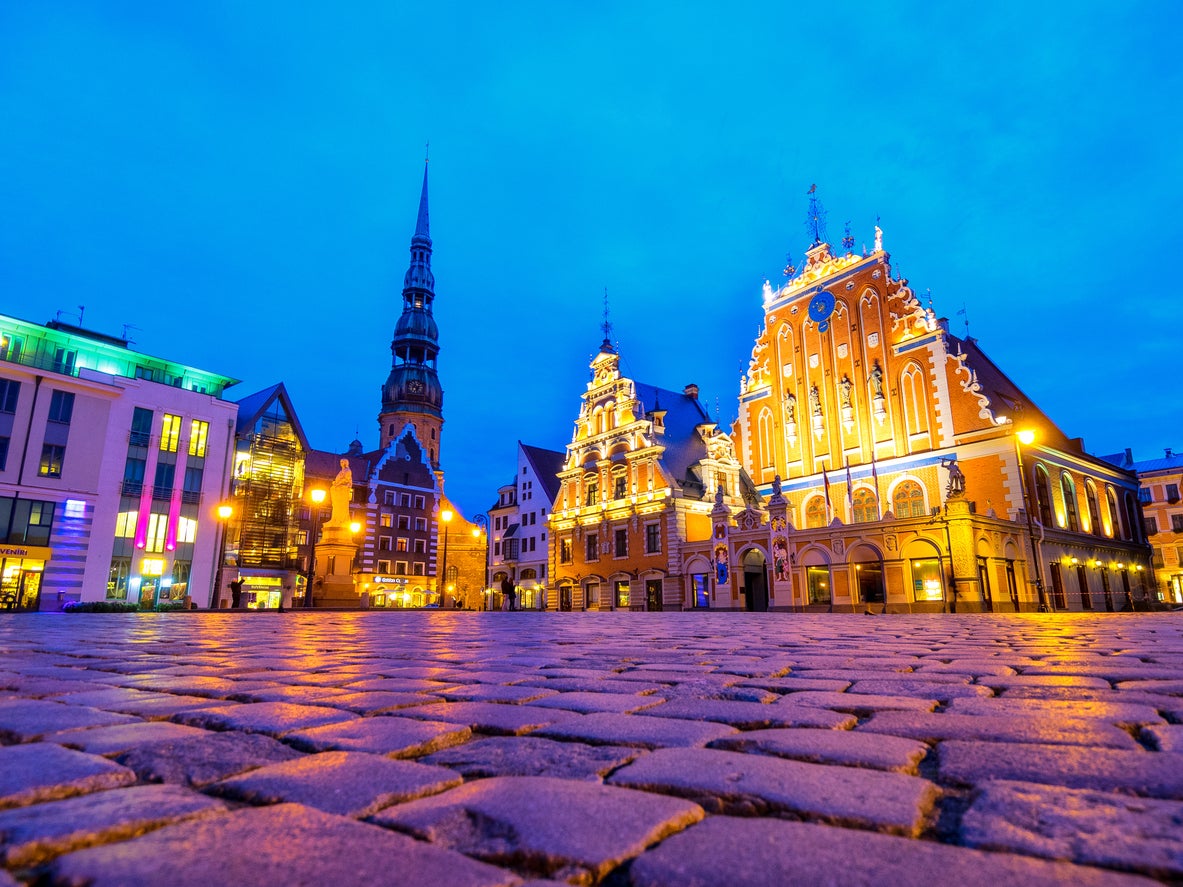
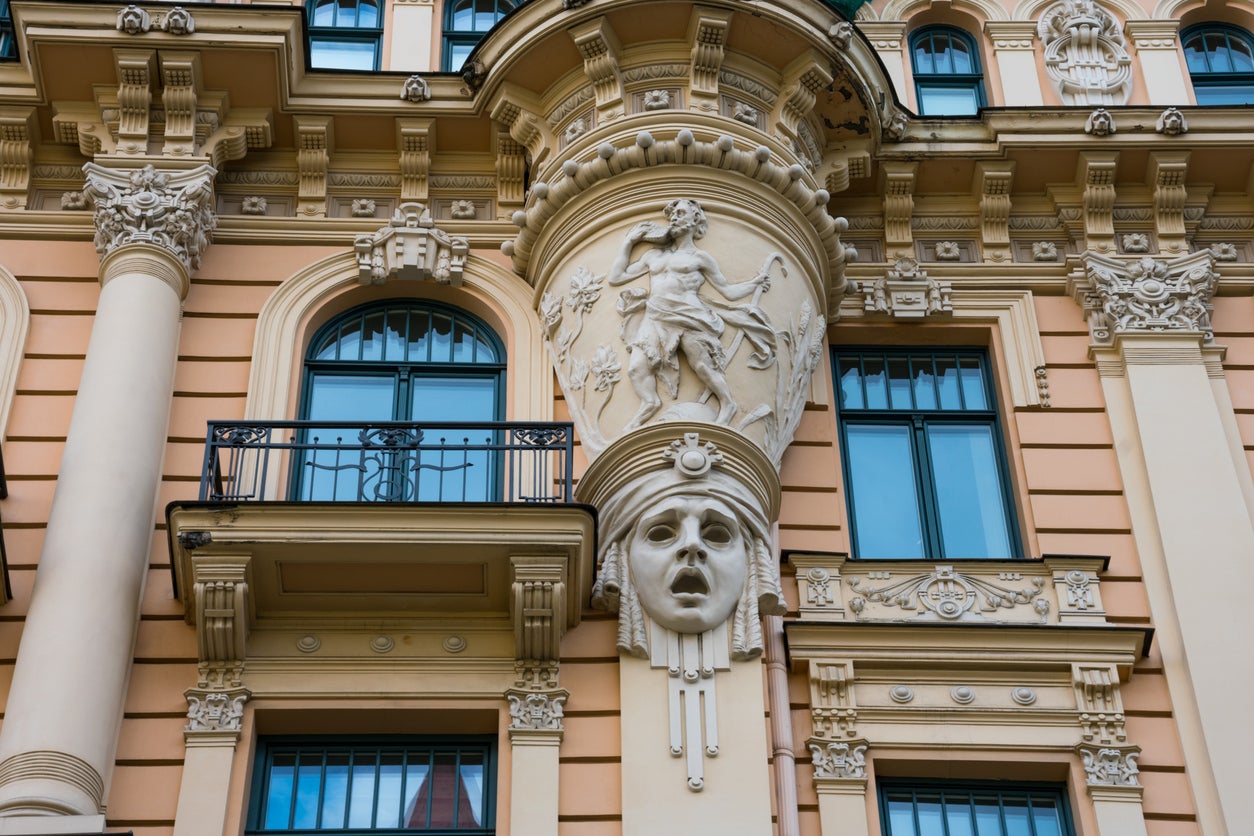
The core of Riga spreads north-east from the grey, broad, River Daugava. The Old Town is hemmed in on three sides by Soviet-era highways: 11 Novembra iela along the embankment, 13 Janvara iela to the south-east and Valdemara iela to the north-west, which is also the approach road to the dramatic Vansu Bridge (4). North of Valdemara iela is a concentration of Jugendstil (art nouveau) buildings that adds a fascinating dimension to Riga. The old town is cushioned from the commercial centre, which begins at the landmark Radisson Blu hotel (5) (00 371 6777 2222; radissonblu.com) and continues along Brivibas iela. The city's main axis connects the hotel with Town Hall Square (1); here, the tourist office (00 371 6 703 7900; rigatourism.com; 10am-6pm) is in the House of Blackheads (6), an elaborate reconstruction of the guildhall of bachelor German merchants.

To get your bearings from the upper deck, Riga Sightseeing (00 371 282 43 200; riga-sightseeing.lv) sells a 24-hour ticket for its hop-on, hop-off bus tour for 10 lats (£13). The main departure point is Town Hall Square (1), with the railway station (2) and Radisson Blu (5) among the other stops.

Check in

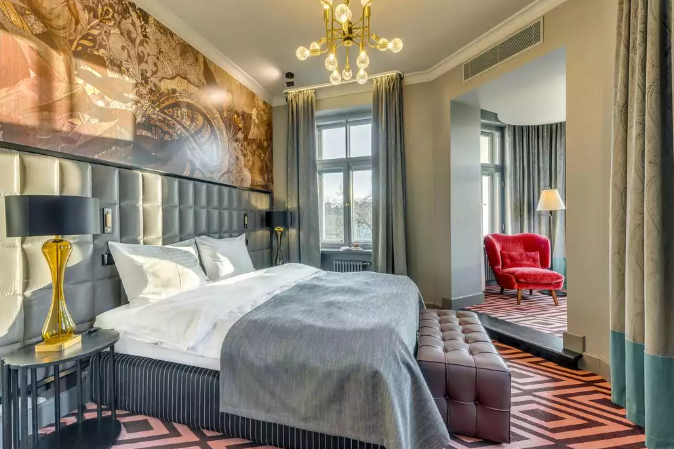
The optimum combination of location, ambience and price is represented by the Hotel Centra (7), a smart, spare conversion at 1 Audeju iela (00 371 6722 6441; centra.lv), where a double costs €46, including breakfast.

For rich history, the Ekes Konvents (8) at 22 Skarnu iela (00 371 6 735 8393; ekeskonvents.lv) has roots that extend back to Riga's first guesthouse in 1435, which presumably puts it in the running for being the world's oldest hotel. Characterful and creaky, with small doubles (including breakfast) for €55.

Of Riga's many hostels, the Blue Cow (9) at Barrack 2B 4 Torna Iela (00 371 2 773 6700; bluecowbarracks.com) is the most chic: it occupies the top floor of part of the Jekaba barracks on the edge of the Old Town. A private double room with en-suite facilities costs €42.

Day one

Take a hike

From the Orthodox Cathedral (3), walk south-west along Brivibas past the Freedom Monument (10), a 100ft-high granite tower. Turn right after the bridge and locate the tall round tower that is now part of the Latvian War Museum (11) (open 10am-5pm daily; free; worth only a quick peek). Walk past the Jekaba Barracks that are now full of tourist shops and restaurants, then alongside the Arsenals art museum (12) at Torma 1 (00 371 6735 7527; lnmm.lv) – where exhibits include a row of stone heads outside. The interior, featuring modern art by Latvian artists, opens noon-5pm daily except Mondays, admission 3 lats (£4).

Turn left along Arsenala iela; two more quick left turns take you threading through Klostera iela to the Catholic cathedral (13). Pop in if it's open, then continue down the lane to see, on the street opposite, the Three Brothers (14) – a trio of old houses leaning on one another for support. Go left then right to the handsome old Stock Exchange (15), complete with German-era weather gauges at the front. It faces out on to Doma square, facing the Protestant Cathedral – the Doma (16) – under wraps due to refurbishment. Find tiny, cobbled Rosena iela (17) for a sense of how little the city has changed since communism, and to locate the lunch stop just beyond the far end.

Lunch on the run

Pelmeni XL (18) (00 371 6710 4441; xlpelmeni.lv) is a colourful self-service café at Kalku 7 offering pelmeni – Russian ravioli – stuffed with meat or vegetables. Help yourself to what you wish, add some sauces and a kefir (yoghurt drink) to wash it down, and pay by weight (not yours – the pelmeni). Another branch is at the railway station (2).

Cultural afternoon

Town Hall Square (1) has plainly suffered over the years, but much of the demolition took place after the Second World War, when Soviet officials sought to eradicate what was considered "Germanic" architecture. Historic buildings were replaced by unsightly blocks, including the structure now housing the Museum of Occupation (19) (00 371 6 721 2715; occupationmuseum.lv). It depicts the suffering of the Latvian people during 51 years of occupation from 1940 by the Soviet Union and Nazi Germany. The most touching exhibits are the personal keepsakes, such as a handkerchief bearing the embroidered signatures of Latvian women in a forced-labour camp in Siberia. It opens 11am-5pm daily except Monday, admission free.

Take a view

Close by, take the lift to the top of St Peter's Church (20) to survey the city in all of its depleted glory; open 10am-5.30pm daily except Monday, 3 lats (£4).

Window shopping

The Central Market (21) occupies a series of vast hangars east of the railway lines, with the gaps between filled by street traders. Wander through this retail frenzy to see how easily capitalism has supplanted communism.

An aperitif

The Radisson Blu (5) was, as the Hotel Latvia, the coolest place in town during the Soviet era – and the Skyline Bar (reached by a glass lift) on the 26th floor appears not to have changed, with Seventies music, purple swirls and orange lampshades. Riga Balzam, a local herb liqueur, costs 2.20 lats (£2.80), while a large beer is 2.90 lats (£3.80) – still cheaper than admission to the top of St Peter's Church.

Dine with the locals

A 15-minute walk north to takes you to Aragats (22) at 15 Miera iela, open daily except Monday for the best Caucasian food north of Yerevan. The proprietor arrived in Riga after the earthquake in Armenia's capital in 1988, and still serves superb shashlik (kebabs) accompanied by tasty Armenian and Georgian treats and wine. When you leave, look across the road for a series of the signature wooden buildings that are so much a part of Riga's character.

Day two

Sunday morning: a walk in the park

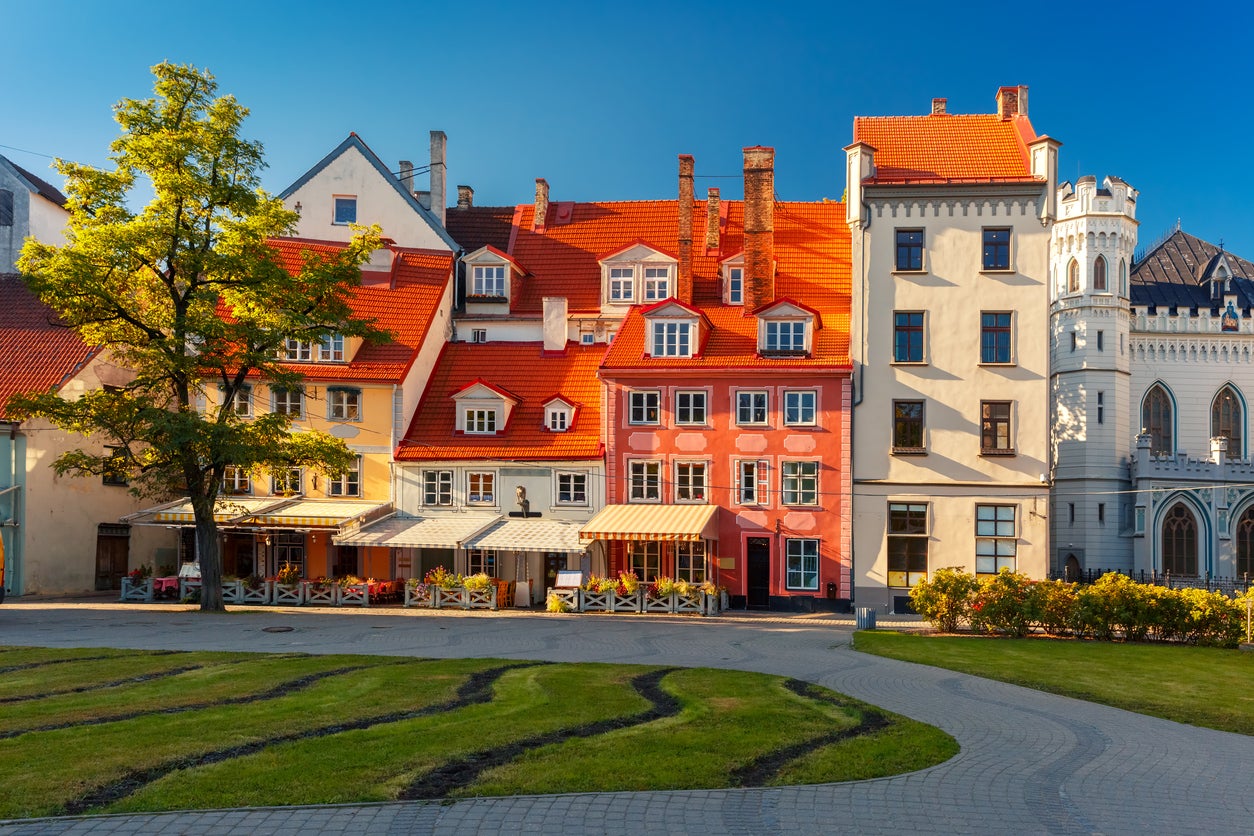
An early start on Sunday is the ideal time to view the exceptional collection of lavish Jugendstil structures that decorate the north-west of the city, a part of Riga with plenty of green spaces. If you are staying in the Old Town, walk through the parkland with the Freedom Monument (10) and Orthodox Cathedral (3) as your beacons, en route to Alberta iela (23). Many of the buildings here are the work of Mikhail Eisenstein, the father of the Battleship Potemkin director.

With Elizabetes iela as your axis, make a loop north up Rupniecibas iela and south along Vilandes iela (24), after which the World Trade Center (25), formerly the Communist Party HQ, looks all the more absurd. Then amble through Kronvalda park, with its exuberant statues, to the National Theatre (26), where Latvia's independence was proclaimed.

Out to brunch

While the Germanic architecture remains, many of the grand Viennese-style cafés were eradicated during the Soviet era. But the genre is returning, with the resurrection of the name (from 1910) of V Kuze (27), a confectionery maker who died in Soviet hands. His life is celebrated in style at 20 Jekaba iela (00 371 6732 2943; kuze.lv; 10am-10pm).

For an absurd Soviet confection, visit the "wedding cake" skyscraper that the Soviet Union imposed – the Academy of Sciences (28) that has Stalinist siblings across the former USSR after the Kremlin sought to dominate its outlying possessions with architecture. In sharp contrast, walk south along Turgeneva (29), lined with now-derelict wooden houses. Turn right at the embankment, and you find the Ghetto Museum (30), another reminder of the cruelty of history in this beautiful corner of Europe (00 371 6727 0827; rgm.lv).

Go to church

There are as many Russians in Riga as there are Latvians, and the Russian Orthodox Cathedral (3) is the hub of their community. You can wander in and admire the astonishingly opulent interior, bedecked with gilt and icons.

Take a ride

Minibus 341 from right outside the Orthodox Cathedral (3) runs to the airport every 15 minutes or so. The 14-seater crosses Vansu Bridge before taking a sharp right to meander around the western suburbs of Riga. In the first few minutes, look for the series of grand wooden villas in various states of (dis-)repair, followed by a vast cemetery on the right.

The journey continues with an excellent summary of the city's nature: a handsome, leafy and bourgeois capital interspersed with the detritus of Soviet occupation such as massed ranks of apartment blocks. The journey takes about 30 minutes for a fare of 0.60 lats (£0.80).

Independent Comment
blog comments powered by Disqus
Career Services

Day In a Page

Teenage kicks: Twitter and the 'bling ring' gang

Lena Corner gets the inside story on this very post-modern scandal.

Moveable feasts: Festival grub goes gourmet

Meet the mobile foodie pioneers bringing Bloody Mary crumpets, craft ales and sustainable seafood to the masses.

'My own Diamond Jubilee': 60 years in same job

The Queen is part of an elite club which clocks in way past retirement age.
Joumana Haddad: 'Arab women have been brainwashed'

Joumana Haddad: 'Arab women have been brainwashed'

Haddad is a voice rarely heard in the Middle East – an unapologetic feminist who wants to challenge the way both Arab men and women think.

Food: Mark Hix knows his onions

Alliums are among the most versatile kitchen ingredients, says our chef.
Grotty no more: How Lanzarote upgraded its appeal

How Lanzarote upgraded its appeal

Lanzarote has been quietly changing its fly-and-flop holiday image, discovers Andrew Eames.
Traveller's Guide: Montenegro

Traveller's Guide: Montenegro

It's one of Europe's smallest countries, but it packs in spectacular landscapes and glittering beach resorts.
48 Hours In: Verona

48 Hours In: Verona

Summer opera returns to the Roman arena, says Charles Hebbert.
Ten things we’re looking out for at E3 2012

Ten things to look out for at E3 2012

From Wii U to The Last of Us we consider this year's show
Come dine (online) with me

Come dine (online) with me

Move over TV chefs, hello YouTube stars
Next in line – but public just can't warm to idea of Charles in charge

Next in line – but public just can't warm to idea of Charles in charge

'Independent' poll finds less that half want him to take throne as ministers moan of interference
Nothing's sacred: the illegal trade in India's holy cows

Nothing's sacred: the illegal trade in India's holy cows

Andrew Buncombe reports from Kaharpara on a bloody war between rustlers and border guards
Mogul grounded: Desmond gives up his jet deal

Mogul grounded: Desmond gives up his jet deal

Media tycoon's company pays £1m to cancel his order for a £36m private jet after drop in profits
How Ai Weiwei built a pavilion in London – by remote control

How Ai Weiwei built a pavilion in London – by remote control

The artist tells Clifford Coonan how he used Skype to escape confinement in Beijing
Nature, nurture... or neither? The new twist in an age-old argument

Nature, nurture... or neither?

The new twist in an age-old argument