Hérault wines
Ten vintage facts that wine lovers should know about the historic region’s vineyards. By Henry Palmer
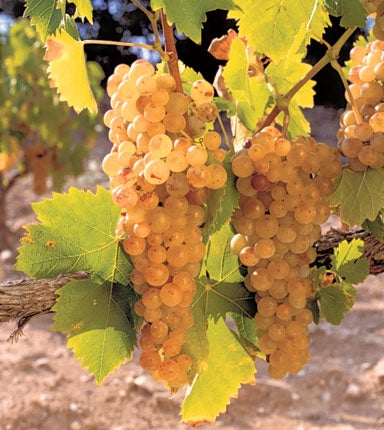
4: The number of areas in the Hérault departement producing different AOC Muscat wine – namely Frontignan, Lunel, Mireval and St Jean de Minervois. Muscat is best known as a fortified sweet wine tasting of honey with hints of marmalade, yet a number of winemakers in these regions are increasingly producing a dry Muscat alongside this vin doux naturel.
20: The number of villages that are part of the Saint-Chinian terroir. This diverse region takes in the River Orb and the mountains of the Caroux and Espinouse. It has been an AOC since 1982, producing rich reds and generously flavoured roses. (Find more information and details of wineries to visit on saint-chinian.com).
50: A conservative estimate of the number of different regional wines, along with 20 or so Champagnes, available at L’Atelier winebar in Montpellier. Set in an atmospheric old workshop that formerly housed a florist, this informal establishment is one of several new wine bars in the Languedoc capital – testimony to changing attitudes and a local, growing appreciation for sampling fine wine in a relaxed environment. (L’Atelier, 4 rue Rebuffy, Montpellier; 00 33 4 67 57 47 23; latelier-jeanfleuriste.fr).
150: A reckoning of the number of stalls that are set out on Esplanade Charles de Gaulle in the centre of Montpellier every Friday night in July and August when Les Estivales market takes place from 6pm to midnight. There’s a party atmosphere, with much sampling of local wines and foods ( ot-montpellier.fr).
200: The age of the estate of Domaine Saint-Andre, one of several vineyards set on the banks of the Thau Lagoon. Stretching over 40 hectares, it was acquired in 2002 by Inès and Thierry Hébert who produce well-regarded reds of Cabernet and Merlot; roses from Carignan, Cinsault and Grenache; and whites from Roussane, Viognier and Chardonnay. The estate is close to the village of Mèze (00 33 4 99 04 94 73; domainesaintandre.com).
1139: The year the Abbey of Valmagne was founded. With extensive farmlands – and vineyards – it became one of the richest monasteries in the south of France. After the Revolution it was sold privately, and today wine is still produced here, with enormous vats stored, stunningly, in the ancient nave of the monastic church. It located near the village of Villeveyrac north of the Thau Lagoon (00 33 4 67 78 06 09; valmagne.com for details of visits).
1564: The year that King Charles IX visited La Tour de Farges. This ancient winery lies close to the town of Lunel and was painted by Gustave Courbet in the 19th century. Curiously, Karl Marx was also a guest here. Tastings daily by appointment (00 33 4 67 83 01 69; latourdefarges.com).
1869: The year that M J Lichtenstein of Montpellier established that the disease then devastating the vineyards of France was caused by a genus of plant lice called phylloxera. It was the first step on the road to recovery.
2007: The year that the Pézenas denomination of wine was officially recognised. It’s a velvety red, made of Grenache, Syrah, Mourvèdre, Carignan and Cinsault grapes. The Pézenas terroir covers 15 communes and produces around 60,000 hectolitres of wine annually ( pezenas-tourisme.com).
2,500,000: The estimated quantity of wine, in hectolitres, produced every year by the vineyards of the Béziers area. This – and much more – you learn at Béziers Méditerranée Oenopole (BMO), a showcase for wines in the region and a centre for wine courses. BMO is open Monday to Friday from 8.30am-noon and 2-6.30pm at 1 avenue Président Wilson, Béziers (00 33 4 67 76 20 20; beziers-agglo.org).
Join our commenting forum
Join thought-provoking conversations, follow other Independent readers and see their replies
Comments
Bookmark popover
Removed from bookmarks