Airlines cleared to use Santa's short-cut
New destinations and shorter journey times on way after North Pole route is approved for passenger jets. Simon Calder reports
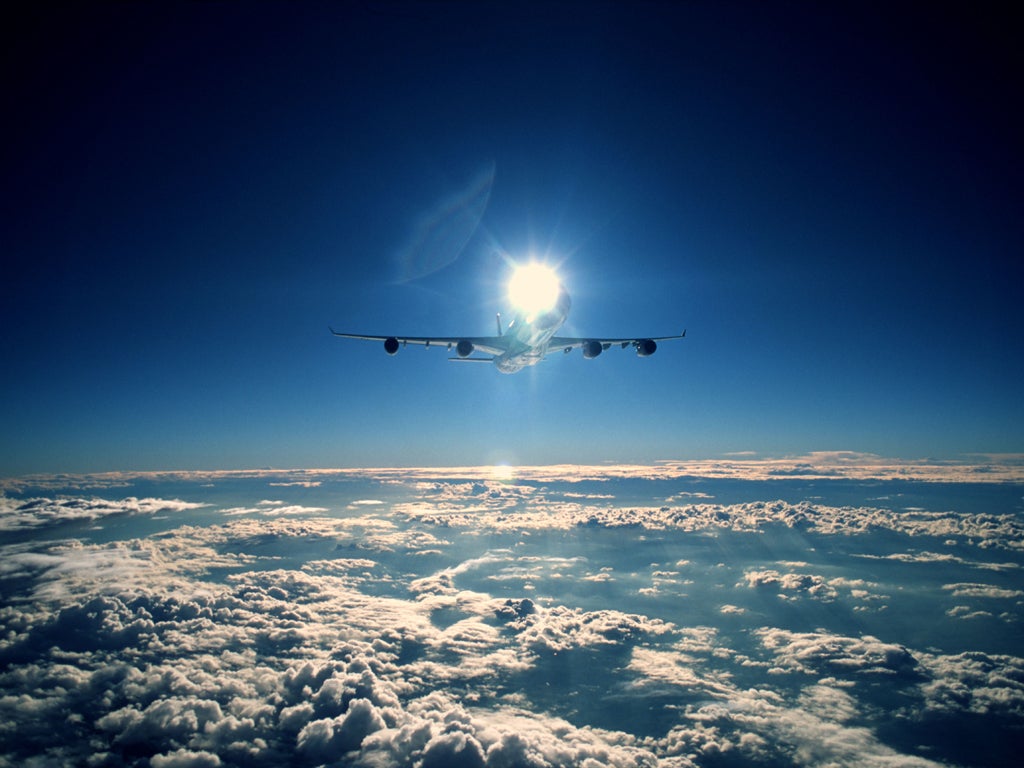
Hard-pressed airlines have been handed the perfect Christmas present: permission to fly twin-jet aircraft over the North Pole, saving millions on fuel costs, opening up new destinations and reducing damage to the environment.
The easing of rules about how close twin-jets must keep to diversion airports means faster, cheaper and cleaner flights.
Until now, America's aviation regulators have insisted that the nearest suitable place to land must be no more than three hours away. That has now been extended to five-and-a-half hours – so long as the airline meets a series of criteria, from additional equipment to special training.
As a result, Boeing 777 and 787 "Dreamliner" twin jets will be able to fly almost anywhere in the world. A patch of territory in Antarctica remains inaccessible. But "Santa's short cut," as the route has been called, gives a green light to flights from Britain straight across the North Pole to Pacific islands that are currently off the route map.
For full graphic click here.
Sir Richard Branson, president of Virgin Atlantic, told The Independent: "This new development really does open up a whole new world and will allow us to take our Dreamliners to more exciting and exotic places. Our new fleet of 787s could well be flying to Honolulu or even Fiji one day."
Fiji straddles the 180-degree line of longitude, and the most direct track passes directly over the North Pole – though because of the distance, over 10,000 miles, the payload would need to be restricted. The new policy could also make non-stop routes to Tahiti in the South Pacific and Anchorage in Alaska viable.
Twin-jets have always faced tight rules on how far they can stray from a diversion airport, with good reason: the failure of one engine is potentially much more serious than for a three- or four-jet aircraft. The default is that twin-jets must be able to reach a suitable diversion airport within an hour's flying time on a single engine.
The worst-case scenario assumes depressurisation as well as the failure of one engine, requiring the aircraft to stay low. This implies a maximum distance of 450 miles in an hour. The rules oblige pilots to fly circuitous routes that waste time and fuel, and render many trans-oceanic trips impossible for twin-engined aircraft.
To venture more than 60 minutes away requires "ETOPS" certification. The term derives from "Extended Twin-jet Operations over water", though a common joke in aviation circles is that it really stands for "Engines Turn Or Passengers Swim". The aircraft and engine makers must convince regulators that it is safe to fly further away from a safe haven.
Many twin-jets are certified for 120-minute ETOPS, while British Airways' entire Boeing 777 fleet is ETOPS-180 compliant – so the planes face few restrictions across the Atlantic.
But routes across the North Pole, as well as many trans-Pacific journeys, have hitherto been out-of-bounds.
Larry Loftis, general manager of Boeing's 777 programme said: "This is the logical continuation of the Boeing philosophy of point-to-point service. Passengers want to minimise their overall travel time."
The first airline to take advantage of the relaxed restrictions is Air New Zealand, which operates across the Pacific. The airline's chief pilot, Captain David Morgan, said: "Less fuel is burned and less carbon dioxide is emitted into the atmosphere. It's also good for customers."
The Boeing 787 is expected soon to be ETOPS-330 certified, with Airbus seeking the same for its big twin jet – coincidentally named the A330.
Not everyone in aviation is happy with the relaxation of restrictions. While it is generally accepted that dual engine failure is extremely unlikely, some safety experts express concern about cabin conditions during a diversion.
One safety manager, who wished to remain anonymous, said: "It's all very well being able to make a safe landing, but passengers are likely to be distraught and extremely cold after a five-hour diversion to an airstrip in the Arctic."
But a spokesman for the British Airline Pilots' Association said: "Our members are confident that the safety case for equipment redundancy, pilot training and passenger welfare will be fully satisfied."
And Sir Richard Branson looked forward to new sightseeing opportunities: "Apart from the stunning destinations on arrival, the Arctic scenery will be just amazing on the way."
Join our commenting forum
Join thought-provoking conversations, follow other Independent readers and see their replies
Comments
Bookmark popover
Removed from bookmarks