Simon Calder: Going back to Underground Zero
The man who pays his way
Mind the gap. Not the jungly, Latin American one in Darien that interrupts the Pan-American Highway and is infested with malarial mosquitos and narco-terrorists, but the more accessible void between the train and the platform edge found on parts of the London Underground. There are many such gaps on “the Tube”, because the system that keeps Western Europe’s biggest capital moving is so old. On Thursday the line that proved people would go into a hole in the ground if it got them around town quicker celebrates its 150th birthday.
Platform 16 at Paddington station is hidden away from Brunel’s magnificent terminus. It promises destinations no more exotic than Hammersmith or Barking. And on a wet Friday morning it does not feel like the birthplace of a transport revolution. Yet this is Underground Zero. On 10 January 1863, it became the fast track to the future – the world’s first high-speed, mass-transit line. The Metropolitan Railway extended less than four miles, from Bishop’s Road (as the station was then known), to the edge of the City of London at Farringdon Street. (The suffix has, like various bits of the Underground, fallen off over the years.)
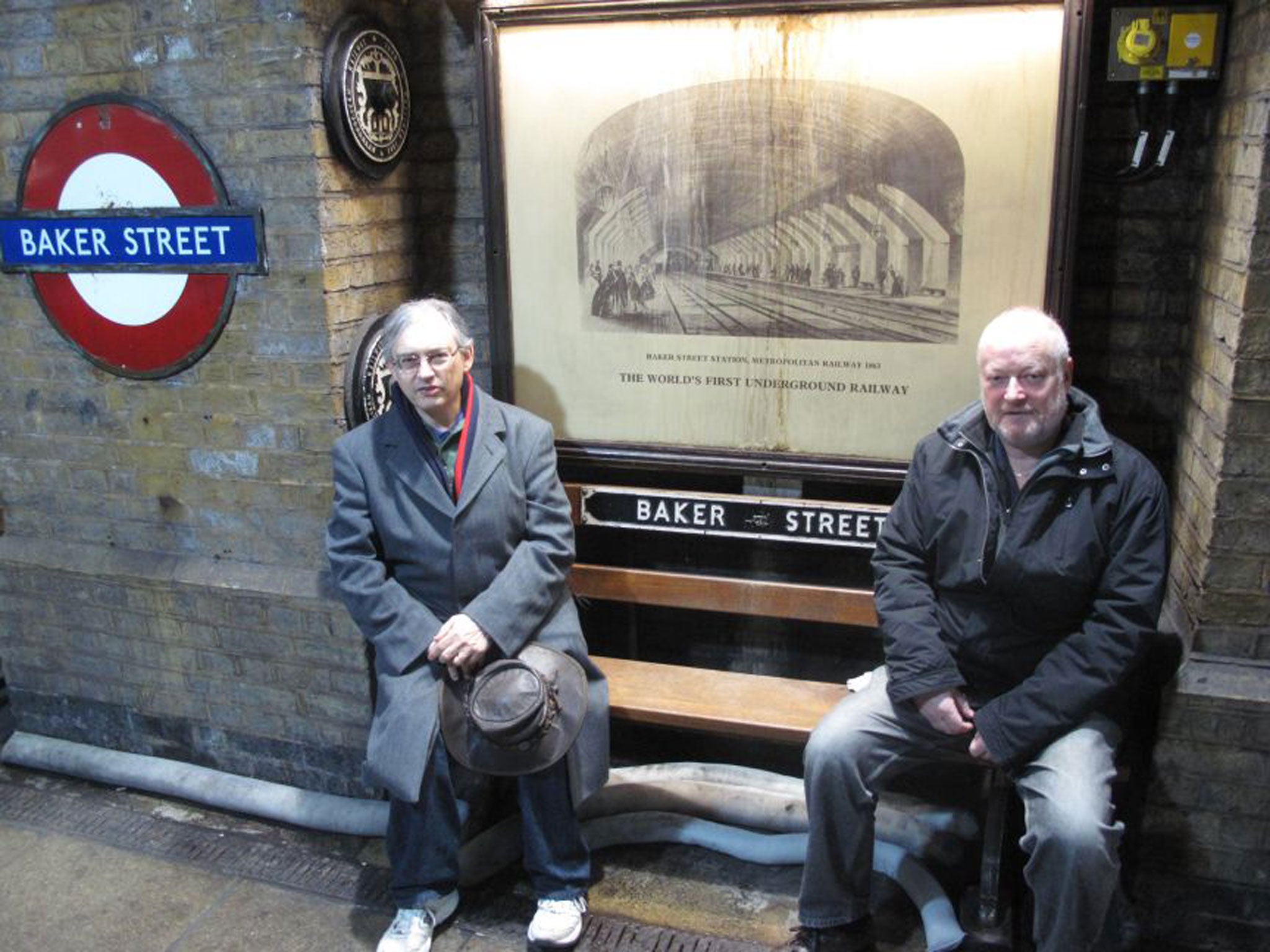
I am here with two leading experts on the world’s greatest sub-surface network: Ian Robins and Nick Mitchell. They once held the record for visiting every station on the Underground in a single day (at the time when the best strategy was to start on the first train from Ongar, and then, after a quick change at Epping to sprint between Wanstead and Snaresbrook). Even though Ongar is no longer, the pair are still enthused by the impending anniversary.
“In 1863, Paddington was then a village on the outskirts of London,” says Nick. “Great Western was only allowed to build a line as far as the edge of London.” Ian adds: “At the same time, the city had a road improvement scheme. The New Road, now Euston Road and Marylebone Road, was wide enough to build a railway beneath it, and they were redeveloping the Holborn Viaduct area, so the two went hand in hand.”
While the above-ground railway had shown how technology could shrink the distance between cities, when people reached the pre-motor-age capital their maximum speed slowed to the pace at which a horse could move through the crowded streets. Thanks to the Metropolitan, a journey that previously took an uncomfortable hour was suddenly accelerated to about 18 minutes in relative comfort – apart from the fumes from the steam locomotives. An early spin doctor sold this as a virtue – encouraging people with chronic respiratory problems to venture below ground to improve their health. The line may not have helped them, but the Underground liberated Victorian Londoners.
Ancient and modern
A train trundles off along the 150-year-old tunnel to Edgware Road (where you can see former sidings for the first Underground) and then to Baker Street, “the hub of the Metropolitan empire”, as Ian calls it. The original platforms (curiously numbered 5 and 6) have been restored as they were 150 years ago, with handsome brickwork and skylights designed to bring a breath of the outside world to the subterranean rail lair. We temporarily venture above ground to witness the emblems that adorn the ticket hall – and visit the Chiltern Court Dining Club. Today, it is a Wetherspoon’s pub – but, says Nick: “In the 1920s and 30s people came here for afternoon tea and the palm court orchestra.”
Today, journey’s end for the pioneering railway is a mass of building work as the Crossrail project takes shape. Farringdon is a key junction on this fast, high-capacity line. Future travellers will change here for Brighton, Gatwick – or take a trip 150 years back in time on what should now be called the History Line. “If you provide a decent service,” says Nick Mitchell, “people will use it.”
Hgh life in Germany
If the Underground is the finest form of urban transport ever conceived – then which is the least successful? The Schwebebahn, an outlandish construction located in Wuppertal, near Düsseldorf. A railway carriage dangles from sky-high supports, resembling 1960s speculation of “what travel will look like in the future” as it whizzes along the Wupper valley. Wupper-class travel has been airborne since 1901 – but no one has chosen to emulate it. The future, as the Victorian pioneers knew, is going Underground. But make time this year to visit the incredible flying train of Wuppertal – and do mind the gap.
Join our commenting forum
Join thought-provoking conversations, follow other Independent readers and see their replies
Comments
Bookmark popover
Removed from bookmarks