A decade after the invasion of Iraq, the Kurds emerge as surprise winners
World View: Troubles in surrounding countries may puncture Iraqi Kurdistan's boom but, for now, new hotels and malls are mushrooming

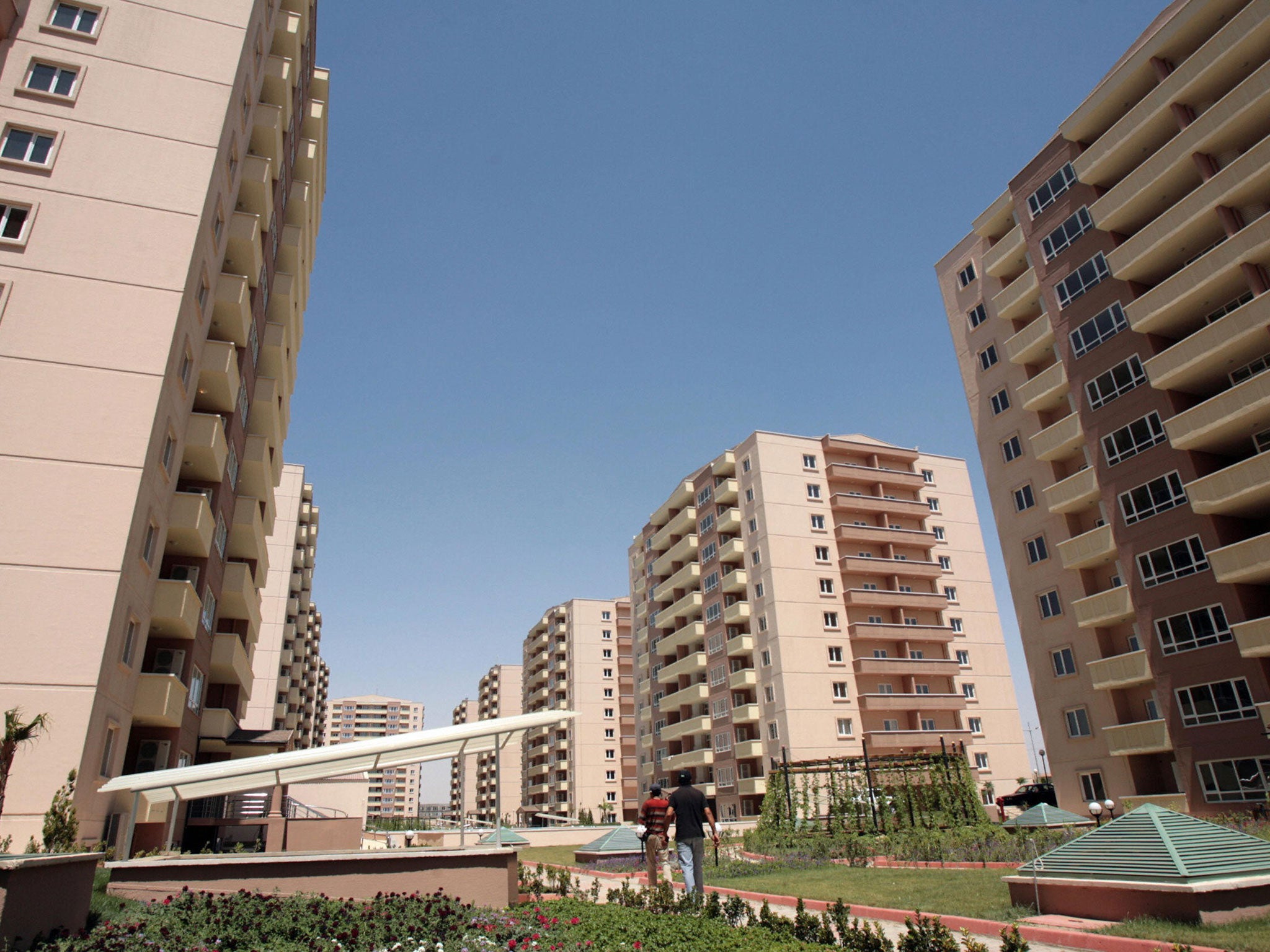
The Kurds of Iraq are the big winners in the 10 years since the overthrow of Saddam Hussein. They have also been lucky. Up to a few weeks before the invasion in 2003, the US was intending to invade northern Iraq from Turkey, along with 40,000 Turkish troops. The Kurds were horrified at this, suspecting that once the Turks were in northern Iraq it would be impossible to get them out. I remember the Kurdish relief and jubilation when the Turkish parliament voted against participating in the US invasion.
Erbil, the Kurdish capital, was at that time a dismal, impoverished place at the centre of three Kurdish provinces with de facto independence from the rest of Iraq since 1991. But self-determination had come at the price of isolation and poverty. The mountains were bare, stripped of trees and bushes by people desperate for firewood. In the middle of minefields, along the Iranian border at Penjwin, I came across villagers who had a peculiarly dangerous occupation. They defused and dismantled a jumping mine called the Valmara in order to sell the explosives, and the aluminium in which they were wrapped, for a few dollars. The local cemetery was full of fresh graves and many villagers were missing hands and feet.
All this sounds like tales from a medieval past, given the present state of the five million people living under the Kurdistan Regional Government (KRG). Erbil today has a glossy new international airport and its skyline is broken by the towers of new five-star hotels. In contrast to the rest of Iraq, life is safe and the electricity supply almost continuous. New housing and shopping malls have sprung up everywhere.
Critics argue that there is rather less to this than meets the eye and the main beneficiary of Kurdistan's economic prosperity is the ruling elite. "We have plenty of new hotels," remarked one jaundiced Kurdish observer, "but just try to find a decent school for your children or a hospital for a sick relative." Government supporters respond that 50 to 60 international oil companies are looking for oil, the hotels and new apartments are full, and every week sees the arrival of a delegation of businessmen from Turkey, Germany or the Gulf. The KRG benefits from being one of the few places in the world seen as booming at a time of recession and stagnation elsewhere.
A striking change is in the countries surrounding Iraqi Kurdistan. I was very interested in these places in early 2003 because I was trying to reach Iraq in time for the start of the US-led invasion. I was certain the government in Baghdad would not give me an entry visa because they disliked a book about Saddam Hussein I had written with my brother Andrew. I knew I would be welcome in the Kurdish enclave, but it was difficult to get there since it was virtually besieged by neighbouring states – Turkey, Iran, Syria and Saddam Hussein's Iraq.
The problem appeared depressingly insoluble until the Kurds persuaded the Syrians that it was in their interest to allow some foreign journalists to pass through Syria into Iraqi Kurdistan. The journalists would be able to publicise the Kurds' hostility to a Turkish invasion of northern Iraq, something both the Kurds and Syria wanted to avoid. I flew to Damascus on a tourist visa, was driven for 10 hours, by a member of the Kurdistan Democratic Party, to the police headquarters in Qamishli in northern Syria. I waited in some trepidation as a Syrian officer leafed slowly through a large handwritten ledger to see if my name was among those allowed to cross the frontier. Finally, his finger stopped at an approximation to my name and I drove immediately to the Tigris, on the far side of which was a sliver of territory controlled by the Kurds. I got into a tin boat with a spluttering outboard motor, which slowly made its way across the river.
I spent the next three months in Kurdistan in a hotel called the Dim Dim in Erbil, which was low on creature comforts, but had the great advantage that I could use my satellite phone from my south-facing room instead of having to clamber on to the roof. People in Erbil were in an edgy mood, hopeful that Saddam would be overthrown, but fearful that the Turks might invade alongside the Americans. They were also fearful of a poison gas attack by Saddam, having experienced it first hand at Halabja in 1988. In the days before the invasion started, the city emptied of people, who took refuge in the countryside. The few who remained bought plastic sheeting to cover windows and doors in a touching effort to keep out any gas.
The last weeks of peace and the short war that followed were filled with incidents that seemed ominous for the future of Iraq. The first American soldiers I saw in Iraq were part of a US State Department security detail guarding Zalmay Khalilzad, the Afghan-born US diplomat, who was overseeing a conference involving the opponents of Saddam Hussein. The US soldiers stood in the driving snow, enforcing stringent search procedures on venerable Shia clerics and bemused Kurdish military leaders, as well as on journalists. "Stop filming and frigging listen to me," shouted an American soldier. "This [the body search] is non-negotiable and anyone who doesn't like it can leave." At this stage, the Americans did not much care what Iraqis thought of them.
All this seems like very ancient history these days. American influence diminished after its last soldiers left at the end of 2011. Instead of Turkey being feared as a menace to the Iraqi Kurds, it has become their reinsurance policy against action by Baghdad. So dependent is the Kurdish economy on Turkey that some in Erbil wonder if their leaders might not be making the same mistake as in the past when they became overreliant on the US and Iran, both of which cynically betrayed them when it suited their interests. Just at the moment, the Iraqi Kurds probably do not have much choice other than looking to Turkey for support.
Once the prospect of Turkish military intervention disappeared in 2003, the Kurds were the only military ally of the US in northern Iraq with troops on the ground. They exploited this cunningly, placing themselves under US command and promising not to capture Kirkuk. I was not a great believer in this promise at the time since I had run into a Kurdish police general in a resplendent uniform who told me that he was the director of traffic-designate for Kirkuk once it had been taken. Ten years on, Kirkuk is firmly under Kurdish control, with no sign of acceptance of this by Baghdad or compromise over its future.
Key to Kurdistan's success is security and there is no sign of this being impaired. But the countries around the KRG are under stress, from civil war in Syria to smouldering guerrilla war in south-east Turkey, rising violence in the rest of Iraq, and economic sanctions and regional setbacks in Iran. These troubles may one day puncture the Kurdish boom and expose it as fragile, but that day has not yet come.
Join our commenting forum
Join thought-provoking conversations, follow other Independent readers and see their replies
Comments