Civility breaks out on a rail journey to hell
It seems that some of the Olympic good humour lingers on, even for commuters
Sign up for the View from Westminster email for expert analysis straight to your inbox
Get our free View from Westminster email
There was a person under the train – again. Hundreds waited at Liverpool Street Station, experiencing that discomfiting inner tug-of-war between sympathy for the private tragedy and exasperation at the public chaos. We stood looking up at the departures board like Earthlings gazing skywards in a science-fiction film.
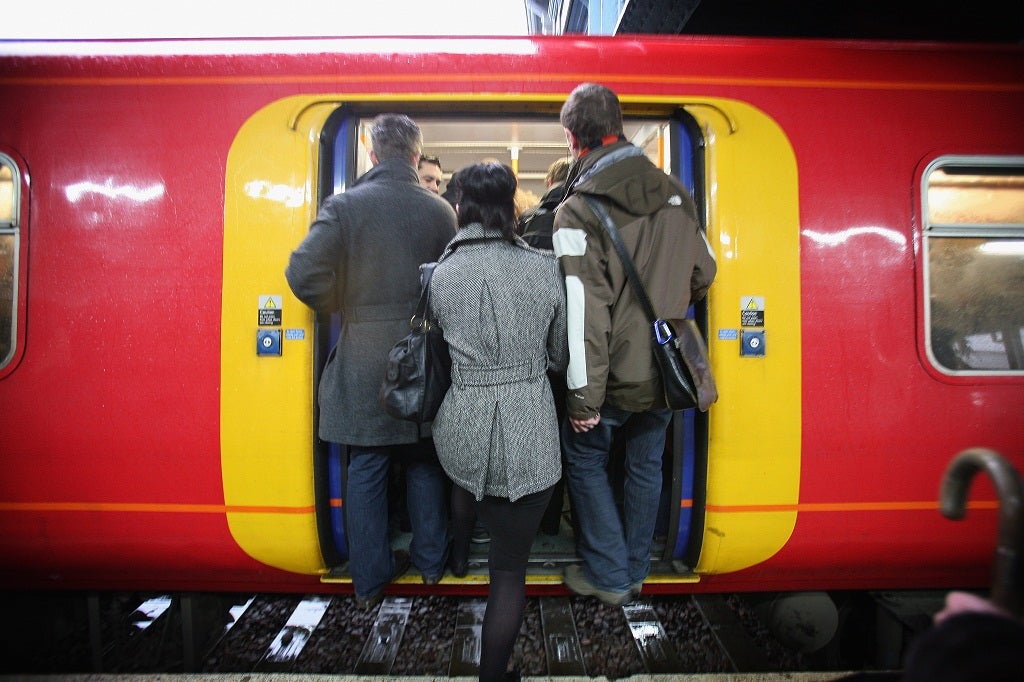
After two hours, we were directed to a platform. There were scenes of undignified confusion as passengers tried to board a train that was as quickly packed as any Tube train during rush hour – only this journey would, for some of us, be well over three hours. After another long delay, the train heaved its way slowly out of the station. An hour later, it stopped. There was a broken-down train in front of us.
It is an everyday story of modern life – genuinely, if you happen to use Greater Anglia trains where, even when people are not throwing themselves in front of trains, there are regular problems of signalling, staff absences, unpredictable delays caused by freight trains, leaves on the line, and so on.
What is interesting, and less predictable, is the public reaction to inconvenience and frustration. It has become more grown-up. There is less of the clenched rage, the defeatist moaning, than, say, a year ago. It has become noticeable in the past few months that people are more prepared to chat to one another, to let down their personal barriers at times of stress.
Although the Olympic summer seems an age away, its subtle effects live on. Good humour, politeness, decency and individuality were the national characteristics on display – or at least, that was the marketing message broadcast to the world – and, as if by magic, those qualities seem to have hung around.
The whinge-and-blame culture has not disappeared, but the significant boost to our national identity provided by a successful Olympics has lifted some of the grumpiness and largely unexpressed rage which was such a depressing part of our national life. It may or may not be true that, as claimed earlier in the week, Britain now leads the world in “soft power”, the international influence of our culture and values, but at home the difference in confidence is noticeable.
The next step is for it to work its way into how our corporations are run. Few Greater Anglia passengers, for example, are great fans of the company but, on one ghastly journey at least, the hero of the moment was Emily, the train’s good-humoured, patient, and genuinely apologetic conductor.
Blandford, hero of our time?
If one were looking for a career which summed up the strangeness of modern Britain, that of Jamie Spencer-Churchill, the Marquess of Blandford, would be a useful place to start. Blandford’s main claim to fame, apart from the family into which he was born, is his imprisonment for driving offences and for prescription drug forgery. There were other incidents – an accusation of racial abuse against a taxi driver (strongly denied by Blandford), a road rage charge – regularly reported in the press. He was on a reality show, but walked out after being discovered staying in a hotel when he was meant to be sleeping rough.
Now he is back, running Blenheim Palace, his family seat and one of the great homes of England, when he is not wintering in Verbier or taking a couple of months to snooze and sunbathe on an island off the Kenyan coast. There is, of course, a TV documentary about his life and achievements. So much for those who say that it is difficult for criminals to be rehabilitated in modern Britain.
Join our commenting forum
Join thought-provoking conversations, follow other Independent readers and see their replies