Cosmetic surgery is bad. That women feel the need for it is worse
The pressure to look attractive can be the worst part of being female. Now even the British Association of Aesthetic Plastic Surgeons is demanding change

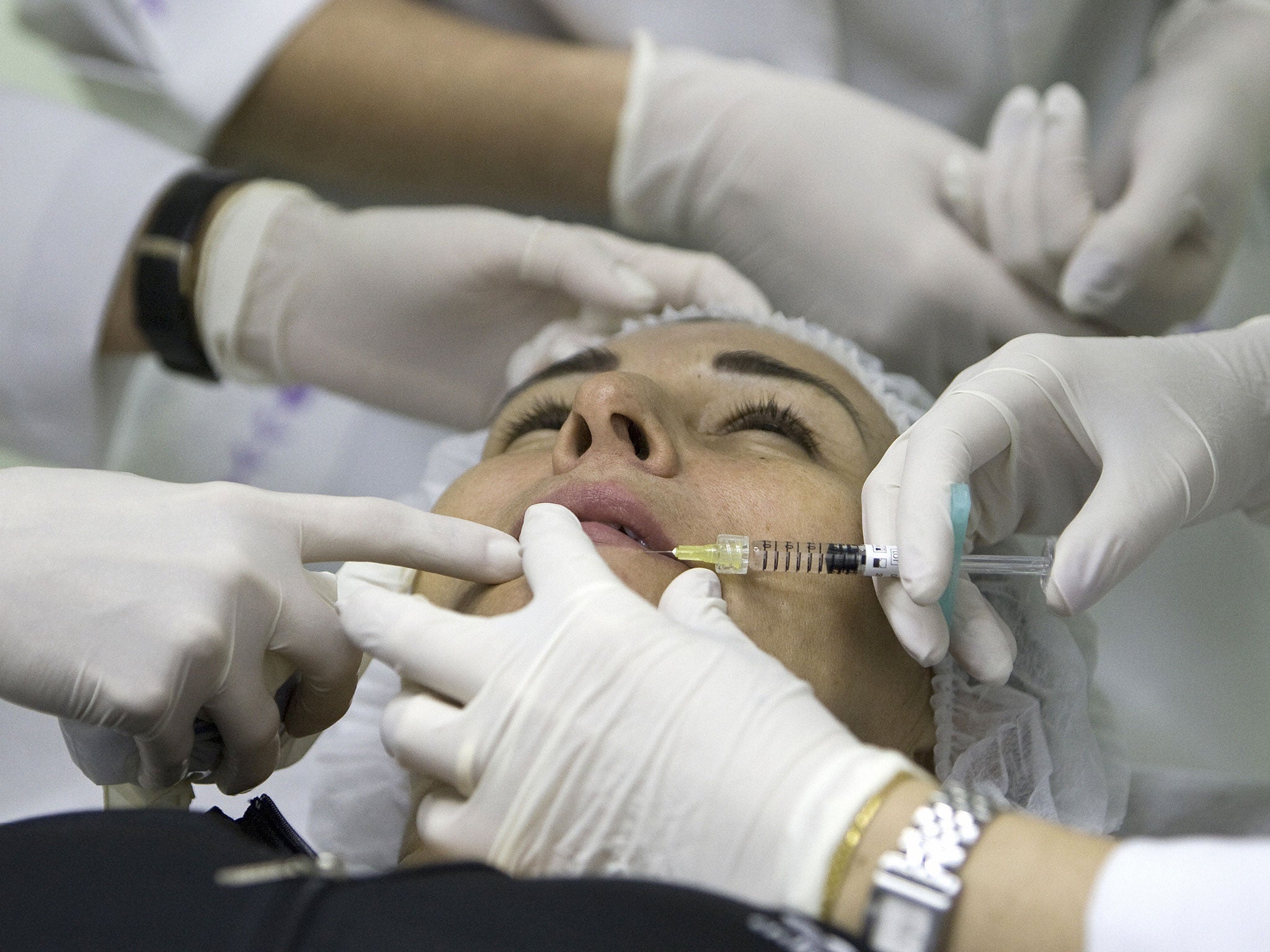
A friend went to the wedding of a British man and his Texan girlfriend. She looked across the aisle and saw a whole row of identical-looking women. “I didn’t know Diane had so many sisters,” she said to her neighbour. “Oh, they’re not family,” came the reply. “They’ve just all gone to the same plastic surgeon.”
Scroll forward 10 years, and that’s what we might be seeing in Britain: the normalisation of cosmetic surgery and the plasticisation of our faces and bodies. For the increasing number of us going under the knife has been scarily unaffected by recession. Borrowing for cosmetic surgery is now the third most common reason for getting into debt.
This week, the Government published the responses to its consultation on regulating the industry. For a medical process that can cause disfigurement and even death, the rules are astonishingly lax. Any doctor can practice as a cosmetic surgeon, with no specialised experience or training. When patients go for a consultation, it’s as often with a sales rep as a surgeon. There is no cooling-off period to allow people to change their minds, and some clinics take non-refundable deposits on the spot. They offer buy-one-get-one-free deals, as if boob jobs were packets of cereal, and they even bombard 17-year-olds with texts offering them procedures at their next birthday.
If that weren’t shocking enough, turn to the back pages of any women’s glossy magazine. You’ll be promised happiness, confidence, self-esteem, and a better you. The ads are not, of course, selling psychotherapy or meditation lessons.
Prescription medicines can’t be advertised. So why do we allow advertising of major surgical interventions with questionable physical and psychological results? Yes, some people may be thrilled with their nose jobs or bigger breasts. But many aren’t. Some simply alight on another part of their body to hate. Some find that their smoother forehead doesn’t solve their relationship problems. Some have unsightly scars, eyelids that won’t shut or implants that rupture. Most chillingly, a whole clutch of studies has found that women with breast implants are three to four times more likely to commit suicide than those without. Whichever way the line of causation runs, it’s alarming.
Even the British Association of Aesthetic Plastic Surgeons has called for a ban on advertising. Its President, Fazel Fatah, says, “ In no other area of surgery would one encounter Christmas vouchers and two-for-one offers – the pendulum has swung too far, and it is time for change… The Government is deluded if they think that the commercial sector will exercise self-regulation.”
So there is a lot that ministers can do to tighten up the industry. But we also need to look deeper and ask why women hate their bodies and faces so much that they are prepared to spend a fortune, suffer pain, and take serious risks in going under the knife. For this is an overwhelmingly female problem: women comprise 90 per cent of plastic surgery patients. And it starts early: Girlguiding UK found that 47 per cent of girls said that the pressure to look attractive was the most negative part of being female and half of young women aged 16 to 21 would consider cosmetic surgery. They’ve watched extreme makeover shows on TV, they’ve read bitchy criticism of any female celebrity’s slightest imperfection and they’ve been bombarded in the media by a narrow definition of beauty which the vast majority of them can never attain.
We are constantly being told that the ideal woman is an impossible combination of slender body and big tits, that she has flawless, unlined skin and freakishly long legs. The model herself doesn’t even look like that in real life – her features have been airbrushed and digitally manipulated to “perfection”. No wonder the rest of us feel inadequate.
Then we see women being chosen, as TV presenters or celebrity WAGs, entirely on the basis of their youth and beauty, not their intelligence or wisdom or kindness or humour. Men can age and be ugly in public life; women can’t. If we find that we’re invisible over the age of 50, possibly even 40, it’s not surprising that some of us are prepared to take drastic action just to make ourselves seen again.
It doesn’t have to be like this. For it’s actually in the fashion industry’s business interest to act differently. Studies have shown that women are more than twice as likely to buy an advertised outfit if the model is their size or age. They say they can better picture themselves in the clothes and they feel more beautiful and confident when the model reflects them.
It would be good to see similar research on TV viewing figures. There’s a huge and growing older demographic, who are more likely to stay in and watch TV. I am sure ratings would go up if more older women appeared on their screens. When I conducted an informal focus group on this subject with younger women, even they said they wanted older role models and would prefer to see older women presenters.
So we could have a virtuous circle. If there were more body shapes and ages in ads and magazines, women would feel better about themselves and manufacturers would make more money. If female TV presenters were chosen for their talent and charisma (just as male ones are), not just their age and looks, women would feel better about themselves and viewing figures would rise. If broadcasters stopped showing programmes that normalised and sanitised plastic surgery, we would feel under less pressure to try it.
And then, perhaps, women could stop looking at themselves through a filter of self-hatred. They might start thinking, “I’m a fun person”, rather than “my nose is too big”. Instead of obsessing about how they look on the outside, they could start thinking about who they are on the inside.
For the truth is that no surgery in the world is going to change that, whatever the industry may claim. The “new you” comes from changing the way you think, not from the surgeon’s knife. It’s cheaper, it’s healthier, it’s safer and it’s longer-lasting. Don’t take it from me; listen to the President of the British Association of Aesthetic Plastic Surgeons himself: “There is an industry making money out of making people feel inadequate.” Yuck.
Join our commenting forum
Join thought-provoking conversations, follow other Independent readers and see their replies
Comments
Bookmark popover
Removed from bookmarks