Don't give up on foreign aid
Spending taxpayers' money on international development programmes is under attack like never before. But there are vital reasons to keep giving.
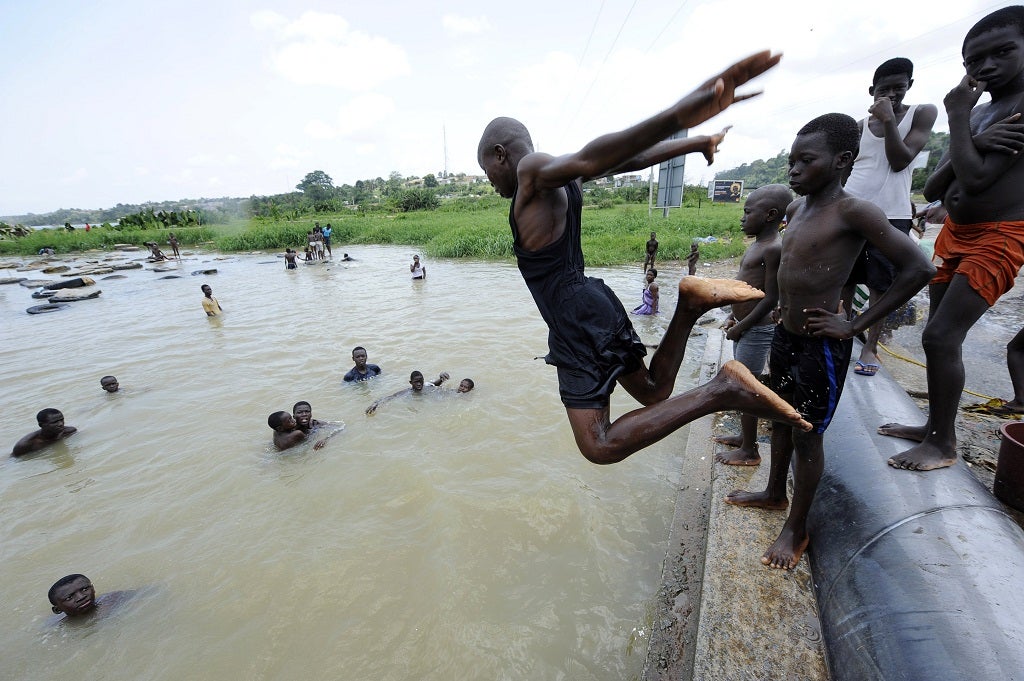
Even if you haven’t already heard ‘the dilemma of the drowning child’ – not having a charity-worker as an old schoolmate – it might sound familiar. It does the rounds. To some, it represents the peak of a certain kind of morally superior waffle that makes a person want to tear up their collection of Oxfam gift-vouchers and donate a large amount of money to the nearest public house. But make up your own mind.
Out on a walk in a park you see a child drowning. You must decide whether to leap in and save the child, even though doing so would mean the ruin of an expensive pair of shoes you’d just bought. Of course this is an emotional full-nelson. The idea is that everybody, no matter how materialistic, would jump – a life being worth such small inconvenience.
The next stage is harder. Peter Singer, creator of the drowning child dilemma, (and a respected moral philosopher in his own right), argues that since people are largely happy to sacrifice an iPhone or pair of sneakers to save a stranger dying in front of their own eyes, they should also be happy to incur similar small costs to save the lives of strangers they can’t see, dying of preventable causes in different countries.
For all its simplification, and galling whiff of piety, the ethical point of Singer’s dilemma – that it’s worth going to mild discomfort to save a life - holds good, and is worth keeping in mind in response to what appeared in the Daily Mail and Daily Telegraph this week.
Foreign Aid is under attack like never before. A natural enemy of the idea of giving taxpayers money (taxpayers' money!) to foreigners, the Mail’s front-page splash on Monday read “ The fat cats of foreign aid: Ministers target consultants paid £500 million by taxpayer" . An editorial advised Justine Greening, the new international development secretary, to “stop hosing taxpayers' money [TAXPAYERS' MONEY] down the drain”.
The Mail scoop lists salaries and home locations (“fashionable Earls Court”) of four men paid to deliver projects in the third world. And these men do earn heaps of cash. But the leap the Mail really wants its readers to make is that - since these four consultants are (possibly) paid too much, all £7.8 billion of Britain’s foreign aid is, in one way or another, a waste of money.
A Telegraph piece puts that subtext slap on the counter, saying aid “is an irresponsible exercise in giving our children's money to people who have nothing to do with Britain” and concluding that “ if she [Justine Greening] were really brave she would press to disband her department”.
It’s probably tempting for lefties to tune this out as right-wing Tory tooth-gnashing. But the broader accusations levelled at aid resonate no matter your political persuasion.
An imposingly-CVed cadre of writers and academics believe aid simply doesn’t work. First, money doesn’t always get to the people or projects it should (a former World Bank director said in 1947: “When the World Bank thinks it’s financing an electric power station, it’s really financing a brothel”). Second, flooding countries with free cash inhibits their development, making sections of their industry dependent on aid and stifling a free market – which may in the long run be the only way to raise people out of poverty.
As the Mail and Telegraph pieces point out, these arguments have been poison-tipped by Britain’s current financial predicament. Why should we give money away when people are falling into poverty over here and the state can’t support public services?
Many won’t want to answer that. But without pressing the ‘ drowning child’ button quite yet, it can be answered. Rational defences of foreign aid rest on one crucial principle – laid out by Abhijit Banerjee and Esther Duflo in their wonderful book Poor Economics . Aid does not “work” or “not work”. Some programmes are extraordinarily successful; others are not. The trick is to research what makes a difference and replicate it.
Obvious advice, perhaps. But a drive for accountability was underway in the Department for International Development before Justine Greening took up her post. And a review of the department’s spending, published Wednseday, shows the UK Aid programme is delivering better value for money as a result.
But the phrase ‘value for money’ doesn’t quite capture why it’s important we don’t let austerity cripple foreign aid. As the hoary old anecdote of the drowning boy illustrates, what value for money actually means in this context is lives saved, or transformed beyond recognition – people pulled out of the waters of poverty and preventable sickness.
So while there may be waste – the benefits are correspondingly greater when a pound does get to its source.
British people should be incredibly proud of the foreign aid our government hands out – and its commitment to keep doing so.
Join our commenting forum
Join thought-provoking conversations, follow other Independent readers and see their replies
Comments